Product Design, Manufacturing & Innovation Resources
Home » Peristaltic Pump

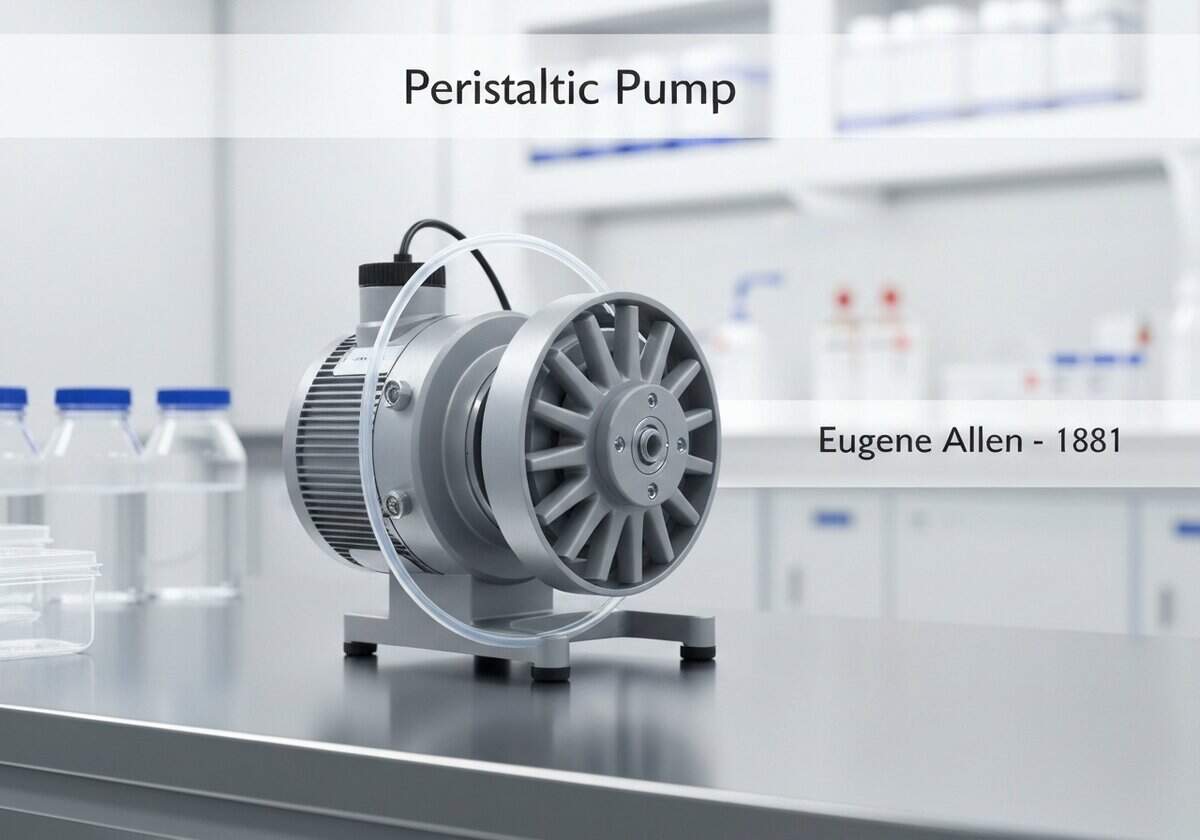
Peristaltic Pump

1881
  • Eugene Allen
Peristaltic pump mechanism in hydraulic machinery for sterile applications.

(generated image for illustration only)

A peristaltic pump is a positive displacement pump where fluid is contained within a flexible tube fitted inside a circular pump casing. A rotor with several ‘rollers’ or ‘shoes’ compresses the tube as it turns. This compression wave moves along the tube, forcing the fluid to move. The fluid only contacts the tube’s interior, making it ideal for sterile applications.

The operating principle of a peristaltic pump is inspired by the biological process of peristalsis, such as in the human gastrointestinal tract. The core components are the flexible tubing, the rotor, a set of rollers or shoes attached to the rotor, and the pump housing or ‘track’ that holds the tube in place. As the rotor turns, the rollers progressively squeeze the tubing against the housing, creating a temporary seal. This seal separates a ‘pillow’ or pocket of fluid. The rotation of the rotor moves this pocket along the tube from the inlet to the outlet.

One of the primary advantages of this design is that the pumped fluid is completely isolated from the pump’s mechanical components. This prevents contamination of the fluid and protects the pump from corrosive or abrasive media. This makes peristaltic pumps invaluable in sterile environments like medicine and biotechnology. They are also sealless, eliminating a common point of failure and leakage in other pump types. The gentle pumping action is suitable for shear-sensitive fluids, such as live cells or large proteins, that would be damaged by the high-speed impellers of centrifugal pumps.

Flow rate is determined by the rotor speed and the tube’s inner diameter, making them excellent for precise metering and dosing applications. However, they do have limitations. The flow is inherently pulsating, although this can be mitigated by using more rollers. The flexible tubing is a consumable part that wears out over time and requires periodic replacement.

UNESCO Nomenclature: 3313
– Mechanical engineering

Type

Physical Device

Disruption

Substantial

Usage

Widespread Use

Precursors

  • understanding of biological peristalsis in organisms like the esophagus
  • development of flexible, resilient materials like vulcanized rubber for the tubing
  • advances in mechanical engineering for creating rotating mechanisms
  • the concept of positive displacement for moving fluids

Applications

  • medical infusion pumps and dialysis machines
  • dosing chemicals in water treatment and swimming pools
  • pumping sterile media in pharmaceutical manufacturing
  • food processing for handling shear-sensitive products like sauces
  • analytical chemistry for precise fluid metering
  • concrete pumping

Patents:

  • US249287

Potential Innovations Ideas

Due to scrapping bot traffic, currently more than 40k per day, this content is reserved to community members.
> Login < or > Register < (100% free) to access this, so as all other restricted content and tools.

Related to: peristaltic pump, positive displacement, tubing pump, roller pump, medical pump, sterile pumping, dosing pump, shear-sensitive, fluid metering, sealless pump.

Historical Context

Peristaltic Pump

1850
1867
1875-01-01
1881
1884
1890
1890
1850
1860
1870
1876
1882-01-01
1886-04-23
1890
1897

(if date is unknown or not relevant, e.g. "fluid mechanics", a rounded estimation of its notable emergence is provided)

Related Invention, Innovation & Technical Principles

Full size images and downloads are only available, 100% free, for registered members.

> Login <