Muda, Muri, Mura (3 of the 7 Wastes)
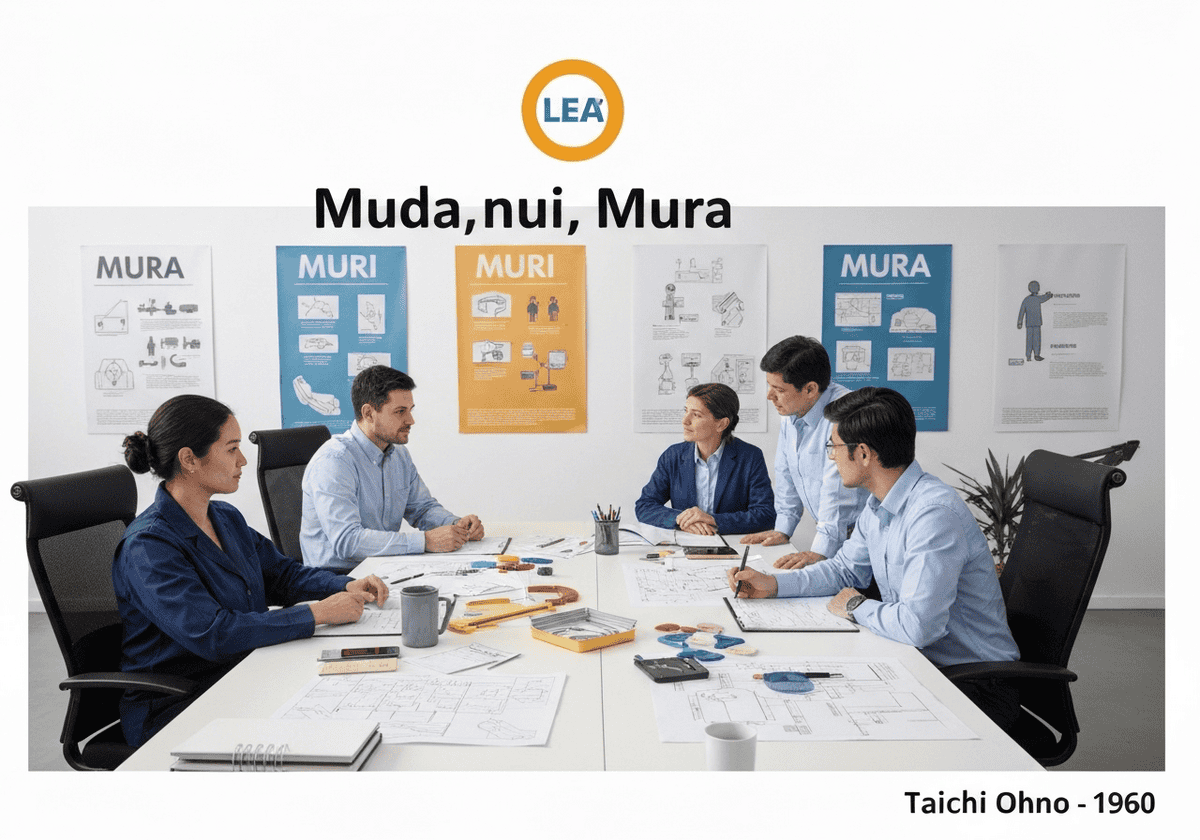
The Toyota Production System is founded on the complete elimination of waste, categorized into 7 types, 3 main being described here: Muda (non-value-adding work), Muri (overburden), and Mura (unevenness). While Muda is the most commonly discussed, TPS recognizes that Muri and Mura are often the root causes of Muda and must be addressed first to achieve a truly lean system.
Muda (Waste) refers to any activity that consumes resources but creates no value for the customer. Taiichi Ohno originally identified seven types of Muda: Transport (unnecessary movement of products), Inventory (excess products and materials), Motion (unnecessary movement by people), Waiting (for the next production step), Overproduction (producing more than is needed), Over-processing (doing more work than necessary), and Defects (efforts causing rework or scrap). An eighth waste, unused human talent, is often added.
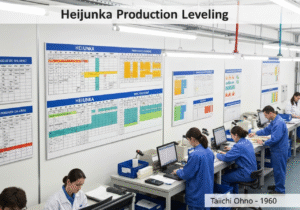
Mura (Unevenness) refers to inconsistency or irregularity in a process. It can be seen in fluctuating production schedules or inconsistent work methods, leading to periods of rushing followed by idleness. Mura is often addressed through Heijunka (production leveling), which smooths out the production mix and volume.
Muri (Overburden) means overburdening equipment or operators by asking them to do more than their natural capacity allows. This can lead to safety issues, burnout, and defects. Muri is often caused by Mura and a lack of standardized work. The TPS philosophy emphasizes that eliminating Mura and Muri is essential for systematically and sustainably eliminating Muda. By creating a leveled, stable, and reasonably paced work environment, the conditions that generate waste (Muda) are removed at their source.
UNESCO Nomenclature: 3306
– Industrial Engineering
Precursors
- frank and lillian gilbreth’s time and motion studies
- henry ford’s focus on waste reduction in his assembly lines
- principles of scientific management by frederick winslow taylor
Applications
- software development (eliminating unused code, unnecessary features)
- healthcare (reducing patient waiting times, redundant paperwork)
- service industries (streamlining customer service processes)
- logistics (optimizing delivery routes to eliminate wasted motion and fuel)
- government administration (simplifying bureaucratic processes)
Potential Innovations Ideas
Due to scrapping bot traffic, currently more than 40k per day, this content is reserved to community members.
> Login < or > Register < (100% free) to access this, so as all other restricted content and tools.
Related to: muda, muri, mura, waste elimination, lean manufacturing, toyota production system, overproduction, kaizen.