Product Design, Manufacturing & Innovation Resources
Home » Implantable Cardioverter-Defibrillator (ICD)

Implantable Cardioverter-Defibrillator (ICD)

1980
  • Michel Mirowski
  • Morton Mower
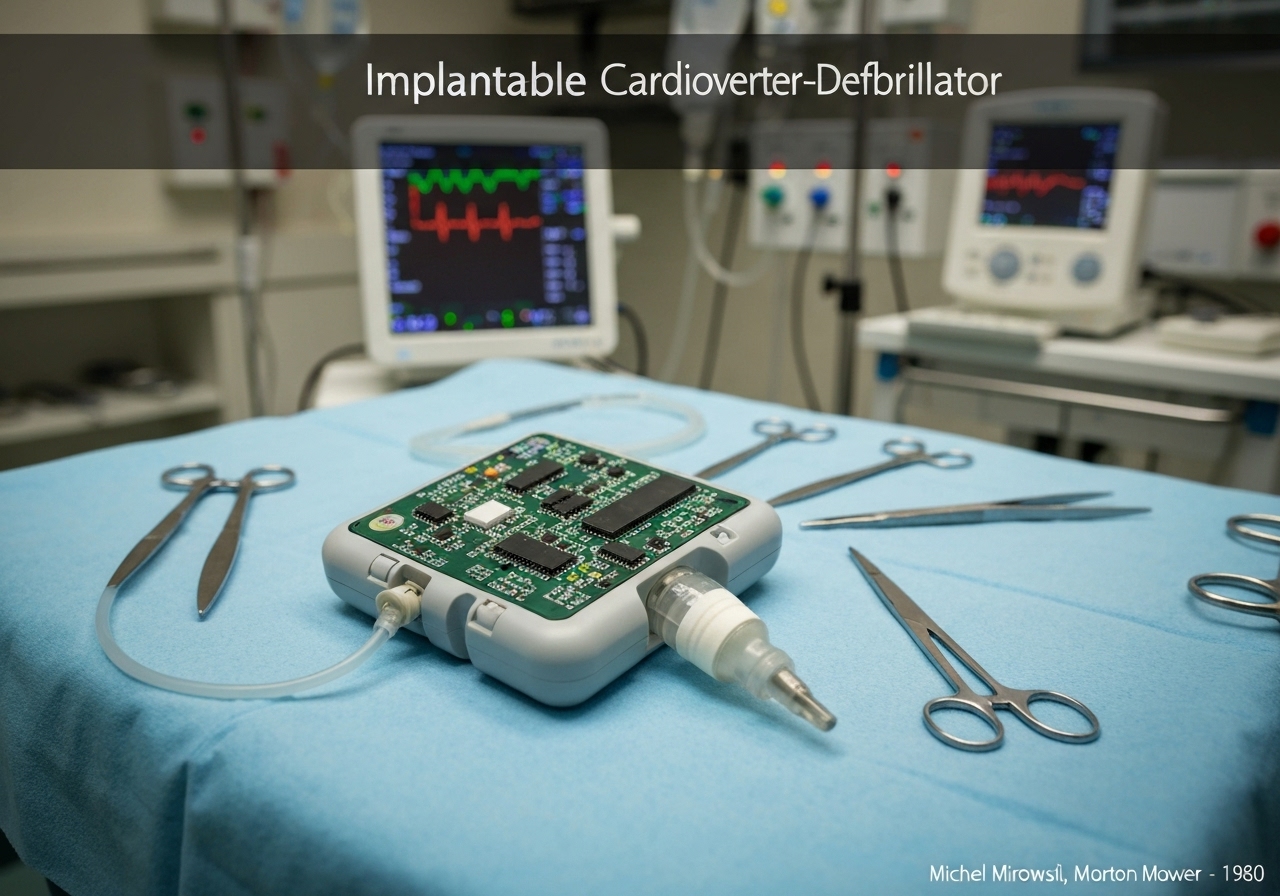
Implantable cardioverter-defibrillator device in a surgical setting, biomedical engineering.

(generated image for illustration only)

An implantable cardioverter-defibrillator (ICD) is a small, battery-powered device placed in the chest to monitor heart rhythm and detect life-threatening arrhythmias like ventricular tachycardia or fibrillation. When an abnormal rhythm is detected, the ICD can deliver a precisely calibrated electrical shock (defibrillation) to restore a normal heartbeat, preventing sudden cardiac death.


An ICD system consists of a pulse generator and one or more electrode leads. The generator, which contains a battery and the electronic circuitry, is typically implanted under the skin below the collarbone. The leads are thin, insulated wires that are threaded through a vein into the heart chambers. These leads have electrodes on their tips that monitor the heart’s electrical activity (acting as an ECG) and can also deliver electrical impulses. The device continuously analyzes the heart’s rhythm. If it detects a rhythm that is too fast or chaotic (tachycardia or fibrillation), it first attempts to correct it with a series of low-energy electrical pulses, a procedure called anti-tachycardia pacing (ATP). If ATP is unsuccessful or if the arrhythmia is immediately life-threatening (like ventricular fibrillation), the ICD charges its capacitors and delivers a high-energy shock to reset the heart. Modern ICDs also function as pacemakers, providing electrical stimulation if the heart rate becomes too slow (bradycardia). They also have sophisticated data logging capabilities, recording arrhythmic events for later review by a cardiologist, which helps in optimizing the patient’s therapy.

UNESCO Nomenclature: 3201
– Biomedical engineering

Type

Physical Device

Disruption

Revolutionary

Usage

Widespread Use

Precursors

  • invention of the external defibrillator by claude beck in 1947
  • development of the implantable pacemaker in the 1950s
  • advances in transistor and battery technology
  • understanding of the electrophysiology of cardiac arrhythmias

Applications

  • prevention of sudden cardiac death in high-risk patients
  • treatment for survivors of cardiac arrest due to ventricular fibrillation
  • management of certain congenital heart conditions
  • therapy for patients with advanced heart failure and low ejection fraction

Patents:

  • US4202340A

Potential Innovations Ideas

Due to scrapping bot traffic, currently more than 40k per day, this content is reserved to community members.
> Login < or > Register < (100% free) to access this, so as all other restricted content and tools.

Related to: ICD, implantable cardioverter-defibrillator, arrhythmia, ventricular fibrillation, sudden cardiac death, defibrillation, pacemaker, tachycardia, michel mirowski, cardiology.

Historical Context

Implantable Cardioverter-Defibrillator (ICD)

1960
1969
1976-05-28
1980
1990
1960
1965
1970
1980
1980
1990

(if date is unknown or not relevant, e.g. "fluid mechanics", a rounded estimation of its notable emergence is provided)

Related Invention, Innovation & Technical Principles

Full size images and downloads are only available, 100% free, for registered members.

> Login <