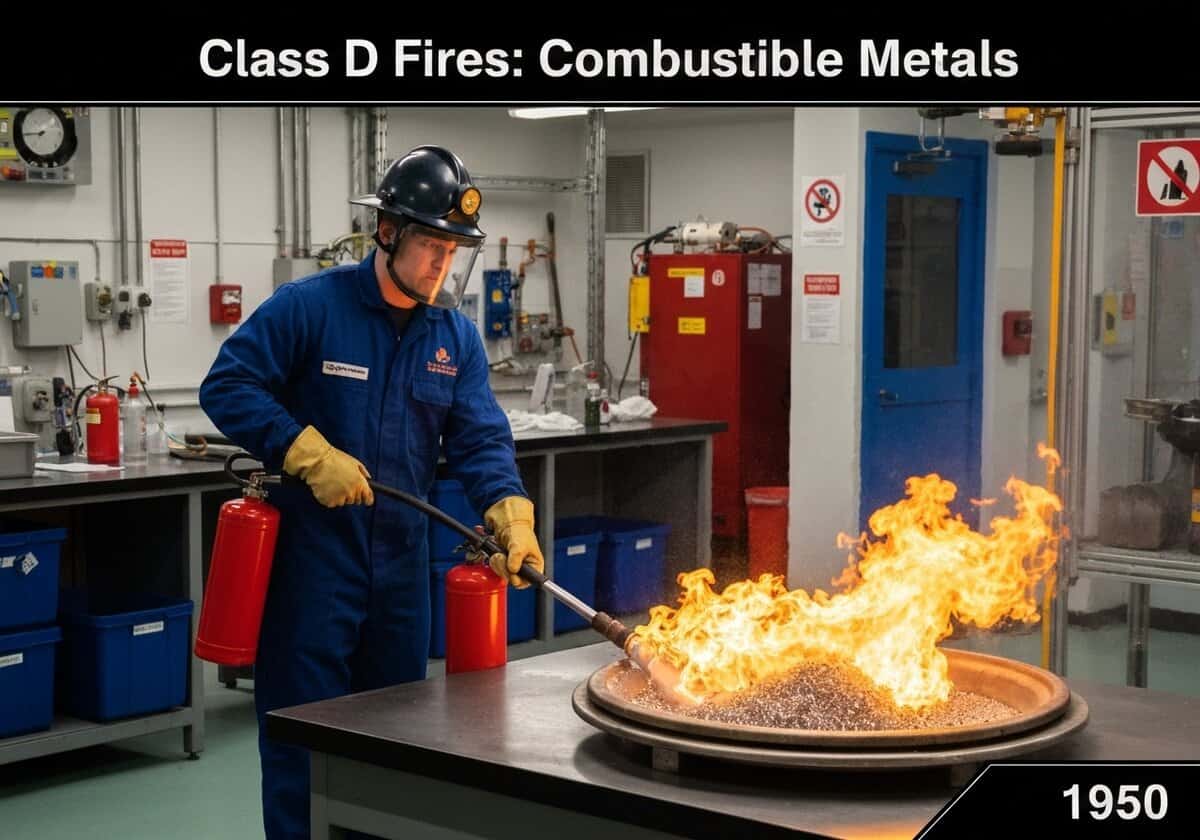
Class D Fires: Combustible Metals
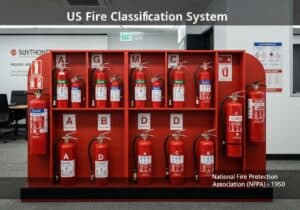
Class D fires involve combustible metals, alloys, or metal compounds, such as magnesium, titanium, sodium, and lithium. These fires are exceptionally hazardous as they burn at extremely high temperatures and can react explosively with common extinguishing agents like water or carbon dioxide. Water, for instance, in some cases, in contrary to popular believes, can dissociate into hydrogen and oxygen, fueling the fire. Specialized dry powder agents are required for extinguishment.
The unique danger of Class D fires stems from the chemical reactivity of the burning metal. Unlike carbon-based fuels, many metals are powerful reducing agents and can strip oxygen from water (H₂O) or carbon dioxide (CO₂). For example, burning magnesium reacts with water in a highly exothermic reaction: \(Mg (s) + H_2O (g) \rightarrow MgO (s) + H_2 (g)\). The hydrogen gas produced is itself extremely flammable, leading to a violent explosion. This makes traditional firefighting methods not only ineffective but dangerously counterproductive.
Extinguishing Class D fires requires agents that will not react with the burning metal. These are typically dry powders, not to be confused with the dry chemical agents used for Class A, B, and C fires. Class D agents work by smothering the fire, forming a crust that excludes oxygen, and by absorbing heat. Common agents include sodium chloride (NaCl) based powders (like Met-L-X), graphite-based powders (G-1), and copper-based powders, with the specific choice depending on the type of metal burning. For instance, copper powder is particularly effective on lithium fires.
The rise of technologies like lithium-ion batteries has brought Class D fire safety into sharper focus. While a battery fire is complex, it often involves the combustion of lithium, requiring Class D-rated extinguishing agents and strategies.
UNESCO Nomenclature: 3305
– Chemical engineering
Precursors
- the discovery and isolation of reactive alkali and alkaline earth metals
- the development of industrial processes using powdered or molten metals (e.g., in aviation and munitions)
- a scientific understanding of exothermic oxidation-reduction reactions
- analysis of industrial accidents involving catastrophic metal fires
Applications
- fire safety protocols in aerospace and automotive industries using lightweight metals
- handling procedures for alkali metals in chemical research and manufacturing
- specialized fire suppression systems in metal foundries and 3d printing facilities using metal powders
- safety design for large-scale battery energy storage systems (e.g., lithium-ion)
- pyrotechnics manufacturing and storage safety
Potential Innovations Ideas
Due to scrapping bot traffic, currently more than 40k per day, this content is reserved to community members.
> Login < or > Register < (100% free) to access this, so as all other restricted content and tools.
Related to: class D fire, combustible metal, magnesium, lithium, sodium, dry powder extinguisher, water-reactive, metal fire, pyrophoric, special hazard.