Product Design, Manufacturing & Innovation Resources
Home » Brushless DC (BLDC) Motor

Brushless DC (BLDC) Motor

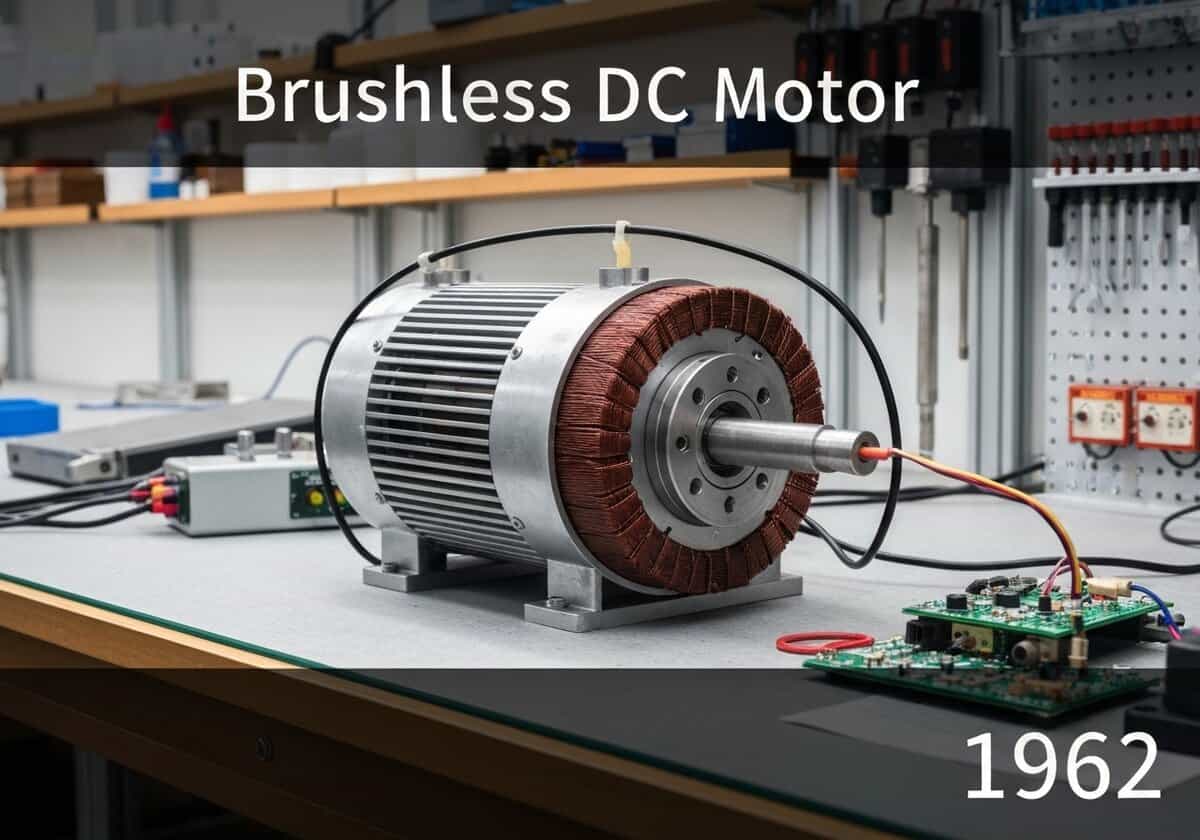
1962
    Brushless DC motor with electronic controller in electrical engineering lab.

    (generated image for illustration only)

    A brushless DC (BLDC) motor is a synchronous motor that uses an electronic controller instead of mechanical brushes and a commutator to switch current in the windings. It typically features a permanent magnet rotor and a wound stator. The controller uses sensors (like Hall effect sensors) or sensorless algorithms to determine rotor position and energize the windings sequentially, creating a rotating magnetic field.

    BLDC motors were developed to overcome the limitations of traditional brushed DC motors, such as brush wear, sparking, and electrical noise. By replacing the mechanical commutation system with solid-state electronics, BLDC motors offer higher efficiency, longer lifespan, less maintenance, and better speed-torque characteristics. The motor’s basic construction is ‘inside-out’ compared to a brushed motor; the permanent magnets are on the rotor, and the windings are on the stationary stator. This configuration improves heat dissipation, as the heat-generating windings are on the outer casing.

    The electronic controller is the brain of the BLDC motor. To create rotation, the controller must know the rotor’s position to energize the correct set of stator windings at the right time. This is often achieved using three Hall effect sensors embedded in the stator that detect the passing of the rotor’s magnetic poles. The controller reads this position data and switches the current to the windings in a specific sequence, creating a stator magnetic field that is always ‘ahead’ of the rotor magnets, pulling them along. More advanced sensorless controllers deduce the rotor position by monitoring the back-EMF in the unenergized windings, reducing cost and complexity.

    UNESCO Nomenclature: 2205
    – Electrical engineering

    Type

    Physical Device

    Disruption

    Substantial

    Usage

    Widespread Use

    Precursors

    • Invention of the transistor and solid-state electronics
    • Development of high-strength permanent magnet materials (e.g., ferrite, neodymium magnets)
    • Principles of the brushed DC motor
    • Invention of the Hall effect sensor

    Applications

    • computer hard drives and cooling fans
    • drones and rc aircraft
    • cordless power tools
    • electric bicycles and scooters
    • robotics and cnc machines
    • hvac systems

    Patents:

      Potential Innovations Ideas

      Due to scrapping bot traffic, currently more than 40k per day, this content is reserved to community members.
      > Login < or > Register < (100% free) to access this, so as all other restricted content and tools.

      Related to: BLDC motor, brushless DC, electronic controller, Hall effect sensor, permanent magnet, synchronous motor, sensorless control, commutator, efficiency, robotics.

      Historical Context

      Brushless DC (BLDC) Motor

      1960
      1960
      1960-05-16
      1962
      1963
      1964
      1968
      1960
      1960
      1960
      1961
      1962
      1963
      1965
      1970

      (if date is unknown or not relevant, e.g. "fluid mechanics", a rounded estimation of its notable emergence is provided)

      Related Invention, Innovation & Technical Principles

      Full size images and downloads are only available, 100% free, for registered members.

      > Login <