Product Design, Manufacturing & Innovation Resources

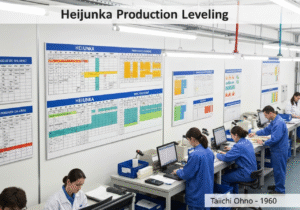
हेइजुनका (स्तर निर्धारण/उत्पादन सुगमीकरण)

हेइजुंका

हेइजुनका (स्तर निर्धारण/उत्पादन सुगमीकरण)

उद्देश्य:

समय के साथ ऑर्डर में होने वाले बदलावों (मात्रा और किस्म दोनों के आधार पर) को कम करके अधिक सुसंगत और पूर्वानुमानित उत्पादन प्रवाह बनाना।


इसका उपयोग कैसे किया जाता है:

फायदे

नुकसान

श्रेणियाँ:

इसके लिए सबसे अच्छा:

Heijunka, or level scheduling, finds extensive application across various industries such as automotive, electronics, and consumer goods, where maintaining a steady flow of production is vital. In the automotive sector, for example, manufacturers often implement Heijunka to synchronize production rates across different models, ensuring that assembly lines operate smoothly regardless of demand fluctuations. This methodology is especially advantageous during the implementation phase of lean manufacturing practices, as it requires initial planning and commitment from all stakeholders, including production managers, supply chain coordinators, and quality assurance teams. Participants typically analyze historical sales data and forecast trends to design a balanced production schedule that accommodates different product variants, reducing the tendency to overproduce some items while underproducing others. Engaging cross-functional teams can enhance collaboration and communication, mitigating risks associated with stockouts or excess inventory. Heijunka also emphasizes continuous improvement practices, prompting teams to regularly evaluate workload distribution and resource utilization to identify areas for enhancement. Companies that successfully implement level scheduling often report increased flexibility, as they can swiftly adapt to market changes without significant disruptions, subsequently improving customer satisfaction and promoting long-term sustainability. With a focus on minimizing waste through consistent production output, organizations can achieve smoother workflows that contribute to enhanced operational efficiency and reduced costs, reinforcing the broader principles of lean manufacturing.

इस पद्धति के प्रमुख चरण

  1. मांग और क्षमता में होने वाले बदलावों की पहचान करने के लिए वर्तमान उत्पादन प्रक्रियाओं का विश्लेषण करें।
  2. उपलब्ध संसाधनों के साथ ग्राहक की मांग को संतुलित करके आदर्श उत्पादन दर निर्धारित करें।
  3. समान प्रसंस्करण आवश्यकताओं वाले उत्पादों को समूहों में विभाजित करें ताकि उनकी गुणवत्ता में समानता लाई जा सके।
  4. एक ऐसा उत्पादन कार्यक्रम बनाएं जो कार्यभार को एक निर्दिष्ट समयावधि में समान रूप से वितरित करे।
  5. उत्पादन को वास्तविक मांग के अनुरूप बनाने और अतिरिक्त इन्वेंट्री को कम करने के लिए एक पुल सिस्टम लागू करें।
  6. मांग के बदलते पैटर्न के आधार पर उत्पादन अनुसूची की नियमित रूप से समीक्षा करें और उसमें समायोजन करें।
  7. निर्धारित समय सारिणी का पालन सुनिश्चित करने के लिए कर्मचारियों को हेइजुंका सिद्धांतों और प्रथाओं पर प्रशिक्षित करें।
  8. समतलीकरण रणनीति की प्रभावशीलता का मूल्यांकन करने के लिए प्रमुख प्रदर्शन संकेतकों की निगरानी करें।

प्रो टिप्स

  • Implement takt time calculations at each workstation to synchronize production rates with customer demand, minimizing variability in output.
  • Utilize visual management tools, such as Kanban boards, to monitor workflow and adjust production schedules in real time, supporting continuous improvement.
  • नियमित रूप से वैल्यू स्ट्रीम मैपिंग सत्र आयोजित करें ताकि बाधाओं और अक्षमताओं की पहचान की जा सके, जिससे समतलीकरण रणनीतियों में लक्षित समायोजन किया जा सके।

विभिन्न पद्धतियों को पढ़ने और उनकी तुलना करने के लिए, हम अनुशंसा करते हैं

> व्यापक कार्यप्रणाली भंडार  <
अन्य 400 से अधिक पद्धतियों के साथ।

इस कार्यप्रणाली पर आपकी टिप्पणियाँ या अतिरिक्त जानकारी का स्वागत है। नीचे टिप्पणी अनुभाग देखें ↓ , साथ ही इंजीनियरिंग से संबंधित कोई भी विचार या लिंक।

ऐतिहासिक संदर्भ

1955
1956
1960
1960
1960
1960
1960
1950
1955
1958
1960
1960
1960
1960
1960

(यदि तिथि अज्ञात है या प्रासंगिक नहीं है, उदाहरण के लिए "द्रव यांत्रिकी", तो इसके उल्लेखनीय उद्भव का एक अनुमानित आंकड़ा प्रदान किया गया है)


संबंधित पोस्ट

पंजीकृत सदस्यों के लिए पूर्ण आकार की छवियाँ और डाउनलोड 100% निःशुल्क उपलब्ध हैं।