Product Design, Manufacturing & Innovation Resources
घर » उपयोगकर्ता-केंद्रित डिज़ाइन (UCD)

उपयोगकर्ता-केंद्रित डिज़ाइन (UCD)

1986
  • Donald Norman
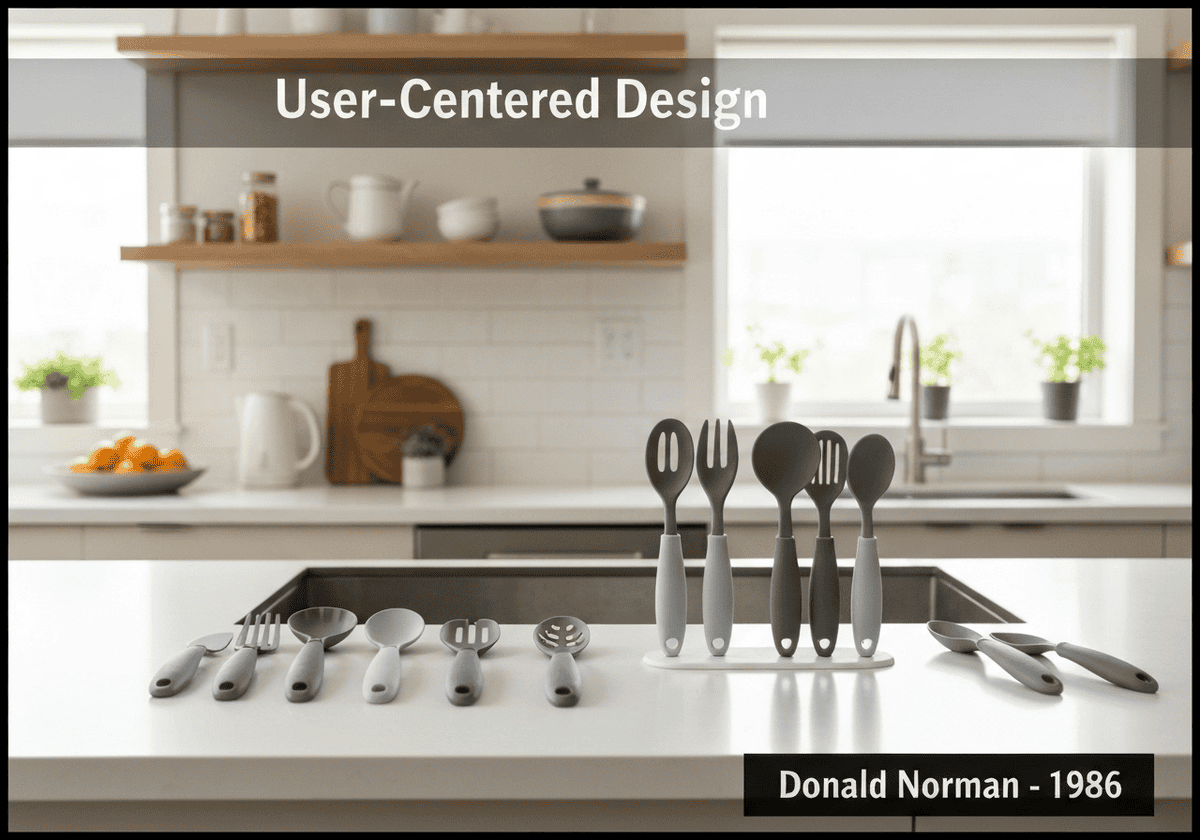
OXO गुड ग्रिप्स द्वारा निर्मित उपयोगकर्ता-केंद्रित डिज़ाइन वाले बर्तनों से सुसज्जित एर्गोनॉमिक किचन वर्कस्पेस।

(यह छवि केवल उदाहरण के लिए बनाई गई है)

A design philosophy and iterative process where the needs, wants, and limitations of end-users are given extensive attention at each stage of the design process. UCD aims to create products that are highly usable and accessible by involving users throughout the design cycle through research, testing, and feedback, rather than relying solely on designer assumptions. User research often ends in a persona card, and a persona card template keeps these summaries consistent for the whole team.


User-Centered Design (UCD) fundamentally shifts the focus of product development from the technical capabilities of the system to the experience of the person using it. The process is built on an explicit understanding of users, tasks, and environments. It begins with extensive user research to build empathy and gather insights, often creating ‘personas’—fictional characters representing key user types—and mapping out ‘user journeys’ to understand their interactions with a product in context. Throughout the design process, UCD employs a variety of methods to keep the user involved. These include उपयोगिता testing, where users are observed performing tasks with a prototype, A/B testing to compare different design variations, and participatory design sessions where users are invited to contribute ideas directly. The core principle is iteration: design, prototype, test, and repeat. Feedback from each testing round directly informs the next design iteration, ensuring the product evolves based on real user data rather than internal opinions. This approach significantly reduces the risk of creating a product that is difficult to use or fails to solve a genuine user problem, ultimately leading to higher user satisfaction and adoption rates.

UNESCO Nomenclature: 6106
एर्गोनॉमिक्स

Type

सार प्रणाली

व्यवधान

क्रांतिकारी

उपयोग

व्यापक उपयोग

शगुन

  • एर्गोनॉमिक्स और मानव कारकों का क्षेत्र
  • cognitive मनोविज्ञान research on human perception and problem-solving
  • ग्राफिकल यूजर इंटरफेस (जीयूआई) का विकास
  • औद्योगिक डिजाइन का ध्यान रूप और कार्य पर केंद्रित होता है।

आवेदन

  • उपयोगकर्ता इंटरफ़ेस सेब आईफोन
  • गूगल का सर्च इंजन इंटरफ़ेस
  • OXO गुड ग्रिप्स द्वारा निर्मित एर्गोनॉमिक किचन के बर्तन
  • विंडोज और मैकओएस जैसे आधुनिक ऑपरेटिंग सिस्टम में एक्सेसिबिलिटी सुविधाएं

पेटेंट:

NA

संभावित नवाचार विचार

  • an ai system that generates personalized user interfaces based on an individual’s cognitive and physical abilities
  • a neuro-feedback loop for software that adjusts its complexity in real-time based on the user’s cognitive load
  • a ‘ucd-as-a-service’ platform providing on-demand user testing with diverse global demographics
  • smart home devices that learn and adapt their functionality based on the household’s routines and preferences
  • educational software that customizes lesson plans based on a student’s learning style and progress
  • पहनने योग्य technology that provides haptic feedback to guide users through complex physical tasks
  • एक सार्वजनिक नीति डिजाइन ढांचा जो अधिक प्रभावी और सुलभ सरकारी सेवाएं बनाने के लिए यूसीडी सिद्धांतों का उपयोग करता है।
  • एक वाहन डैशबोर्ड जो ड्राइविंग स्थितियों और ड्राइवर के फोकस के आधार पर अपने लेआउट को पुनर्व्यवस्थित करता है।
संबंधित विषय: उपयोगकर्ता-केंद्रित डिज़ाइन, यूसीडी, मानव-कंप्यूटर अंतःक्रिया, उपयोगिता, उपयोगकर्ता अनुभव, डोनाल्ड नॉर्मन, एर्गोनॉमिक्स, अभिगम्यता।

ऐतिहासिक संदर्भ

उपयोगकर्ता-केंद्रित डिज़ाइन (UCD)

1941
1986
1990
2000
1950
1990
1990

(यदि तिथि अज्ञात है या प्रासंगिक नहीं है, उदाहरण के लिए "द्रव यांत्रिकी", तो इसके उल्लेखनीय उद्भव का एक अनुमानित आंकड़ा प्रदान किया गया है)

नवीनतम परिवर्धन

शीर्ष पोस्ट और लेख

शीर्ष मूल उपकरण

10वां वर्ष सालगिरह

पंजीकृत सदस्यों के लिए पूर्ण आकार की छवियाँ और डाउनलोड 100% निःशुल्क उपलब्ध हैं।





















