Product Design, Manufacturing & Innovation Resources
بيت » التصميم المرتكز على المستخدم (UCD)

التصميم المرتكز على المستخدم (UCD)

1986
  • Donald Norman
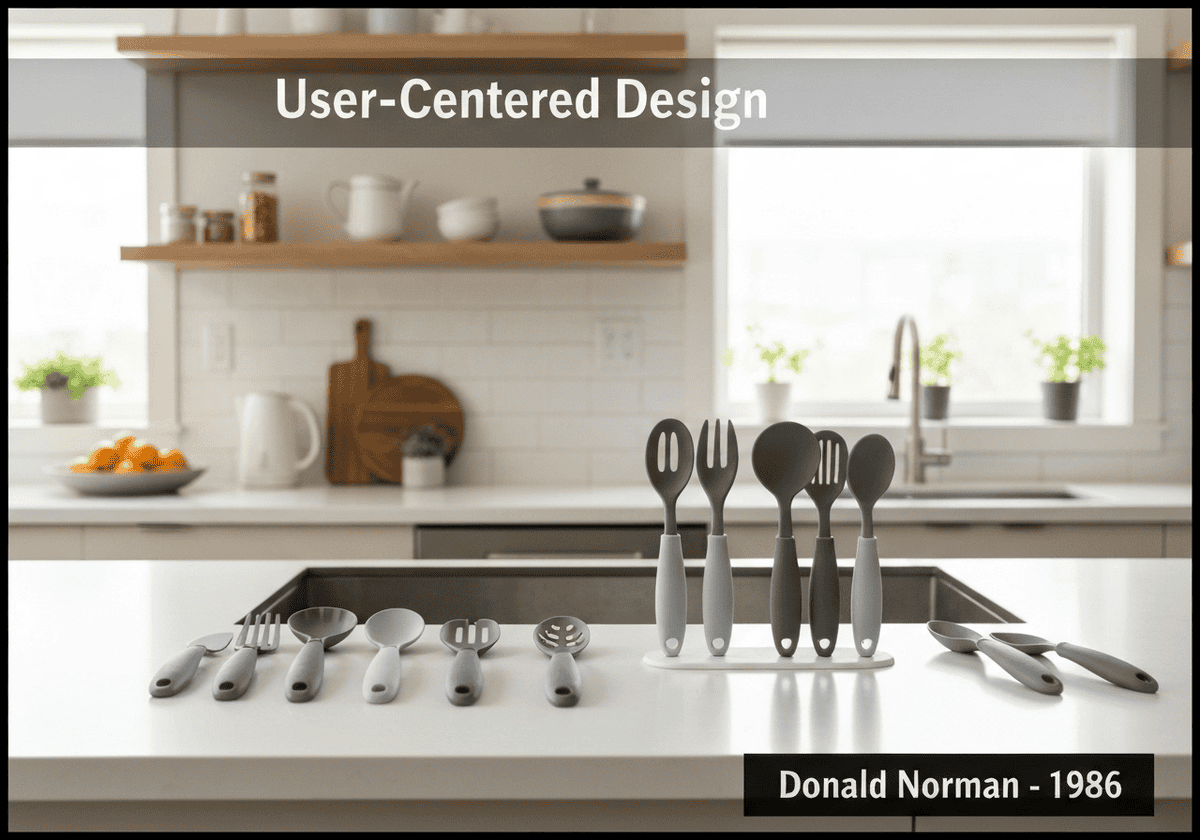
مساحة عمل مريحة في المطبخ تتميز بأدوات مطبخ مصممة خصيصًا لتناسب المستخدم من إنتاج شركة OXO Good Grips.

(صورة توضيحية فقط)

A design philosophy and iterative process where the needs, wants, and limitations of end-users are given extensive attention at each stage of the design process. UCD aims to create products that are highly usable and accessible by involving users throughout the design cycle through research, testing, and feedback, rather than relying solely on designer assumptions. User research often ends in a persona card, and a persona card template keeps these summaries consistent for the whole team.


User-Centered Design (UCD) fundamentally shifts the focus of product development from the technical capabilities of the system to the experience of the person using it. The process is built on an explicit understanding of users, tasks, and environments. It begins with extensive user research to build empathy and gather insights, often creating ‘personas’—fictional characters representing key user types—and mapping out ‘user journeys’ to understand their interactions with a product in context. Throughout the design process, UCD employs a variety of methods to keep the user involved. These include سهولة الاستخدام testing, where users are observed performing tasks with a prototype, A/B testing to compare different design variations, and participatory design sessions where users are invited to contribute ideas directly. The core principle is iteration: design, prototype, test, and repeat. Feedback from each testing round directly informs the next design iteration, ensuring the product evolves based on real user data rather than internal opinions. This approach significantly reduces the risk of creating a product that is difficult to use or fails to solve a genuine user problem, ultimately leading to higher user satisfaction and adoption rates.

UNESCO Nomenclature: 6106
– Ergonomics

يكتب

نظام مجرد

خلل

Revolutionary

الاستخدام

استخدام واسع النطاق

مقدمات

  • مجال بيئة العمل والعوامل البشرية
  • cognitive علم النفس research on human perception and problem-solving
  • تطوير واجهات المستخدم الرسومية
  • industrial design’s focus on form and function

التطبيقات

  • the user interface of the apple iphone
  • google’s search engine interface
  • أدوات مطبخ مريحة من OXO Good Grips
  • ميزات إمكانية الوصول في أنظمة التشغيل الحديثة مثل Windows وMacOS

براءات الاختراع:

NA

أفكار ابتكارية محتملة

  • an ai system that generates personalized user interfaces based on an individual’s cognitive and physical abilities
  • a neuro-feedback loop for software that adjusts its complexity in real-time based on the user’s cognitive load
  • a ‘ucd-as-a-service’ platform providing on-demand user testing with diverse global demographics
  • smart home devices that learn and adapt their functionality based on the household’s routines and preferences
  • educational software that customizes lesson plans based on a student’s learning style and progress
  • wearable technology that provides haptic feedback to guide users through complex physical tasks
  • إطار عمل لتصميم السياسات العامة يستخدم مبادئ التصميم الموحد لإنشاء خدمات حكومية أكثر فعالية وسهولة في الوصول إليها
  • لوحة قيادة السيارة التي يتم إعادة تكوين تخطيطها بناءً على ظروف القيادة وتركيز السائق
Related to: user-centered design, UCD, human-computer interaction, usability, user experience, donald norman, ergonomics, accessibility.

السياق التاريخي

التصميم المرتكز على المستخدم (UCD)

1941
1986
1990
2000
1950
1990
1990

(إذا كان التاريخ غير معروف أو غير ذي صلة، على سبيل المثال "ميكانيكا الموائع"، يتم توفير تقدير تقريبي لظهوره الملحوظ)

أحدث الإضافات

أهم المنشورات والمقالات

أفضل الأدوات الأصلية

السنة العاشرة عيد

الصور والتنزيلات بالحجم الكامل متاحة فقط، ومجانية تمامًا، للأعضاء المسجلين.





















