Product Design, Manufacturing & Innovation Resources
घर » लीन सिग्मा ग्रीन बेल्ट

लीन सिग्मा ग्रीन बेल्ट - पाठ्यक्रम और परीक्षा

लीन सिग्मा ग्रीन बेल्ट

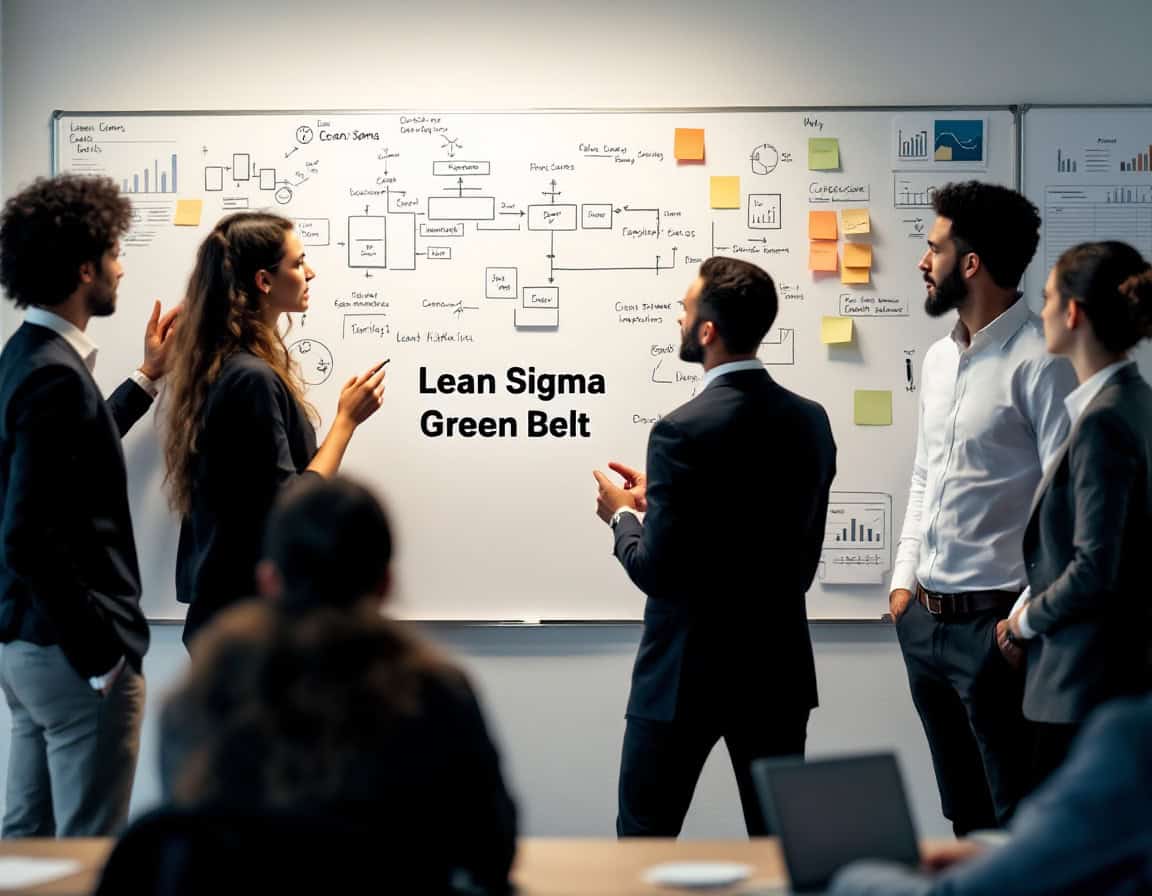
In the Lean Sigma belts methodology, the Green Belt sits between the two-day floor-level literacy of Yellow Belt and the full-time statistical practice of the ब्लैक बेल्ट: someone who runs improvement projects inside their own department while keeping their regular job, typically committing a quarter to half of their time to the work rather than all of it. Where Yellow Belt teaches recognition – naming waste, following 5S, contributing to a kaizen event someone else leads – Green Belt teaches execution: owning a DMAIC project start to finish, writing the charter, mapping the process, pulling the data, and defending root cause with something more rigorous than a hunch.

Green belt
लीन सिक्स सिग्मा में ग्रीन बेल्ट प्रमाणन परिचालन निष्पादन को सांख्यिकीय विश्लेषण के साथ एकीकृत करता है, जिससे अपव्यय में कमी और दोष प्रबंधन के बीच संबंध स्थापित होता है।

The training adds the layer Yellow Belt deliberately skips: basic inferential statistics, प्रक्रिया क्षमता indices, measurement system analysis, FMEA scoring, control charts. A Green Belt doesn’t need to derive the mathematics behind a hypothesis test, but they need to run one correctly, read the output, and know when the result changes a decision.

Inside the belt hierarchy, Green sits as the operational core: Black Belts design कार्यप्रणाली and coach across multiple projects, Master Black Belts set the program’s statistical and training standards, and Yellow Belts execute local fixes without carrying a project – Green Belts are the ones actually closing tickets on the DMAIC scoreboard, usually several a year, each with a dollar figure attached. That positioning shapes what the certification is for: it’s the level at which Lean सिक्स सिग्मा stops being a vocabulary and becomes a job function, the point where a company gets a self-sufficient project owner instead of someone who merely understands the diagrams. Within the methodology itself, Green Belt is where Lean’s waste-and-flow thinking and Six Sigma’s variation-and-defect thinking actually fuse into one discipline rather than two adjacent ones – a Green Belt project routinely opens with a value stream map and closes with a control chart, using both toolkits on the same problem because separating them stopped being useful the moment the work got real.


The Concepts & Tools to Learn in this Course:

ये ज्ञान के निकाय हैं जिनका मूल्यांकन नीचे दिए गए परीक्षण में किया जाएगा:

  • प्रोजेक्ट चार्टर: डीएमएआईसी प्रोजेक्ट शुरू होने से पहले समस्या विवरण, कार्यक्षेत्र, लक्ष्य और टीम की भूमिकाओं को परिभाषित करता है।
  • एसआईपीओसी आरेख: विस्तृत मैपिंग से पहले आपूर्तिकर्ताओं, इनपुट, प्रक्रिया, आउटपुट और ग्राहकों को उच्च स्तर पर फ्रेम करता है।
  • ग्राहक की आवाज़: शिकायतों और आवश्यकताओं को मापने योग्य विनिर्देश सीमाओं में परिवर्तित करता है
  • मापन प्रणाली विश्लेषण: विश्लेषण करने से पहले यह जांच करता है कि डेटा संग्रह विधि विश्वसनीय है या नहीं।
  • गेज आर एंड आर: माप में होने वाले बदलाव को पुर्जे, ऑपरेटर और गेज में विभाजित करता है।
  • डेटा संग्रह योजना: एक बिंदु डेटा एकत्र करने से पहले यह निर्धारित करती है कि क्या मापना है, कितनी बार मापना है, किसके द्वारा मापना है और किस गेज का उपयोग करना है।
  • केंद्रीय सीमा प्रमेय: यह बताता है कि नमूना औसत एक पूर्वानुमानित पैटर्न में क्यों स्थिर हो जाते हैं, भले ही कच्चा डेटा ऐसा न करता हो।
  • सामान्यता परीक्षण: सही सांख्यिकीय परीक्षण चुनने से पहले यह जांच करता है कि डेटा सेट बेल कर्व के अनुरूप है या नहीं।
  • परिकल्पना परीक्षण: दो स्थितियों की तुलना करते समय सहज अनुमान को एपी मान से प्रतिस्थापित करता है।
  • दो-नमूना टी परीक्षण: यह जांचता है कि क्या दो छोटे नमूनों के माध्य किसी वास्तविक कारण से भिन्न हैं।
  • एनोवा (ANOVA): एक ही परीक्षण में तीन या दो से अधिक समूहों के माध्यों की तुलना करता है।
  • ची स्क्वायर परीक्षण: यह जांच करता है कि क्या श्रेणीबद्ध परिणाम, जैसे कि शिफ्ट के अनुसार दोष का प्रकार, सार्थक रूप से भिन्न हैं।
  • सहसंबंध और सरल प्रतिगमन: यह मापता है कि एक चर दूसरे चर का कितनी मजबूती से पूर्वानुमान लगाता है।
  • प्रक्रिया क्षमता, Cp और Cpk: यह मापता है कि किसी प्रक्रिया का आउटपुट अपनी विनिर्देश सीमाओं के भीतर कितनी अच्छी तरह फिट बैठता है।
  • कंट्रोल चार्ट, एक्स बार आर और आई एमआर: समय के साथ एक प्रक्रिया को ट्रैक करता है और किसी खराबी के उत्पन्न होने से पहले ही उसे चिह्नित करता है।
  • पैरेटो विश्लेषण: समस्या के मुख्य कारणों को उनकी आवृत्ति के आधार पर क्रमबद्ध करता है, ताकि उन कुछ कारणों पर अधिक ध्यान दिया जा सके जो समस्या का सबसे बड़ा कारण बनते हैं।
  • फिशबोन आरेख: संभावित मूल कारणों को मशीन, विधि, सामग्री और मानव जैसे निश्चित श्रेणियों में वर्गीकृत करता है।
  • बहु-चर अध्ययन: किसी भी परीक्षण से पहले भिन्नता को भाग के भीतर, भागों के बीच और समय-समय पर स्रोतों में विभाजित करता है।
  • FMEA जोखिम स्कोरिंग: विफलता के प्रकारों को गंभीरता, घटना और पहचान के आधार पर रैंक करता है ताकि यह तय किया जा सके कि पहले क्या ठीक करना है।
  • सांख्यिकीय सॉफ़्टवेयर अभ्यास: परीक्षण और नियंत्रण चार्ट को मैन्युअल रूप से करने के बजाय मिनिटैब जैसे टूल में चलाएँ।
  • किसी समाधान का परीक्षण करना: पूर्णतः लागू करने से पहले छोटे पैमाने पर सुधार का परीक्षण करना और लाभ की पुष्टि करना।

Our Suggested Readings

The list below is a special selection of our original articles, tools and methodologies available on this site.

बख्शीश: the big dot at the start of each title indicates if that post/article has already been read ( ● ), or not ( ○ ). Refresh the page if necessary.

बख्शीश: the reading progress is recorded either in a cookie (if you are not logged in or no account created), or in your site profile. Use the later to be sure not to loose your progression.

As soon as you start a given article, your progress will be indicated on top of each page to help you finish and move on to the next.

नोट: for this particular course, we recommend to read the articles in that order.

Lean Sigma Green Belt :
  1. 1○काइज़ेन (निरंतर सुधार)क्रियाविधि
  2. 2○एसआईपीओसी आरेखक्रियाविधि
  3. 3○सांख्यिकीय प्रक्रिया नियंत्रण (एसपीसी) के माध्यम से गुणवत्ता को कैसे अनुकूलित किया जाएपोस्ट
  4. 4○प्रयोगों का डिज़ाइन (DOE)क्रियाविधि
  5. 5○गुणवत्ता और इंजीनियरिंग के लिए 6 अवश्य जानने योग्य सांख्यिकीय परीक्षणपोस्ट
  6. 6○विचरण विश्लेषण (एनोवा)क्रियाविधि
  7. 7○गेज आर-आर (पुनरावर्तनीयता और पुनरुत्पादनीयता)क्रियाविधि
  8. 8○विफलता मोड प्रभाव और आलोचनात्मकता विश्लेषण (FMECA) पर 101पोस्ट
  9. 9○V&V, विनिर्माण और गुणवत्ता में एक-तरफ़ा दोषों और बाहरी तत्वों को संभालनापोस्ट
  10. 10○8D समस्या-समाधान: व्यापक मार्गदर्शिकापोस्ट
  11. 11○उत्पाद मूल्य विश्लेषण अवलोकनपोस्ट
  12. 12○सत्यापन बनाम प्रमाणीकरण (V&V): अंतर क्या है और अनुसंधान एवं विकास में इनका उपयोग क्या है?पोस्ट
  13. 13○एसएमईडी विनिर्माण दक्षता के लिए डिज़ाइन का अनुकूलनपोस्ट
  14. 14○इंजीनियरिंग परिवर्तन आदेश (ECO): व्यवधान और लागत को कम करने के लिए सर्वोत्तम अभ्यासपोस्ट
  15. 15○IQ OQ PQ प्रक्रिया सत्यापन: पूर्ण सिद्धांत और व्यवहारपोस्ट

The Exam For This Course

After you are familiar with the lectures above, so as having done your own readings, we recommend attending the Exam below.

The test consists of 20 questions in random order, out of many more, to insure novelty each time. Each completely correct answer gets you 10 points. You get a full correction at the end of the test.

If the course has different levels, the current test does not include questions of lower levels, making it … hard वह level!

  • radio-buttons: only 1 correct answer must be selected
  • check-boxes: 1 or several answers must be checked (with strict all-good-or-nothing grading logic)

बख्शीश: mouse over “Hint” to get an advise for the response.

Only innovation.world members can see it below and attend it.

Exam version: 01.00.00

संबंधित पोस्ट

10वां वर्ष सालगिरह

पंजीकृत सदस्यों के लिए पूर्ण आकार की छवियाँ और डाउनलोड 100% निःशुल्क उपलब्ध हैं।