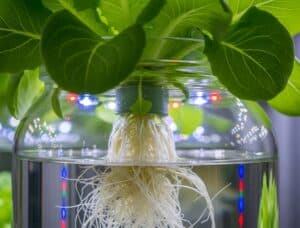
Vertical farming employs multi-layered indoor cultivation systems that maximize space efficiency and resource use. Controlled environments regulate light, temperature, humidity, and nutrient delivery through hydroponic or aeroponic methods, enabling year-round crop production. LED La iluminación adaptada a los fotorreceptores de las plantas optimiza la fotosíntesis al tiempo que reduce el consumo de energía. La integración de sensores y la automatización mejoran el control de la salud de las plantas y los parámetros de crecimiento. Los retos son el elevado gasto de capital inicial y la demanda de energía, que se compensan con la reducción del consumo de agua y la eliminación de pesticidas.
Esta es nuestra última selección de publicaciones y patentes mundiales en inglés sobre Agricultura Vertical, entre muchas revistas científicas en línea, clasificadas y centradas en agricultura de ambiente controlado, aeropónico, acuapónico, hidropónico, cultivo sin suelo, luz de crecimiento LED, técnica de película de nutrientes, cultivo en aguas profundas, flujo y reflujo, riego vertical por goteo, fogponic, fábrica de plantas, radiación fotosintéticamente activa, suministro automatizado de nutrientes, software de control climático, cosecha robotizada, apilamiento vertical, agricultura urbana, agricultura de interior, sistema de acuicultura de recirculación, bandejas de cultivo y solución nutritiva.
A Systematic Review of Augmented Reality, Digital Twins, and IoT Integration
Published on 2026-06-09 by @MIT
Abstract: AbstractThis systematic review analyzes the synergistic integration of Digital Twin (DT), Augmented Reality (AR), and Internet of Things (IoT) technologies within aquaponics systems. Following PRISMA 2020 guidelines, we identified and analyzed studies from IEEE Xplore and Scopus (2019–2024). The review reveals that while IoT is widely adopted, the integration of DT and AR remains fragmented, failing to function as a coordinated presence medium. The analysis identifies a critical theoretical ga[...]
Our summary: This review examines the integration of Digital Twin, Augmented Reality, and Internet of Things in aquaponics. It highlights the fragmented nature of current systems and the lack of unified frameworks. The paper proposes future research on modular architectures to improve efficiency and user accessibility.
Augmented Reality, Digital Twin, Internet of Things, Aquaponics
Publication
Waste heat recovery device, waste nutrient solution recycling device, crop growth device, and indoor farming microclimate management system comprising
Patent published on the 2026-04-16 in WO under Ref WO2026079911 by MIDBAR CO LTD [KR] (Park Daniel [kr])
Abstract: A waste heat recovery device according to the present invention comprises: a light-emitting unit for providing photosynthetic photon flux density (PPFD) required for the growth of crops; a collection unit for collecting waste heat which is generated by light emission from the light-emitting unit and interferes with the growth of the crops; a suction unit for sucking in first air inside the collection unit so that the waste heat is used for recycling a waste nutrient solution generated during hyd[...]
Our summary: The invention includes a waste heat recovery device that captures heat from a light-emitting unit used for crop growth. It features a collection unit to gather waste heat and a suction unit to recycle waste nutrient solutions. The system aims to optimize indoor farming microclimates for enhanced crop production.
waste heat recovery, nutrient recycling, crop growth, indoor farming
Patent
Remotely and centrally managed farm of indoor farming appliance
Patent published on the 2026-03-26 in WO under Ref WO2026063794 by DEPARTMENT OF SCIENCE AND TECH - ADVANCED SCIENCE AND TECH INSTITUTE [PH] (Aborot Jeffrey A [ph], Copino Rother Jay B [ph])
Abstract: Indoor farming appliance comprising: a growing area further comprising: a body with an opening at the front side; a misting system placed at the lowest part of the body; a plant bed placed above the misting system; a growing light panels placed the top of the body; a plurality of fans installed at the rear, left and right sides of the body; a sensor holder placed the rear side of the body and holds a light sensor, CO2 sensor and Temperature and Humidity sensor, a computer box comprising: a housi[...]
Our summary: The system is a remotely managed indoor farming appliance with a misting system and growing area. It features a computer box with microcontrollers and sensors for monitoring environmental conditions. Nutrients are delivered from a tank to the misting system, ensuring optimal plant growth.
Indoor Farming, Remote Management, Hydroponics, Sensor Integration
Patent
Method for hydroponic cultivation of leguminous plant in high-concentration carbon dioxide environment
Patent published on the 2026-03-26 in WO under Ref WO2026063186 by FUJI OIL CO LTD [JP] (Shibata Masayuki [jp])
Abstract: The present invention provides a cultivation method for obtaining, in hydroponic cultivation in an environment with a high carbon dioxide concentration of 600-5,000 ppm, leguminous plant seeds having a high protein content, without lowering the protein content in the leguminous plant seeds. In the hydroponic cultivation of a leguminous plant in an environment with a high carbon dioxide concentration, the concentration of nitrogen dissolved in a nutrient solution is adjusted to 250-400 ppm to inc[...]
Our summary: This invention describes a method for hydroponic cultivation of leguminous plants in high carbon dioxide environments. It aims to produce seeds with high protein content while maintaining yield levels. The method involves adjusting nitrogen concentration and optimizing cultivation periods for enhanced seed quality.
hydroponics, leguminous plants, carbon dioxide, protein content
Patent
Dynamic carbon sink accounting system based on multi-modal ai remote sensing monitoring and blockchain-based evidence storage
Patent published on the 2026-03-26 in WO under Ref WO2026061545 by SHENZHEN GDR CARBON CO LTD [CN] (Jiang Qunxing [cn], Lai Wenzhen [cn], Zhong Xianchen [cn], Lai Sujuan [cn], Liu Yichen [cn])
Abstract: The present invention relates to the technical field of dynamic carbon sink accounting, and specifically relates to a dynamic carbon sink accounting system based on multi-modal AI remote sensing monitoring and blockchain-based evidence storage. The system collects optical remote sensing, radar, photosynthetically active radiation and meteorological data, performs unified spatiotemporal calibration on the data, and then fuses the calibrated data by means of a cross-modal attention mechanism, so a[...]
Our summary: The system utilizes multi-modal AI remote sensing to monitor carbon sinks. It employs blockchain for secure evidence storage and smart contract functionality. The approach enhances prediction accuracy and transparency in carbon asset management.
carbon sink, remote sensing, blockchain, AI
Patent
Effects of Polypropylene Microplastics and Copper Contamination on Rice Seedling Growth
Published on 2026-02-02 by Ziwen Hao, Steven Xu, Siquan Huang, Lin Wang @MDPI
Abstract: This study investigates the effects of polypropylene microplastics (PP-MPs) and copper (Cu), applied individually and in combination, on the growth (root and shoot length, fresh and dry biomass), peroxidase (POD) activity, and Cu accumulation of rice seedlings. A hydroponic experiment was conducted with four treatments: control (CK), PP, Cu, and PP+Cu. Exposure to PP-MPs slightly promoted seedling growth, whereas Cu markedly inhibited growth and induced chlorosis. Compared with Cu alone, co-expo[...]
Our summary: This study examines the effects of polypropylene microplastics and copper on rice seedling growth. Exposure to microplastics promoted growth slightly, while copper inhibited it and caused chlorosis. Co-exposure to both substances improved shoot growth and altered antioxidant responses, highlighting the complexity of their interactions.
Microplastics, Copper, Rice Seedlings, Antioxidant Responses
Publication
Valorization of Treated Olive Mill Wastewater and Olive Pits in Hydroponic Systems for Lettuce Production
Published on 2026-02-01 by Margarida Oliveira, Renata A. Ferreira, Adelaide Almeida, Annabel Fernandes, Ftima Carvalho, Alexandra Afonso @MDPI
Abstract: Significant volumes of wastewater and solid by-products are produced by olive oil industries worldwide, posing serious environmental challenges. This study presents an innovative circular economy and environmental sustainability approach that simultaneously valorizes liquid (olive mill wastewater, OMW) and solid by-products (crushed olive pits) rom olive oil production through hydroponic lettuce cultivation. The OMW was pretreated and supplemented with nutrients (OMW-N) to create a hydroponic so[...]
Our summary: This study explores the use of treated olive mill wastewater and crushed olive pits in hydroponic systems for lettuce cultivation. The hydroponic solution showed a 100% survival rate for lettuce, despite a reduction in fresh mass. The integration of these by-products offers a sustainable method to valorize agro-industrial waste while maintaining consumer acceptance.
hydroponics, olive mill wastewater, circular economy, agro-industrial waste
Publication
A Systematic Analysis of Factors Influencing Life Cycle Assessment Outcomes in Aquaponics
Published on 2026-01-23 by Syed Ejaz Hussain Mehdi, Aparna Sharma, Suleman Shahzad, Sandesh Pandey, Fida Hussain, Woochang Kang, Sang-Eun Oh @MDPI
Abstract: Aquaponic systems are the integration of aquaculture and hydroponic systems to enhance productivity, reduce land use, and improve sustainability. This review focused on commonly used life cycle assessment (LCA) methodologies, system boundaries, and functional units used in aquaponics, standard impact categories, and identified hotspots. The scope is worldwide and encompasses a variety of aquaponic designs, fish species, and crops, illustrating the diversity of the systems examined. The analysis [...]
Our summary: This review analyzes factors affecting life cycle assessment outcomes in aquaponics. It highlights environmental advantages and challenges, including energy consumption and greenhouse gas emissions. The study recommends standardizing methodologies and considering broader impacts for improved sustainability.
Life Cycle Assessment, Aquaponics, Sustainability, Environmental Impact
Publication