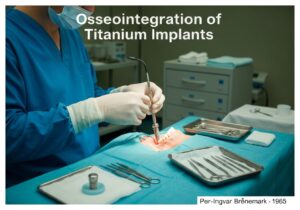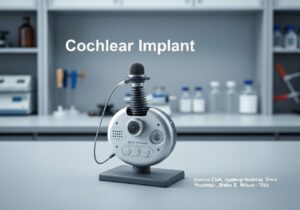
Los dispositivos electrónicos biodegradables integran materiales transitorios diseñados para descomponerse naturalmente tras su uso, minimizando así la acumulación de residuos electrónicos. Estos dispositivos emplean semiconductores orgánicos, metales biorreabsorbibles y polímeros que se disuelven en condiciones ambientales o dentro de sistemas biológicos. Sus aplicaciones abarcan desde implantes médicos que se disuelven de forma segura tras un tratamiento hasta sensores ambientales que no dejan residuos tóxicos. La selección de materiales equilibra el rendimiento con tasas de degradación controladas, garantizando la funcionalidad durante el funcionamiento y una descomposición predecible posteriormente.
Los dispositivos que se disuelven después de su uso podrían reducir los residuos electrónicos y evitar la cirugía de extracción. Los materiales están en biomateriales, uso clínico en dispositivos médicosy el ángulo de desperdicio en economía circularEl poder para ellos puede provenir de recolección de energía.
Esta es nuestra última selección de publicaciones y patentes mundiales en inglés sobre Electrónica Biodegradable, entre muchas revistas científicas online, clasificadas y centradas en electrónica transitoria, sustrato biorreabsorbible, degradación enzimática, degradación microbiana, degradación por hidrólisis, encapsulación biodegradable, fibroína de seda, nanofibra de celulosa, ácido poliláctico, polihidroxialcanoato, conductor biodegradable, semiconductor biodegradable, conductor de magnesio, PEDOT:PSS y cinética de disolución.
3d-printed fire-safe cooling pad
Patent published on the 2026-11-19 in WO under Ref WO2026239400 by BADURKAR ANAND [IN] (Badurkar Anand [in])
Abstract: A fire-safe cooling pad for electronic devices is disclosed. The pad includes a 3D- printed polylactic acid (PLA) base layer and a multi-layer inorganic fire-retardant coating on at least one major surface. The coating, based on total solids, comprises 30–50% sodium silicate, 20–40% borax, 10–30% alumina, and 5–20% kaolin clay, arranged sequentially as a sodium silicate layer, a borax layer, a kaolin clay layer, a second sodium silicate layer, an alumina layer, and a final sodium silicat[...]
Our summary: The invention is a fire-safe cooling pad for electronic devices featuring a 3D-printed PLA base and a multi-layer inorganic fire-retardant coating. The coating consists of several layers including sodium silicate, borax, alumina, and kaolin clay, enhancing fire resistance and thermal conductivity. This pad is suitable for applications in electric vehicle batteries, drones, industrial systems, and aerospace electronics.
3D printing, fire-retardant, thermal conductivity, electronic devices
Patent
Optimization of a Halophilic PHB Depolymerase for Industrial Applications
Patent published on the 2026-11-19 in US under Ref US20260365815 by KIMBERLY CLARK CO [US] (Quirk Stephen [us])
Abstract: Industrial processing systems and enzymes that can be incorporated into the systems for simultaneous degradation and decontamination of biopolymers such as polyhydroxyalkanoates. The enzymes encompass wild-type enzymes that can be incorporated into a high-salt industrial process, as well as modified enzymes, that can exhibit improved solubility kinetic, stability, and/or thermal characteristics as compared to a wild-type enzyme when incorporated into an industrial degradation/decontamination pro[...]
Our summary: The study focuses on optimizing halophilic PHB depolymerase for industrial use. It highlights the potential of wild-type and modified enzymes for degrading polyhydroxyalkanoates in high-salt environments. The methods aim to enhance the efficiency of decontaminating personal care products containing these biopolymers.
Halophilic enzymes, PHB depolymerase, industrial applications, biopolymer degradation
Patent
Hard Carbon and Method for Producing Hard Carbon
Patent published on the 2026-11-19 in US under Ref US20260365517 by NTT INC [JP] (Nohara Masaya [jp], Okubo Sho [jp], Sakamoto Shuhei [jp], Hayashi Masahiko [jp], Taguchi Hiroaki [jp], Aratake Atsushi [jp])
Abstract: Provided is a method for producing hard carbon, the method including: freezing a dispersion or gel containing cellulose nanofibers to obtain a frozen body; drying the frozen body in a vacuum to obtain a dried body; heating and carbonizing the dried body in a non-combustible atmosphere to obtain amorphous carbon derived from cellulose nanofibers; and heating the amorphous carbon in a non-combustible atmosphere while applying pressure to grow graphite crystals to obtain hard carbon derived from ce[...]
Our summary: A method for producing hard carbon involves freezing a cellulose nanofiber dispersion, followed by vacuum drying and carbonization. The amorphous carbon is then heated under pressure to form graphite crystals. This process yields hard carbon derived from cellulose nanofibers.
Hard Carbon, Cellulose Nanofibers, Carbonization, Graphite Crystals
Patent
Texture improver
Patent published on the 2026-11-19 in WO under Ref WO2026240048 by AJINOMOTO CO INC [JP] (Takahashi Kunitsugu [jp])
Abstract: The present invention provides: a texture improver which contains an acyl basic amino acid lower alkyl ester or a salt thereof and carboxymethylated cellulose nanofibers at a weight ratio (the acyl basic amino acid lower alkyl ester/the carboxymethylated cellulose nanofibers) of 0.01-0.45; a composition which contains an acyl basic amino acid lower alkyl ester or a salt thereof and carboxymethylated cellulose nanofibers at a weight ratio (the acyl basic amino acid lower alkyl ester/the carboxyme[...]
Our summary: The invention provides a texture improver with acyl basic amino acid lower alkyl ester and carboxymethylated cellulose nanofibers. The specified weight ratio of the components is between 0.01 and 0.45. The composition must contain at least 0.05 wt% of carboxymethylated cellulose nanofibers.
texture improver, acyl amino acid ester, cellulose nanofibers, composition
Patent
Methods for hematopoietic stem and progenitor cell expansion and differentiation in three-dimensional silk scaffolds and uses thereof
Patent published on the 2026-11-19 in US under Ref US20260365981 by UNIV DEGLI STUDI DI PAVIA [IT] (Balduini Alessandra [it], Di Buduo Christian Andrea [it])
Abstract: The present invention relates to silk fibroin-based scaffolds suitable for supporting the 3D culture of human hematopoietic stem and progenitor cells and/or the production of blood cells ex-vivo, and methods for producing the same.[...]
Our summary: This invention involves silk fibroin-based scaffolds for 3D culture of hematopoietic stem and progenitor cells. It supports ex-vivo production of blood cells. Methods for producing these scaffolds are also described.
hematopoietic stem cells, silk scaffolds, 3D culture, cell differentiation
Patent
Method for producing polyhydroxyalkanoates from mixed organic substrates
Patent published on the 2026-11-19 in WO under Ref WO2026239003 by DIONYMER [FR] (Charbonnier Guillaume [fr], Brege Antoine [fr], Pelletier Simon [fr], Hennebel Thomas [fr])
Abstract: The present invention relates to the field of biopolymer production. In particular, the invention relates to a method for producing polyhydroxyalkanoates (PHA s) comprising a step of enzymatic hydrolysis of a mixture of organic materials comprising: - at least one starchy organic material comprising at least 0.5 g of starch per g of dry matter, and - at least one organic material containing little or no starch comprising at most 0.4 g of starch per g of dry matter.[...]
Our summary: The invention details a method for producing polyhydroxyalkanoates (PHAs) from mixed organic substrates. It involves enzymatic hydrolysis of starchy and non-starchy organic materials. The method requires specific starch content in the organic materials used.
polyhydroxyalkanoates, enzymatic hydrolysis, biopolymer production, organic substrates
Patent
Segmental composition-dependent enzymatic degradation of poly(?-caprolactone)-based polyurethanes and poly(urethane-amide)s
Published on 2026-08-21 by Kai Cheng, Manjie He, Yu-I Hsu, Hiroshi Uyama @NATURE
Abstract: Polymer Journal, Published online: 21 August 2026; doi:10.1038/s41428-026-01239-5Tunable enzymatic degradability was achieved in poly(ε-caprolactone)-based segmented polyurethanes and poly(urethane-amide)s through segmental composition regulation. By varying soft-segment length and hard-segment chemistry, the degradation behavior of these segmented polymeric materials could be systematically tuned due to changes in microphase separation behavior and crystallinity. The established segmental comp[...]
Our summary: This study explores the tunable enzymatic degradability of poly(ε-caprolactone)-based segmented polyurethanes and poly(urethane-amide)s. The degradation behavior is influenced by variations in soft-segment length and hard-segment chemistry. Insights gained from the segmental composition-degradability relationship aid in the development of biodegradable polymers for biomedical and sustainable applications.
polycaprolactone, enzymatic degradation, segmented polyurethanes, biodegradable polymers
Publication
Fabrication of electrically conductive cellulose nanofiber scaffolds with Ag nanoparticles via post-reduction
Published on 2026-04-16 by Hiroshi Eguchi, Misato Itoi, Kenji Nagata @NATURE
Abstract: Polymer Journal, Published online: 16 April 2026; doi:10.1038/s41428-026-01177-2In this study, the fabrication of electrically conductive cellulose nanofiber (CNF) scaffolds containing highly dispersed Ag nanoparticles is reported. To preserve the dispersed state of the Ag species, a post-reduction technique was employed to prepare the CNF/Ag scaffolds. As a result, Ag nanoparticles effectively formed electrically conductive pathways throughout the CNF scaffolds. In addition, the combination of [...]
Our summary: This study reports the fabrication of electrically conductive cellulose nanofiber scaffolds with Ag nanoparticles. A post-reduction technique was used to maintain the dispersion of Ag species. The methodology allows for controlled pore structures in CNF-based composite scaffolds.
cellulose nanofibers, electrically conductive, Ag nanoparticles, post-reduction
Publication