Product Design, Manufacturing & Innovation Resources
Heim » E-Commerce-Modell vom Kunden zum Kunden (C2C)

E-Commerce-Modell vom Kunden zum Kunden (C2C)

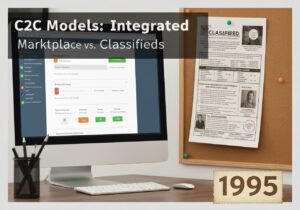
1995
Kunden-zu-Kunden-Transaktionen in einem dynamischen Online-Marktplatzumfeld.

(Abbildung dient nur zur Veranschaulichung)

Kunde-zu-Kunde (C2C) is a business model where consumers trade directly with each other, typically facilitated by a third-party online platform. This model contrasts with business-to-consumer (B2C) and business-to-business (B2B) models. The platform provider is not the seller but an intermediary that enables the transaction, creating a market for second-hand goods, handmade items, or collectibles.


Der C2C model fundamentally democratizes commerce by removing traditional intermediaries like retailers and wholesalers. In this framework, an individual can act as both a buyer and a seller. The enabling third-party platform provides the necessary infrastructure, including user profiles, search functionality, messaging systems, and often payment processing. The success of a C2C platform hinges on its ability to attract a critical mass of both buyers and sellers, a network effect where the value of the service increases as more people use it.

Historisch gesehen fanden C2C-Transaktionen in Formen wie Garagenverkäufen, Flohmärkten und Kleinanzeigen in Zeitungen statt. Das Internet revolutionierte dies, indem es geografische Barrieren beseitigte und die Transaktionskosten drastisch senkte. Frühe Plattformen wie eBay, gegründet 1995, demonstrierten das immense Potenzial dieses Modells durch die Schaffung eines globalen Handelsraums. Marktplatz Für praktisch jeden Artikel. Die Rolle der Plattform ist entscheidend; sie muss Regeln festlegen, Streitigkeiten beilegen und, was am wichtigsten ist, ein Gefühl des Vertrauens zwischen Fremden fördern, um Transaktionen zu ermöglichen.

UNESCO Nomenclature: 5312
- Betriebswirtschaftslehre

Typ

Abstraktes System

Störung

Revolutionär

Verwendung

Weitverbreitete Verwendung

Vorläufer

  • Kleinanzeigen in der Zeitung
  • Flohmärkte und Tauschbörsen
  • Garagenverkäufe
  • die Erfindung des World Wide Web
  • Entwicklung sicherer Online-Zahlungssysteme

Anwendungen

  • Online-Auktionsseiten wie eBay
  • Peer-to-Peer-Marktplätze wie Etsy
  • Kleinanzeigen-Websites wie Craigslist
  • Sozialer Handel auf Plattformen wie dem Facebook Marketplace
  • die Sharing Economy (z. B. Airbnb, Turo)

Patente:

NA

Potenzielle Innovationsideen

  • hyper-local c2c platforms for neighborhood skill-swapping
  • ai-powered c2c matching for rare collectibles based on image recognition
  • blockchain-based c2c platforms with smart contracts for automated, trustless transactions
  • subscription box services for curated second-hand goods
  • c2c platforms for trading digital assets and in-game items
  • Augmented Reality try-on features for second-hand clothing marketplaces
  • c2c rental platforms for specialized equipment (e.g., Film gear, scientific instruments)
  • gamified c2c apps that reward users for successful transactions and positive reviews
Verwandt mit: C2C, E-Commerce, Geschäftsmodell, Peer-to-Peer, Online-Marktplatz, Konsument, Transaktion, Vermittler.

Historischer Kontext

E-Commerce-Modell vom Kunden zum Kunden (C2C)

1986
1990
1992
1995
1995
2000
2008
1983
1990
1992
1994
1995
2000
2002-05-01
2010

(wenn das Datum unbekannt oder nicht relevant ist, z. B. „Strömungsmechanik“, wird eine gerundete Schätzung seines bemerkenswerten Auftretens bereitgestellt)

10. Jahr Jubiläum

Bilder in voller Größe und Downloads sind nur für registrierte Mitglieder 100% kostenlos verfügbar.

> Login <