Product Design, Manufacturing & Innovation Resources
Heim » Design for the Environment (DfE)

Design for the Environment (DfE)

1992
  • United States Environmental Protection Agency (EPA)
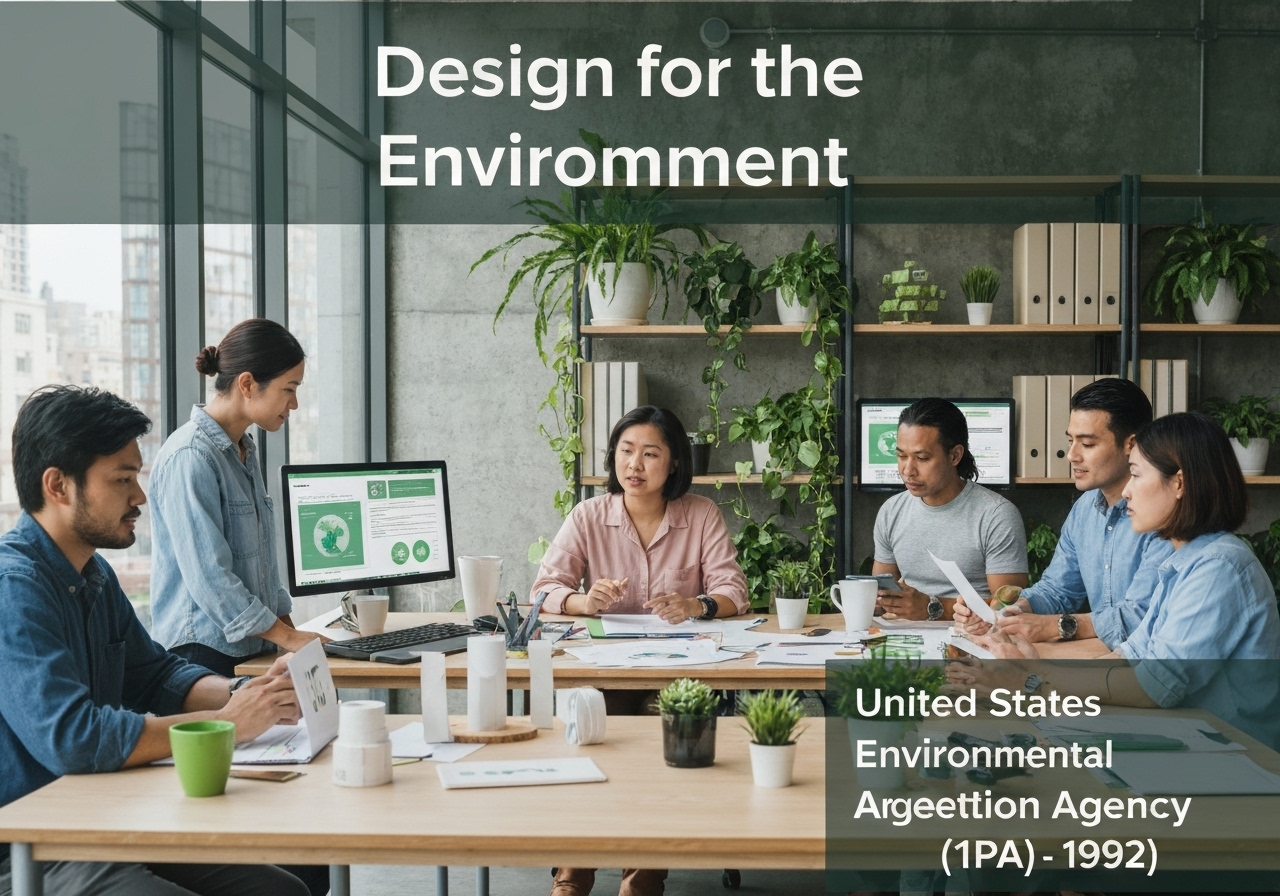
Umweltingenieure arbeiten in einem modernen Büro an Ökodesign.

(Abbildung dient nur zur Veranschaulichung)

Design for the Environment (DfE), auch bekannt als Ökodesign, is a proactive approach to product and process development that minimizes environmental and human health impacts across the entire Produktlebenszyklus. Neben den traditionellen Faktoren wie Kosten und Leistung werden Umweltaspekte bereits in den frühesten Planungsphasen berücksichtigt, um Umweltverschmutzung zu vermeiden und Ressourcen von Anfang an zu schonen.

DfE emerged from the realization that end-of-pipe pollution controls were inefficient and costly. Instead of treating waste after its creation, DfE focuses on prevention by making smarter choices during design. This holistic approach employs life-cycle thinking, evaluating everything from raw material extraction (‘cradle’) to manufacturing, use, and final disposal (‘grave’). Key principles include selecting low-impact, non-toxic, and recycled materials; minimizing overall material and energy usage during production and operation; and designing for longevity, repairability, and disassembly. By considering a product’s end-of-life at its beginning, DfE facilitates recycling, remanufacturing, and safe decomposition, forming a cornerstone of the circular economy. The novelty of DfE was its fundamental shift from a reactive to a proactive and systemic view of environmental protection within industry, embedding sustainability as a core criterion of innovation and quality, rather than an afterthought or a regulatory burden. It transformed environmental management from a compliance issue into a strategic business opportunity.

UNESCO Nomenclature: 3308
- Umwelttechnik

Typ

Abstraktes System

Störung

Wesentliche

Verwendung

Weitverbreitete Verwendung

Vorläufer

  • the environmental movement of the 1960s and 1970s
  • the concept of pollution prevention (p2)
  • Frühe Methoden zur Lebenszyklusanalyse (LCA)
  • der Bericht "Grenzen des Wachstums" (1972)
  • der brundtland-bericht "unsere gemeinsame zukunft" (1987) definiert die nachhaltige entwicklung

Anwendungen

  • epa safer choice label
  • epeat (electronic product environmental assessment tool)
  • cradle to cradle certification
  • circular economy business models
  • sustainable supply chain management

Patente:

NA

Potenzielle Innovationsideen

Aufgrund des hohen Datenverkehrs durch Web-Scraping-Bots, der derzeit mehr als 40.000 Anfragen pro Tag umfasst, ist dieser Inhalt ausschließlich Community-Mitgliedern vorbehalten.
> Anmelden < oder > Registrieren < (100% kostenlos) Zugriff darauf sowie auf alle anderen eingeschränkten Inhalte und Tools.

Related to: design for the environment, DfE, ecodesign, sustainable design, life cycle assessment, green design, circular economy, pollution prevention, product stewardship, industrial ecology.

Historischer Kontext

Design for the Environment (DfE)

1990
1990
1990
1992
1992
1993-07-22
1996
1990
1990
1990
1991
1992
1993
1994
1997

(wenn das Datum unbekannt oder nicht relevant ist, z. B. „Strömungsmechanik“, wird eine gerundete Schätzung seines bemerkenswerten Auftretens bereitgestellt)

Verwandte Erfindungen, Innovationen und technische Prinzipien

Bilder in voller Größe und Downloads sind nur für registrierte Mitglieder 100% kostenlos verfügbar.

> Login <