
Our innovation.world courses provide high-value educational resources that bridge technical design concepts with factory production constraints. Engineers, product designers, and manufacturing specialists gain immediate access to free, targeted modules covering Design for Manufacturing (DfM), ergonomics, intellectual property, and Lean Six Sigma methodologies.
Each structured path includes:
- actionable checklists,
- curated core readings,
- and progress trackers
- registered users can take final online certification exams to formally validate their technical proficiency at zero financial cost.
This educational hub accelerates career advancement by establishing a standardized operational vocabulary across design and quality management teams. Industry professionals can utilize the platform to systematically evaluate product viability, reduce production costs, and master strategic patent search techniques.
Organizations benefit from the structured Lean Six Sigma training, which equips personnel to eliminate process waste. Ultimately, the hub serves as a practical asset for technical teams focused on transitioning concepts into scalable, market-ready products.
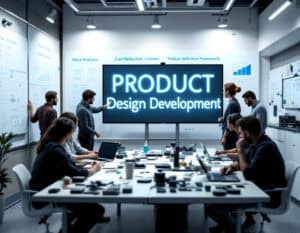
Product Design & Development – Level 2
Once a part works, a harder question follows: does the product deserve to be built and sold at all, and Level 2 shifts attention from function to that judgment. It opens with value analysis, the discipline of separating a feature’s
Quality Management & Compliance Systems
Operating inside a regulated or standards-driven manufacturing environment requires a framework this course builds step by step. It starts with the glossary and the verification-versus-validation distinction that underlies every quality record, moves through the standards frameworks governing mechanical hardware, home
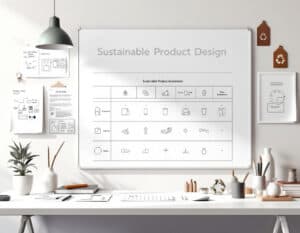
Sustainable & Circular Product Design Course
A product’s environmental footprint extends across its entire life, not only its manufacturing stage, and evaluating and reducing that full footprint is the skill this course builds. It opens with Life Cycle Assessment applied specifically to product design, compares it

UX & Human-Centered Design – Level 1
Every product presents an interface to the person using it, a software screen, a physical control panel or a printed instruction sheet, and this level builds the vocabulary and structural thinking behind all three. It starts by separating customer experience

UX & Human-Centered Design – Level 2
Knowing the vocabulary of an interface is not the same as knowing whether it works, and Level 2 supplies the testing methods that prove it, along with the psychology that explains the result. It covers formative and summative usability testing,