Product Design, Manufacturing & Innovation Resources
بيت » المكثفات الفائقة

المكثفات الفائقة

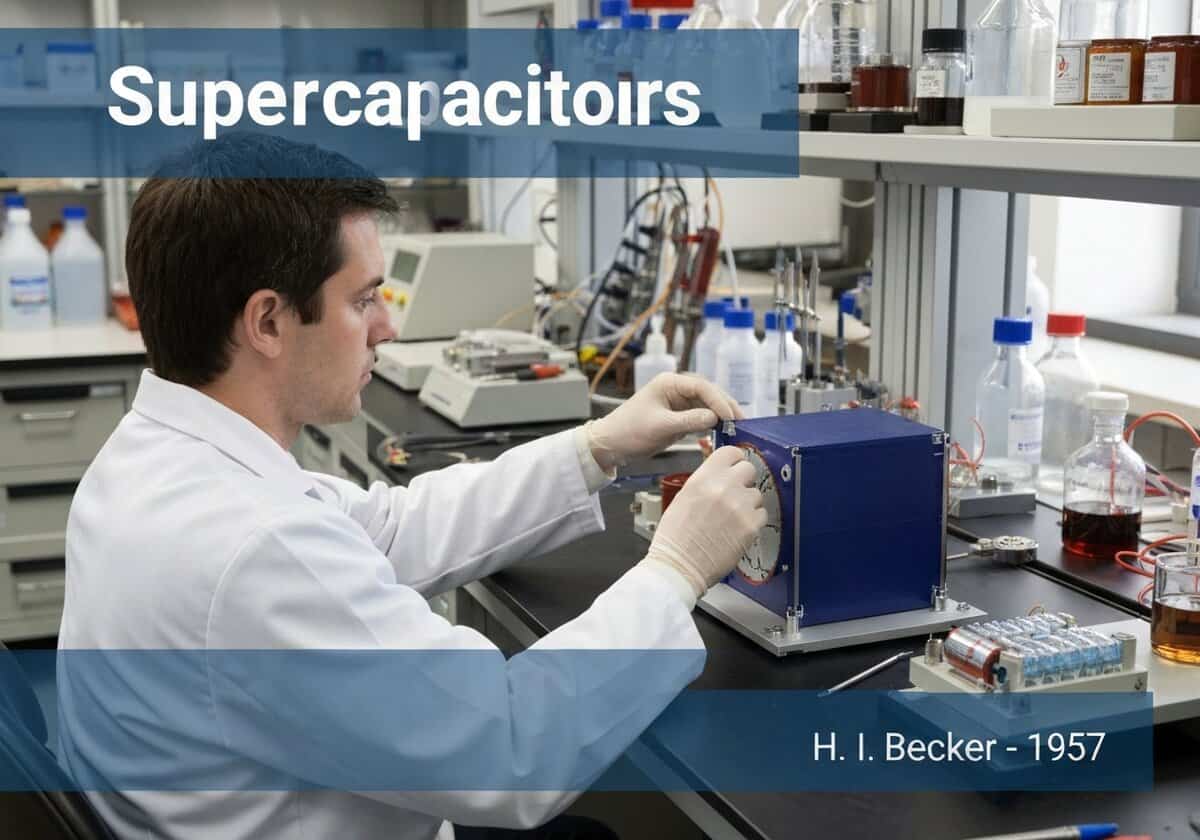
1957
  • H. I. Becker
Researcher analyzing supercapacitor in electrochemistry laboratory.

(صورة توضيحية فقط)

An electric double-layer capacitor (EDLC), or supercapacitor, stores energy electrostatically by polarizing an electrolytic solution. Unlike a conventional battery, no chemical reactions are involved. It stores energy in the electric double-layer (Helmholtz double layer) formed at the interface between a high-surface-area electrode and an electrolyte. This allows for extremely fast charging and discharging and a very long cycle life.
The core principle of an EDLC is the separation of charge at the interface between a solid conductive electrode and a liquid electrolyte. The electrodes are typically made of activated carbon or other porous materials with an extraordinarily high surface area (up to 2000 square meters per gram). When a voltage is applied, ions in the electrolyte migrate towards the electrodes of opposite polarity, forming two layers of charge—one electronic layer in the electrode surface and one ionic layer in the electrolyte. These two layers are separated by a molecularly thin insulating layer called the Helmholtz layer, which acts as the dielectric. The capacitance is given by [latex]C = frac{epsilon A}{d}[/latex], where [latex]epsilon[/latex] is the electrolyte permittivity, A is the electrode surface area, and d is the charge separation distance. The massive surface area and the minuscule charge separation distance (on the order of nanometers) result in extremely high capacitance values, thousands of times greater than conventional capacitors. This allows them to store significant amounts of energy, although their energy density is still lower than batteries. Their key advantage is power density—the ability to deliver and absorb charge very quickly.

UNESCO Nomenclature: 2203
– Physical chemistry

يكتب

Physical Device

خلل

Substantial

الاستخدام

استخدام واسع النطاق

مقدمات

  • اختراع جرة ليدن (1745)
  • Helmholtz’s theory of the electric double layer (1850s)
  • تطوير المواد الكربونية المسامية
  • المبادئ الأساسية للكهرباء الساكنة والسعة

التطبيقات

  • الكبح المتجدد في الحافلات والقطارات والرافعات
  • النسخ الاحتياطي للطاقة على المدى القصير للذاكرة في الأجهزة الإلكترونية (sram، dram)
  • استقرار الطاقة في أنظمة الطاقة المتجددة
  • مساعدة بدء التشغيل البارد للمحركات
  • ومضات الكاميرا

براءات الاختراع:

  • US2800616A

أفكار ابتكارية محتملة

  • المكثفات الفائقة الهجينة التي تجمع بين أقطاب كهربائية تشبه البطارية وأقطاب كهربائية تشبه المكثف
  • أقطاب كهربائية تعتمد على الجرافين لتحقيق مساحة سطح وموصلية أعلى
  • المكثفات الفائقة الهيكلية المدمجة في ألواح هيكل السيارة
  • micro-supercapacitors for powering iot sensors and wearable tech
  • تحسين الإلكتروليت لدرجات حرارة تشغيل أوسع وجهد أعلى
  • المكثفات الفائقة المرنة والقابلة للتمدد
  • الإلكتروليتات النشطة للأكسدة والاختزال (المكثفات الكاذبة) لزيادة كثافة الطاقة
  • المكثفات الفائقة القائمة على الخيوط المنسوجة في المنسوجات
  • المكثفات الفائقة الشفافة للنوافذ والشاشات الذكية
  • المكثفات الفائقة ذاتية الشفاء
Related to: supercapacitor, EDLC, ultracapacitor, electric double-layer, Helmholtz layer, activated carbon, power density, regenerative braking, electrostatic storage, fast charging.

السياق التاريخي

المكثفات الفائقة

1950
1950
1950
1957
1957
1959-11
1960
1950
1950
1950
1950
1957
1958
1960
1960

(إذا كان التاريخ غير معروف أو غير ذي صلة، على سبيل المثال "ميكانيكا الموائع"، يتم توفير تقدير تقريبي لظهوره الملحوظ)

أحدث الإضافات

أهم المنشورات والمقالات

أفضل الأدوات الأصلية

السنة العاشرة عيد

الصور والتنزيلات بالحجم الكامل متاحة فقط، ومجانية تمامًا، للأعضاء المسجلين.