Product Design, Manufacturing & Innovation Resources
بيت » The “Big Five” Mass Extinctions

The “Big Five” Mass Extinctions

1982
  • David M. Raup
  • Jack Sepkoski
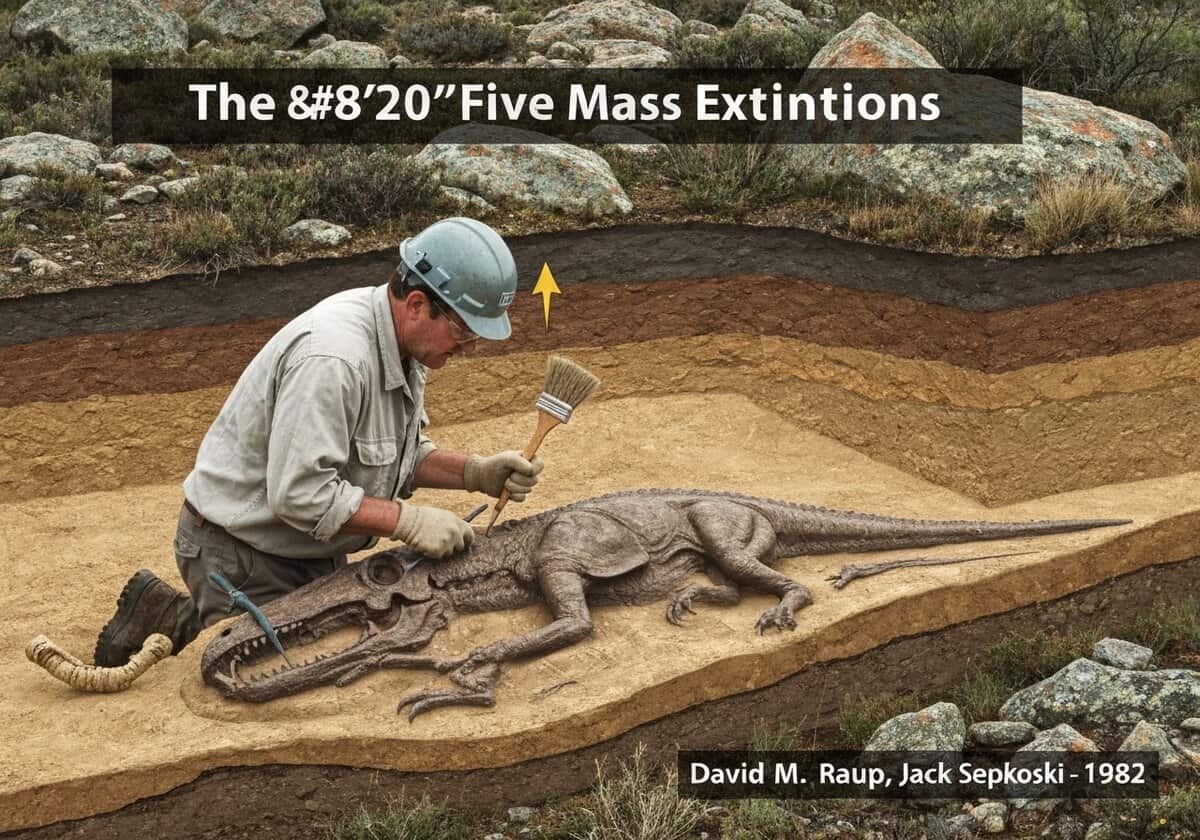
Paleontologist excavating dinosaur fossils in geological layers illustrating mass extinctions.

(صورة توضيحية فقط)

The “Big Five” are five major extinction events in Earth’s history where over 75% of species disappeared in a geologically short interval. Identified by Jack Sepkoski and David M. Raup, they are the Ordovician–Silurian, Late Devonian, Permian–Triassic, Triassic–Jurassic, and Cretaceous–Paleogene events. These events profoundly reshaped the biosphere, creating opportunities for new life forms to radiate.

The concept of the “Big Five” mass extinctions emerged from statistical analysis of the fossil record, primarily marine invertebrates, by paleontologists David M. Raup and Jack Sepkoski in a 1982 paper. They compiled a massive database of fossil genera, which allowed them to track biodiversity levels through the Phanerozoic Eon. Their analysis revealed that while extinction is a continuous process (background extinction), there were five distinct intervals where the rate of extinction spiked dramatically. These are: 1) The End-Ordovician (c. 443 Ma), which saw the demise of about 85% of marine species, likely due to rapid glaciation and subsequent sea-level fall. 2) The Late Devonian (c. 372 Ma), a prolonged crisis that eliminated about 75% of species, possibly linked to anoxia and volcanism. 3) The End-Permian or “Great Dying” (c. 252 Ma), the most severe, wiping out over 95% of marine species and 70% of terrestrial vertebrate species, strongly associated with the Siberian Traps volcanism. 4) The End-Triassic (c. 201 Ma), which eliminated around 80% of species, paving the way for dinosaurs to dominate, linked to the Central Atlantic Magmatic Province. 5) The End-Cretaceous (K-Pg) (حوالي 66 مليون سنة)، والذي تسبب بشكل مشهور في موت الديناصورات غير الطائرة ونحو 76٪ من جميع الأنواع، ويعزى ذلك إلى اصطدام كويكب تشيكسولوب.

كان هذا الإطار ثوريًا لأنه حوّل التركيز من التنافس الدارويني التدريجي إلى دور الأحداث الكارثية في تشكيل تاريخ الحياة. وقد أبرز أن عمليات التطور الإشعاعي الكبرى، مثل ظهور الثدييات بعد حدث انقراض العصر الطباشيري-الباليوجيني، كانت غالبًا ما تعتمد على الفرص البيئية التي أتاحتها الانقراضات الجماعية. يوفر نموذج "العوامل الخمسة الكبرى" أساسًا حاسمًا لتقييم مدى خطورة أزمة التنوع البيولوجي الحالية التي تسبب بها الإنسان، والتي غالبًا ما تُسمى "الانقراض السادس".

UNESCO Nomenclature: 2508
– Geology

يكتب

نظام مجرد

خلل

أساسيات

الاستخدام

استخدام واسع النطاق

مقدمات

  • Georges Cuvier’s theory of catastrophism
  • Charles Lyell’s principles of uniformitarianism
  • Charles Darwin’s theory of evolution by natural selection
  • تطور المقياس الزمني الجيولوجي
  • التطورات في تقنيات التأريخ الإشعاعي

التطبيقات

  • يوفر إطارًا لدراسة أسباب وعواقب الانقراضات الجماعية
  • informs modern conservation biology by providing historical context for التنوع البيولوجي loss
  • يوجه البحث في علم الحفريات من خلال تسليط الضوء على فترات رئيسية من الدورة الحيوية
  • تُستخدم في نمذجة المناخ لفهم نقاط التحول في أنظمة الأرض

براءات الاختراع:

NA

أفكار ابتكارية محتملة

  • نظام الذكاء الاصطناعي للتنبؤ بمخاطر الانقراض في المستقبل استنادًا إلى الأنماط السببية الخمسة الكبرى
  • شبكة مراقبة عالمية للكشف المبكر عن نقاط التحول في النظم البيئية الرئيسية
  • محاكاة الواقع الافتراضي التعليمية للأرض خلال كل من الأحداث الخمسة الكبرى
  • علم الأحياء الاصطناعي projects to engineer resilient species capable of surviving predicted future environmental stressors
  • تطوير تقنيات الهندسة الجيولوجية مع ضمانات بيئية مدمجة تم تعلمها من محفزات الانقراض السابقة
  • a public “biodiversity health index” modeled on stock market indices
  • deep-sea robotic missions to search for “living fossils” that survived past extinctions
  • أرشيف وراثي لجميع الأنواع المهددة بالانقراض المعروفة، المحفوظة بالتبريد
  • الأطر السياسية للتعاون الدولي خلال الأزمات البيئية العالمية
  • نماذج مناخية متقدمة تتضمن حلقات التغذية الراجعة الحيوية التي لوحظت خلال الانقراضات الماضية
Related to: big five, mass extinction, Raup, Sepkoski, Phanerozoic, biodiversity loss, paleontology, Ordovician, Permian, Cretaceous.

السياق التاريخي

The “Big Five” Mass Extinctions

1975
1980
1980
1982
1990
1990
1990
1970
1978
1980
1980
1982
1990
1990
1990

(إذا كان التاريخ غير معروف أو غير ذي صلة، على سبيل المثال "ميكانيكا الموائع"، يتم توفير تقدير تقريبي لظهوره الملحوظ)

أحدث الإضافات

أهم المنشورات والمقالات

أفضل الأدوات الأصلية

السنة العاشرة عيد

الصور والتنزيلات بالحجم الكامل متاحة فقط، ومجانية تمامًا، للأعضاء المسجلين.