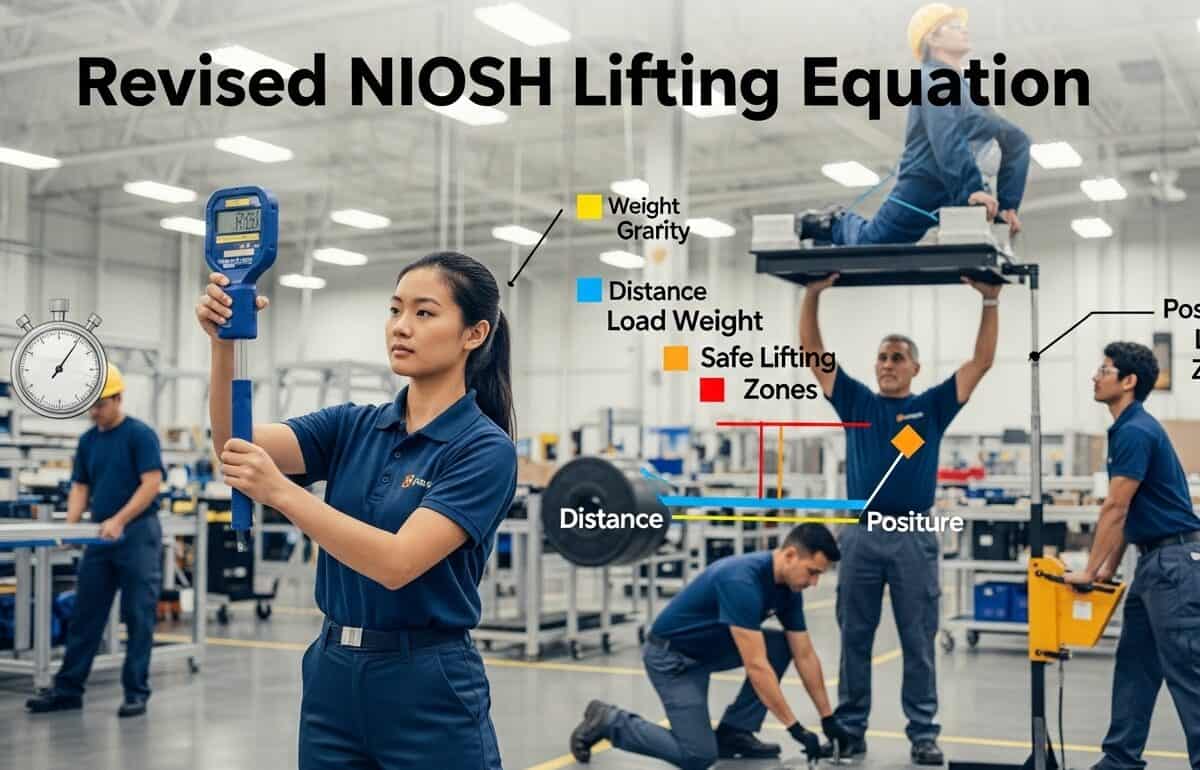
Overexertion injuries account for approximately 33% of all worker injuries, highlighting the need for effective lifting assessment tools such as the Revised NIOSH Lifting Equation. This comprehensive article will detail into the purpose and background of this equation, breaking down its individual components to provide a clearer understanding of how it enhances safety across varied industries such as manufacturing, healthcare, and construction. Readers will gain insights into data collection and measurement techniques for accurate assessments, how to calculate the Recommended Weight Limit (RWL), and the importance of the Lifting Index (LI) in تقييم المخاطر. We also will discuss implementing مريح controls and redesigning tasks to elevate workplace safety, while also addressing the limitations and scope of this equation in practical applications.
النقاط الرئيسية

- معادلة NIOSH المعدلة تُحسّن تقييم مهام الرفع بكلتا اليدين.
- تشمل المكونات الرئيسية الوزن والمسافة والوضعية.
- يساهم جمع البيانات الدقيقة في تحسين تقييمات الرفع.
- يضمن حساب RWL حدود الرفع الآمنة لكل مهمة.
- يشير مؤشر الرفع إلى مستويات المخاطر التي يتعرض لها العمال.
- Task redesign and flows redesign is a يجب to mitigate ergonomic risks effectively.
نبذة عن معهد NIOSH
المعهد الوطني للسلامة والصحة المهنية (NIOSH) وكالة فيدرالية في الولايات المتحدة الأمريكية تُعنى بالبحث وتقديم التوصيات للحد من الإصابات والأمراض والوفيات المرتبطة بالعمل. تأسس المعهد بموجب قانون السلامة والصحة المهنية لعام 1970، ويعمل كجزء من مراكز السيطرة على الأمراض والوقاية منها (CDC)، وهو ملتزم بضمان بيئات عمل آمنة وصحية لجميع الموظفين. يُسهم المعهد في تطوير رؤى جديدة في مجال السلامة والصحة المهنية، ويُطبّق هذه المعرفة لتعزيز حماية العمال. يضم المعهد فريقًا متنوعًا من أكثر من 1300 متخصص، من بينهم خبراء في مجالات مثل علم الأوبئة، والطب، والصحة المهنية، والسلامة.
خلفية معادلة المعهد الوطني للسلامة والصحة المهنية (NIOSH)
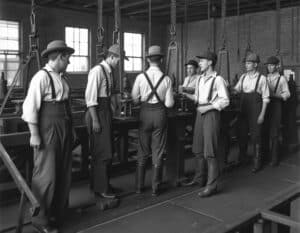
The Revised NIOSH Lifting Equation was developed to provide a scientifically grounded method for evaluating and predicting the risk of injury associated with manual lifting tasks in various work environments. This evolution reflects advancements in ergonomic research, emphasizing not only the weight lifted but also factors such as lifting height, distance, frequency, and duration.
قبل التعديل، كانت معادلة الرفع الأصلية الصادرة عن المعهد الوطني للسلامة والصحة المهنية (NIOSH) تُنتقد بشدة لتبسيطها المفرط لمهام الرفع. وتعالج المعادلة المُحدثة هذا الأمر من خلال تضمين مجموعة من المتغيرات التي تؤثر على ظروف الرفع، مما يُحسّن دقة التنبؤ بالمخاطر المحتملة.
لقد ثبت أن استخدام هذا النهج الشامل يقلل من إصابات العمل بنسبة تصل إلى 25٪ في الصناعات التي تطبق تقييمات بيئة العمل بناءً على هذه المعادلة.
نصيحة: conducting a thorough ergonomic assessment using the Revised NIOSH Lifting Equation before implementing lifting tasks can significantly mitigate injury risks and enhance worker efficiency.
معادلة الرفع المعدلة للمعهد الوطني للسلامة والصحة المهنية (NIOSH) هي أداة تستخدم لتقييم مخاطر إصابات أسفل الظهر المرتبطة بمهام الرفع اليدوي بكلتا اليدين.
تقوم المعادلة بحساب الحد الأقصى للوزن الموصى به (RWL)، وهو الحد الأقصى للوزن الذي يمكن لمعظم العمال الأصحاء رفعه خلال نوبة عمل مدتها 8 ساعات دون زيادة خطر إصابتهم باضطرابات العضلات والعظام في أسفل الظهر.
المعادلة ومكوناتها
تُقدّم معادلة الرفع المُعدّلة الصادرة عن المعهد الوطني للسلامة والصحة المهنية (NIOSH) صيغةً لحساب الحد الأقصى الموصى به للوزن (RWL) لمهام الرفع بكلتا اليدين as الناتج الأساسي للمعادلة. تتضمن المعادلة عوامل متعددة تؤثر على قدرة الرفع، مما يتيح دقة أكبر في التقييمات المريحة. وتُعرَّف الصيغة الأساسية لـ RWL كما يلي:
المعادلة هي كالتالي: [latex]RWL = LC*HM*VM*DM*AM*FM*CM[/latex]
ومن المقاييس ذات الصلة مؤشر الرفع (LI): هو نسبة الوزن الفعلي المرفوع إلى الوزن المرجعي للرفع. ويُعتبر مؤشر الرفع الذي يبلغ 1.0 أو أقل آمناً.
The value of each multiplier ranges from 0 to 1 and is determined using tables that correspond to the measured value of each variable. Here is a breakdown of each parameter in the equation:
| Parameter | وصف | Units |
LC Load Constant | This is the maximum recommended weight for lifting under ideal conditions. | 23 kg (or 51 lbs) |
HM Horizontal Multiplier | This factor accounts for the horizontal distance of the hands from the midpoint between the ankles: the horizontal distance (H) is the distance from the point projected on the floor directly below the midpoint of the hands grasping the object, to the midpoint of the ankles. | The horizontal distance (H) is measured in centimeters. |
VM Vertical Multiplier | This factor is determined by the vertical height of the hands from the floor at the start of the lift. | The vertical distance (V) is measured in centimeters. |
DM Distance Multiplier | This multiplier accounts for the vertical distance the load travels during the lift, i.e. the vertical distance the hands move between the start and end of the lift. | The vertical travel distance (D) is measured in centimeters. |
AM Asymmetric Multiplier | This factor is determined by the degree of twisting or turning of the body during the lift: The asymmetry angle (A) is the angle between the asymmetry line and the sagittal line. The asymmetry line is the horizontal line that joins the midpoint between the ankles and the point projected on the floor directly below the midpoint of the hands grasping the object. The sagittal line is the line going through the midpoint between the ankles and extending straight forward from the body. | The angle of asymmetry (A) is measured in degrees. |
FM Frequency Multiplier | This factor accounts for the frequency of lifting, including the number of lifts per minute and the duration of the lifting task.The lifting frequency (F) is the average number of lifts per minute over a 15-minute period. | This is determined by the number of lifts per minute and the duration of the work in hours. |
CM Coupling Multiplier | This multiplier assesses the quality of the hand-to-object grip (coupling). The coupling quality is determined by the type of grip, surface, shape and size on the object. A “good” coupling has handles or cut-outs, a “fair” coupling might involve gripping a box with no handles, and a “poor” coupling would be an awkward, bulky, or slippery object. | The quality of the grip is classified as “good,” “fair,” or “poor”. |
The NIOSH ratio to use
Horizontal Multiplier (HM):
| H = Horizontal Distance (cm) | HM Factor |
|---|---|
| 25 or less | 1.00 |
| 30 | 0.83 |
| 40 | 0.63 |
| 50 | 0.50 |
| 60 | 0.42 |
Vertical Multiplier (VM):
| V = Starting Height (cm) | VM Factor |
|---|---|
| 0 | 0.78 |
| 30 | 0.87 |
| 50 | 0.93 |
| 70 | 0.99 |
| 100 | 0.93 |
| 150 | 0.78 |
| 175 | 0.70 |
| >175 | 0.00 |
Distance Multiplier (DM):
| D = Lifting Distance (cm) | DM Factor |
| 25 or less | 1.00 |
| 40 | 0.93 |
| 55 | 0.90 |
| 100 | 0.87 |
| 145 | 0.85 |
| 175 | 0.85 |
| >175 | 0.00 |
Asymmetric Multiplier (AM):
| A = Angle (degrees) | AM Factor |
| 90° | 0.71 |
| 60° | 0.81 |
| 45° | 0.86 |
| 30° | 0.90 |
| 0° | 1.00 |
Frequency Multiplier (FM):
| F = Time Between Lifts | FM Factor | |||
|---|---|---|---|---|
| Lifting While Standing: | OR Lifting While Stooping: | |||
| One Hour or Less | Over One Hour | One Hour or Less | Over One Hour | |
| 5 min | 1.00 | 0.85 | 1.00 | 0.85 |
| 1 min | 0.94 | 0.75 | 0.94 | 0.75 |
| 30 sec | 0.91 | 0.65 | 0.91 | 0.65 |
| 15 sec | 0.84 | 0.45 | 0.84 | 0.45 |
| 10 sec | 0.75 | 0.27 | 0.75 | 0.27 |
| 6 sec | 0.45 | 0.13 | 0.45 | – |
| 5 sec | 0.37 | – | 0.37 | – |
Coupling Multiplier (CM): (usually one of the low hanging fruit)
| C = Grasp | CM Factor: | |
|---|---|---|
| Standing | Stooping | |
| Good (handles) | 1.00 | 1.00 |
| Fair | 1.00 | 0.95 |
| Poor | 0.90 | 0.90 |
Source of these tables: Canadian Centre for Occupational Health And Safety (CCOHS), based on original NIOSH tables
Summary: close to the body, the most in front as possible, as similar height as possible to the height of hands when elbows is at 90°.
As the lift distance and body orientation change, the distance multiplier (DM) is applied to recognize the potential risk associated with how far loads are moved. This factor is essential in environments like warehouses, where heavy loads may need to be moved over varying distances.
نصيحة: when applying the equation, consistently gather accurate data for each lifting condition to ensure reliability in assessment outcomes and ergonomic interventions.
NIOSH Example: an Assembly Line Worker
سيناريو: a 30-year-old male worker is standing on an assembly line. One of is his task is to lift a car battery from a conveyor belt and place it into a chassis. He has been performing this task for the last two hours.
Applied Values

- Load Weight (L): the car battery weighs 18 kg.
- Load Constant (LC): the maximum recommended weight for lifting under ideal conditions is a constant 23 kg.
- Horizontal Location (H): the worker reaches out to pick up the battery. The horizontal distance from the midpoint between his ankles to his hands is 40 cm. The corresponding Horizontal Multiplier (HM) for 40 cm is 0.63.
- Vertical Location (V): the conveyor belt is at a height of 70 cm from the floor. This is the starting height of the lift. The corresponding Vertical Multiplier (VM) for 70 cm is 0.96.
- Vertical Travel Distance (D): the worker lifts the battery from the conveyor belt (70 cm) and places it into the chassis at a height of 110 cm. The vertical travel distance is 110 cm – 70 cm = 40 cm. The corresponding Distance Multiplier (DM) for 40 cm is 0.93.
- Asymmetric Angle (A): the worker has to twist his body slightly to move the battery from the conveyor to the chassis. The angle of the twist is 30 degrees. The corresponding Asymmetric Multiplier (AM) for 30 degrees is 0.90.
- Lifting Frequency (F): the assembly line is moving at a steady pace, and the worker performs this lift 4 times per minute. Since he has been working for 2 hours, the Frequency Multiplier (FM) for 4 lifts/minute over a duration of more than 1 hour but less than 2 hours is 0.84.
- Coupling (C): the car battery has built-in handles, which allows for a firm and comfortable grip. This is considered a “Good” coupling. The corresponding Coupling Multiplier (CM) for a good grip is 1.00.
Calculation: using the formula above with these values, the Recommended Weight Limit (RWL) is RWL = 23 kg x 0.63 x 0.96 x 0.93 x 0.90 x 0.84 x 1.00 = 9.79 kg
Next, the Lifting Index (LI) is calculated to assess the risk of the lifting task: [latex]LI = \frac{\text{Load Weight (L)}}{\text{Recommended Weight Limit (RWL)}}[/latex]
LI = 18 kg / 9.79 kg = 1.84
Conclusion of this Study
The Recommended Weight Limit (RWL) for this specific lifting task is 9.79 kg. This is the maximum weight that a healthy worker could safely lift under these exact conditions. The actual weight of the battery is 18 kg, which is significantly higher than the RWL.
The Lifting Index (LI) is 1.84. A Lifting Index greater than 1.0 indicates that the task is hazardous and poses an increased risk of low back injury to the worker.
An LI of 1.84 suggests a high risk, and that the task should be redesigned.
Possible modifications could include
By decreasing priority order (our view):
- Bringing the object closer to the worker to reduce the horizontal distance, decreasing the twist angle, and reducing the delta height: bench بيئة العمل, done at start if possible, once for all.
- Implementing mechanical lifting aids: likely possible. Either special tools, or polyvalents tools, depending on the line and factory.
- Reducing the lifting frequency: possible, but as reducing the production is probably not the goal, that means spreading among more workers; but better suppress the problem at the root rather than creating special shifts and spreading a bad task to many. Note that in very critical and urgent cases, there may be no other option as a last resort (Tchernobyl, Fukushima …).
- Reducing the weight of the object: probably not an easy option here, if at all, unless redesign the product or the car in the first place -what should have been done but we are in a too-late-scenario here-.

Data Collection and Measurement Techniques for Ergonomic Study

Data collection and measurement, as in most ergonomic studies, involve the systematic observation of lifting activities to identify critical parameters such as weight, height, distance, and the frequency of the lift. Real-time observations can be recorded through direct monitoring or by employing tools such as video analysis, which allows for precise measurements of body الميكانيكا during lifting. Factors such as grip type and load characteristics should also be noted, as they affect ergonomic risks. Accurate documentation is paramount to ensure comprehensive assessments.
| Measurement Method | الايجابيات | سلبيات |
|---|---|---|
| Video Analysis | Highly accurate; visual feedback | Time-consuming; requires software |
| Force Gauges | Direct weight measurement | Limited to point of lift; user handling |
| Surveys | Captures subjective feedback | Potential bias in responses |
| Accelerometers | Tracks body movement dynamically | Requires calibration; may need expertise |
Surveys can supplement these efforts by gathering worker feedback on perceived exertion and discomfort levels.
The evaluation process must quantify fatigue, which can significantly influence lifting capabilities. Tools such as the Borg Rating of Perceived Exertion Scale provide valuable insights into this aspect. A common recommendation is to track lifting activities over a set period, for instance, analyzing a week’s worth of lifting to identify trends and peak fatigue periods. Implementing this empirical approach leads to more informed decisions regarding workload adjustments.
نصيحة: in high volumes industries (consumer goods, car industry …) integrating automated data logging systems can streamline the tracking process, reducing human error and improving overall data reliability.
Next Steps
A calculated LI value greater than 1 signifies that the lifting conditions present a potential risk for the worker, necessitating further assessment and interventions. For instance, in warehouse environments, lifts with an LI above 3 are considered high-risk, potentially leading to musculoskeletal disorders if not addressed.
Risk assessment strategies must incorporate both individual and task-related factors. Variables such as the worker’s experience, body mechanics, and environmental conditions must be considered. Employers should also monitor aggregate data to identify trends, such as increased injury reports linked to specific tasks or loads. By analyzing these datasets, corrective actions can be prioritized effectively.
نصيحة: conduct regular ergonomic assessments and يخطب with employees for continuous improvement in lifting methods.
A full ergonomic study is beyond the scope of this article, but common correctives measures include:
- organizing the circuit of parts vs workers position (spaghettis diagram among other flow methods).
- ergonomic equipment such as adjustable lift tables or hoists minimizes the need to lift heavy objects.
- training programs play a significant role in enhancing employee awareness and adherence to safe lifting practices. Employees should be educated not only on how to lift correctly but also on recognizing when to seek assistance or use equipment.

Limitations of the Revised NIOSH Lifting Equation
The Revised NIOSH Lifting Equation provides a guideline for lifting tasks, but it does have limitations that vary across different industries. This equation primarily focuses on straightforward lifting scenarios without considering dynamic conditions such as lifting from awkward body postures, the presence of multiple lifts, or the need for frequent changes in task orientation. For example, in the healthcare sector, the shift from lifting weights directly to transferring patients with varying sizes complicates the applicability of the equation, potentially leading to higher injury rates.
The equation assumes ideal conditions that may not always be present in various settings. For instance, construction environments typically involve uneven surfaces and shifting loads. As a result, the application of the Revised NIOSH Lifting Equation becomes less certain in these contexts.
خاتمة

The significant statistic that overexertion injuries account for approximately 33% of all worker injuries underscores the pressing need for effective lifting assessment tools, such as the Revised NIOSH Lifting Equation. By providing a structured framework for evaluating and understanding lifting tasks across a variety of industries -ranging from manufacturing to healthcare- the equation serves as a robust guide in promoting worker safety and reducing injury risks. Through careful data collection, accurate weight limit calculations, and thoughtful implementation of ergonomic controls, organizations can significantly enhance the safety and well-being of their employees during manual lifting operations.
Incorporating the Revised NIOSH Lifting Equation into workplace practices is not just about compliance; it’s a commitment to a safer environment for all workers involved, which should be the number #1 priority in any company, and ultimately leading to lower injury rates and improved productivity.
التعليمات
ما هو الغرض من معادلة الرفع المعدلة الصادرة عن المعهد الوطني للسلامة والصحة المهنية (NIOSH)؟
تُعدّ معادلة الرفع المُعدّلة الصادرة عن المعهد الوطني للسلامة والصحة المهنية (NIOSH) أداةً تُستخدم لتقييم مخاطر إصابات الظهر الناتجة عن مهام الرفع. وتُحدّد هذه المعادلة حدود الرفع الآمنة، والمعروفة باسم الحدّ الأقصى الموصى به للوزن (RWL)، للوقاية من اضطرابات الجهاز العضلي الهيكلي المرتبطة بالعمل. كما تُشكّل هذه المعادلة دليلاً لتصميم وتحسين سلامة مهام الرفع اليدوي في مكان العمل.
كيف يتم حساب الحد الأقصى الموصى به للوزن (RWL)؟
يُقدّم الحد الأقصى للوزن الموصى به (RWL) إرشاداتٍ حول أقصى وزن يُمكن للعامل رفعه لتقليل مخاطر الإصابة. ويتم حساب هذا الحد بضرب ثابت الحمل في ستة مُعاملات مُختلفة. تُمثّل هذه المُعاملات عوامل الخطر المُتعددة المُرتبطة بالرفع، مثل المسافة الأفقية والرأسية للرفع، وتكرار الرفع، وعدم تناسق الرفع.
ما هو مؤشر الرفع (LI) وكيف يتم استخدامه في تقييم المخاطر؟
مؤشر الرفع (LI) هو أداة توفر تقديرًا نسبيًا لمستوى الجهد البدني ضغط وخطر الإصابة المرتبط برفع الأشياء يدويًا. يُحسب هذا المؤشر بقسمة الوزن الفعلي للشيء المرفوع على الحد الأقصى الموصى به للوزن. يُعتبر مؤشر الرفع بقيمة 1.0 أو أقل آمنًا، بينما تشير القيمة الأكبر من 1.0 إلى زيادة خطر الإصابة لبعض العمال، حيث يزداد خطر الإصابة مع ارتفاع قيمة مؤشر الرفع.
ما هي حدود ونطاق معادلة الرفع المعدلة الصادرة عن المعهد الوطني للسلامة والصحة المهنية (NIOSH)؟
تتميز معادلة الرفع المُعدّلة الصادرة عن المعهد الوطني للسلامة والصحة المهنية (NIOSH) بنطاق محدد وعدة قيود: فهي مصممة لتقييم مخاطر مهام الرفع بكلتا اليدين، ولكنها لا تنطبق على الرفع بيد واحدة، أو الرفع أثناء الجلوس أو الركوع، أو الحمل والدفع والسحب. تفترض المعادلة أن الرفع هو النشاط الرئيسي في العمل، ولا تأخذ في الحسبان استهلاك الطاقة الكبير في الأنشطة الأخرى. إضافةً إلى ذلك، لا يمكن تطبيق المعادلة في البيئات ذات درجات الحرارة أو الرطوبة غير الملائمة، كما أنها لا تراعي خصائص العامل الفردية أو العوامل البيئية.
قراءات ذات صلة
- هندسة العوامل البشرية: فهم كيفية تأثير القدرات والقيود البشرية على التصميم وتنفيذ المهام.
- أساليب تحليل المهام: إجراء فحص منهجي للمهام لتحديد المخاطر وتحسين السلامة.
- أدوات تقييم وضعية الجسم: تقنيات التقييم لتحديد المخاطر المريحة المتعلقة بوضعيات الجسم أثناء الرفع.
- تقنيات قياس القوة: طرق لتحديد قوى الرفع ومقارنتها بالعتبات المحددة.
- Workstation design principles: إرشادات لإنشاء محطات عمل تعزز الرفع الآمن وتقلل من خطر الإصابة.
- عمليات تحديد المخاطر: إجراءات التعرف على مخاطر الرفع المحتملة في أماكن العمل.
- برامج التدريب على بيئة العمل المريحة: مبادرات تعليمية تهدف إلى توعية الموظفين بممارسات الرفع الآمن.
- تصميم المعدات وفقًا لمبادئ بيئة العمل: تصميم الأدوات والآلات التي تقلل من الجهد البدني أَضْنَى أثناء مهام الرفع.
- Job rotation strategies: تطبيق نظام يقوم فيه العمال بتبديل المهام لتقليل إصابات الإجهاد المتكرر - عندما لا يكون التحسن ممكناً في المقام الأول -
- التحليل الإحصائي في بيئة العمل: استخدام الأساليب الإحصائية لتقييم تأثير الرفع على صحة وسلامة العمال.
- أنظمة الإبلاغ عن الإصابات: أطر عمل لتوثيق وتحليل الإصابات المرتبطة بالرفع بهدف إحداث تحسينات.
- تطوير ثقافة السلامة: تعزيز بيئة تنظيمية تعطي الأولوية للسلامة والاعتبارات المريحة.
- النماذج الأولية والمحاكاة: استخدام النماذج أو البرامج لاختبار وتحسين الحلول المريحة قبل التنفيذ الكامل.
- التصنيع الرشيق التقنيات: المنهجيات التي تهدف إلى تقليل الهدر، بما في ذلك التحسينات المريحة في عمليات الرفع.
- المراقبة الصحية المهنية: المراقبة المستمرة لصحة العمال للكشف عن تأثير مهام الرفع بمرور الوقت.
External Links on Revised NIOSH Equation
المعايير الدولية
(حرك الرابط لرؤية وصفنا للمحتوى)
مسرد المصطلحات المستخدمة
Contract Manufacturer (CM): شركة تُنتج سلعًا نيابةً عن شركة أخرى، وعادةً ما تتبع مواصفات تصميم وجودة محددة. يتيح هذا الترتيب للشركة المُوظِّفة التركيز على كفاءاتها الأساسية، كالتسويق وتطوير المنتجات، مع الاستعانة بمصادر خارجية لعمليات التصنيع.