Product Design, Manufacturing & Innovation Resources

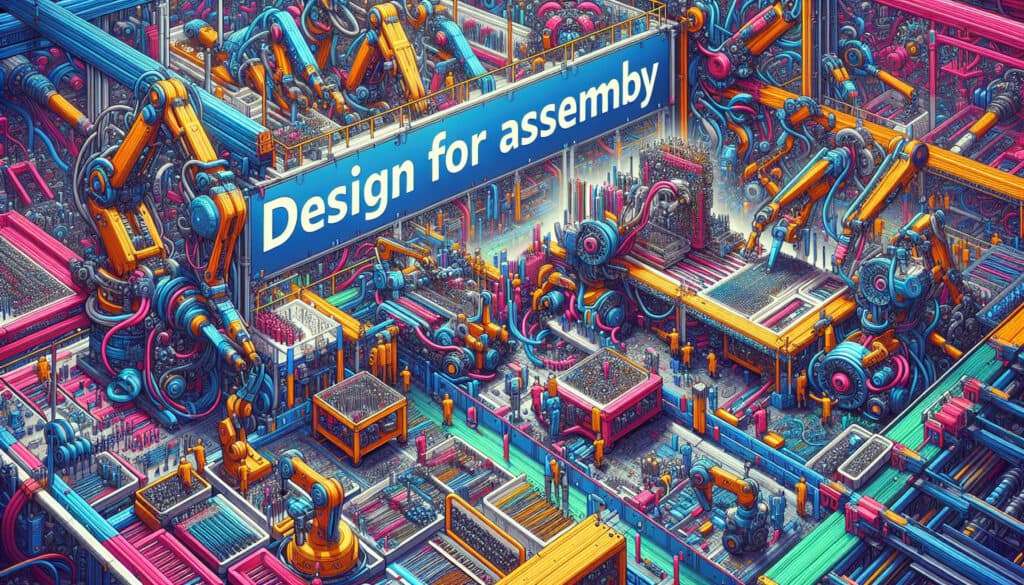
Design for Assembly (DfA)

Design for Assembly

Design for Assembly (DfA)

Objective:

The practice of designing products with ease of assembly in mind.

How it’s used:

优点

缺点

Categories:

最适合:

Design for Assembly (DfA) methodology is particularly advantageous in industries such as consumer electronics, automotive, and furniture manufacturing, where complex products often consist of numerous components. In the initial project phases, design teams 从事 in DfA to identify opportunities for reducing the total part count, often optimizing designs to use modular components that can serve multiple functions, such as incorporating fasteners that also act as alignment features. This approach not only minimizes the physical parts required but also improves the ease of assembly, thereby allowing assembly workers to take less time per unit, which correlates directly with lower labor costs. Cross-functional teams, including design engineers, assembly line workers, and manufacturing engineers, work collaboratively in this process to gather diverse perspectives on assembly challenges and efficiencies. Specific applications of DfA can be observed in the production of smartphones, where companies utilize integrated circuit boards to minimize space and reduce the number of assembly steps, thereby improving yield rates and enhancing overall product reliability. Companies may also leverage DfA principles in iterative prototyping stages, enabling quicker pivots based on early testing feedback to refine both product design and assembly flow before large-scale production begins. When implemented effectively, DfA contributes to higher levels of product quality as designs are inherently more robust against assembly errors, which is particularly important in highly regulated industries like aerospace, where safety and reliability are paramount.

Key steps of this methodology

  1. Conduct a detailed analysis of the current design for assembly opportunities.
  2. Identify redundant or unnecessary parts in the assembly process.
  3. Group parts to facilitate assembly as a single unit where possible.
  4. Simplify parts to reduce complexity while maintaining functionality.
  5. Standardize components to minimize variations and facilitate easier assembly.
  6. Utilize self-locating and self-fastening components to ease assembly tasks.
  7. Evaluate the assembly sequence for efficiency and simplicity.
  8. Implement design changes focused on reducing assembly time and labor.
  9. Test prototypes focusing on assembly performance and gather feedback.
  10. Iterate on design based on assembly feedback and test results.

专业提示

  • Utilize modular components to allow for easier interchangeability and reduce assembly complexity, which can enhance repair and upgrade options.
  • Conduct assembly time studies iteratively during design phases, identifying bottlenecks to refine processes and optimize work sequences efficiently.
  • Implement 再见 在装配线上使用系统来消除错误,确保组件第一次就能正确组装,从而减少返工和废品率。

To read and compare several methodologies, we recommend the

> Extensive Methodologies Repository  <
together with the 400+ other methodologies.

Your comments on this methodology or additional info are welcome on the comment section below ↓ , so as any engineering-related ideas or links.

历史背景

1972
1974
1975-06-01
1980
1980
1980
1980
1970
1974
1974
1978
1980
1980
1980
1980

(如果日期未知或不相关,例如“流体力学”,则提供其显著出现的近似估计)

第十年 周年纪念日

只有注册会员才能免费获取完整尺寸的图片和下载内容。

> 登录 <