Product Design, Manufacturing & Innovation Resources

故障树分析(FTA)

故障树分析

故障树分析(FTA)

目标

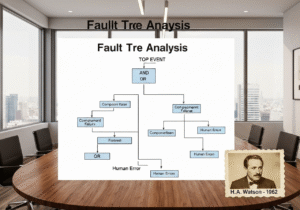
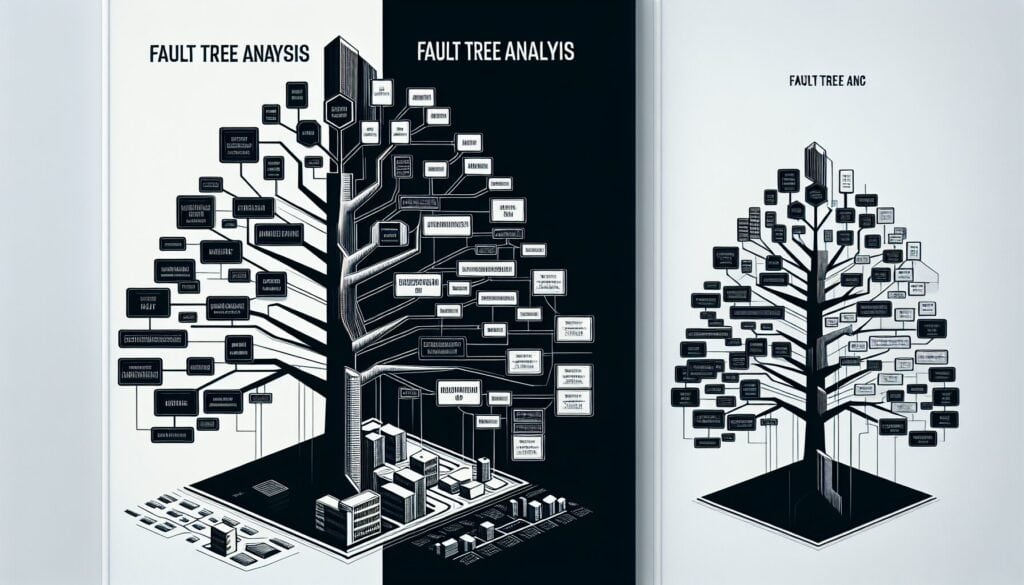
A top-down, deductive failure analysis technique where an undesired state of a system (the “top event” or failure) is analyzed using Boolean logic to combine a series of lower-level events or failures that could cause it.


如何使用

优点

缺点

类别

最适合:

故障树分析 (FTA) is particularly advantageous in industries such as aerospace, automotive, nuclear power, and healthcare, where system reliability and safety are paramount. This methodology is effective during the design phase of a project, where engineers and designers can preemptively identify potential failure modes before they manifest in real-world applications. For example, in the aerospace sector, FTA can be employed to analyze the reliability of a 飞行控制 system, mapping out all possible failure pathways that could lead to a flight safety incident. In the automotive industry, manufacturers might utilize FTA when developing new vehicle models to ensure that all safety mechanisms are robust against potential failure scenarios. Participants in an FTA typically include system engineers, safety engineers, and reliability analysts, who collaboratively assess both hardware and software components of a system. It is often initiated by stakeholders seeking to improve operational safety and reduce risks associated with system failures. By quantifying the probabilities of basic events, FTA also enables organizations to allocate resources effectively, directing focus to the most significant risk factors that, if addressed, would yield substantial improvements in safety and reliability metrics. The visual representation of the fault tree further facilitates communication among multidisciplinary teams and supports decision-making processes by providing clear pathways that depict how various failures can converge to a top event. This structured approach aligns well with regulatory requirements in industries governed by strict safety standards, ultimately leading to enhanced compliance with safety protocols.

该方法的关键步骤

  1. 定义代表系统故障的顶级事件。
  2. 找出可能导致顶级事件的直接原因。
  3. 发展有助于直接原因的中间事件。
  4. 使用逻辑门(AND、OR)连接事件以说明关系。
  5. 尽可能为基本事件分配概率。
  6. 利用基本事件的概率计算最高事件的概率。
  7. 审查并完善故障树,确保其完整性和准确性。

专业提示

  • 纳入失效模式影响分析(FMEA)失效模式及影响分析) 结合故障树分析法,全面理解故障模式及其对系统性能的影响。.
  • 对基本事件的概率进行敏感性分析,以确定哪些事件对首要事件的概率影响最大。
  • 随着系统设计的发展或运行数据的获得,定期更新故障树,以确保风险评估的相关性和准确性。

阅读和比较几种方法、 我们建议

> 广泛的方法论资料库  <
以及其他 400 多种方法。

欢迎您就此方法发表评论或提供更多信息,请登录 下面的评论区 ↓ ,因此任何与工程相关的想法或链接都是如此。

历史背景

1960
1960
1960
1962
1963
1965-12-21
1970
1960
1960
1960
1960
1962-10-09
1964
1970
1970

(如果日期未知或不相关,例如“流体力学”,则提供其显著出现的近似估计)

第十年 周年纪念日

只有注册会员才能免费获得 100% 的全尺寸图片和下载。.

> 登录 <