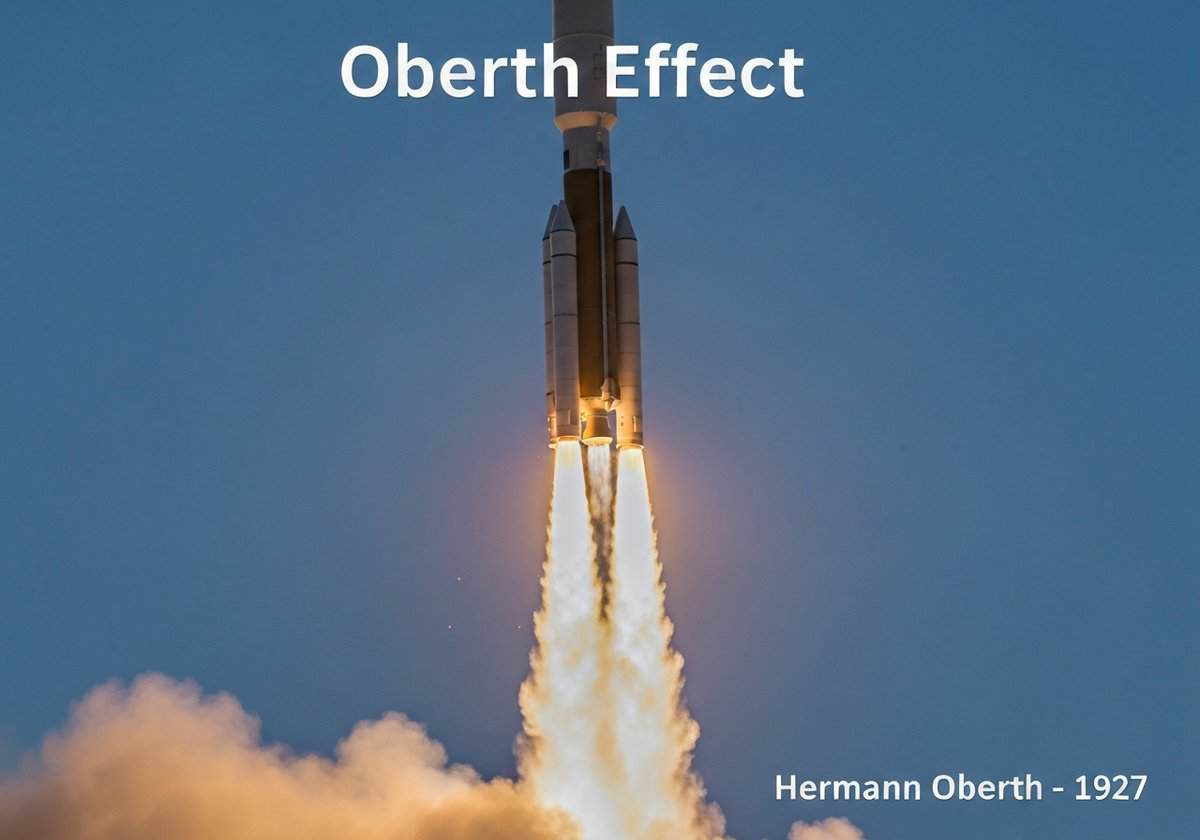
The Oberth effect is a consequence of the work-energy theorem. The work done on a 火箭 by its engine is the thrust force multiplied by the distance traveled during the burn ([latex]W = F \cdot d[/latex]). At higher speeds, the rocket travels a greater distance during the same burn time. Therefore, the same engine burn (same force, same duration, same 速度变化量) 对车辆做更多功,导致车辆动能 ([latex]Delta E_k[/latex]) 增加更多。
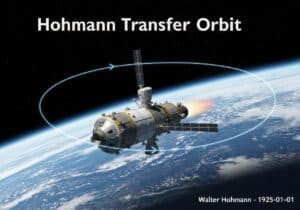
This effect is most pronounced when a spacecraft is moving fastest, which in an orbit occurs at its lowest point, the periapsis. By firing the engine at periapsis, a spacecraft can gain significantly more orbital energy than if it performed the same burn at apoapsis (the highest, slowest point). This is why interplanetary missions often use a powered flyby or ‘Oberth maneuver’ around a massive body like Jupiter. The spacecraft dives deep into the planet’s gravity well to pick up speed, then fires its engine at maximum velocity to multiply the effect of the burn, flinging it out into the 太阳 system at a much higher final speed than would otherwise be possible. The effect is not about getting more delta-v, but about getting more useful energy out of each unit of delta-v applied.