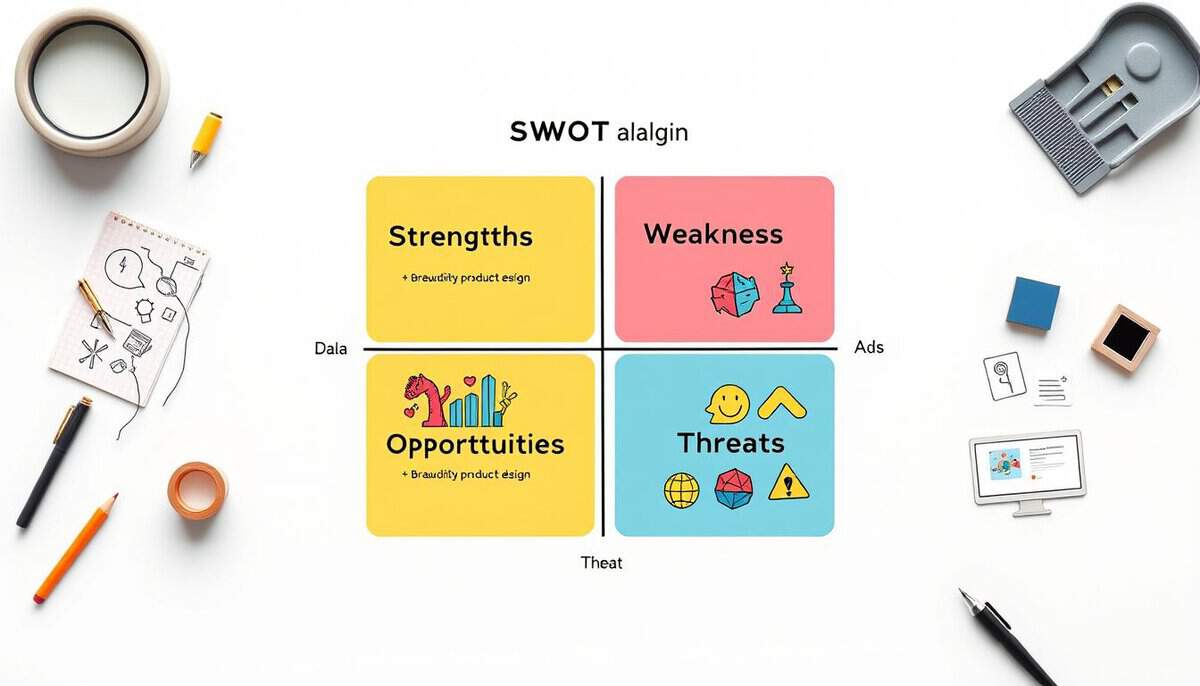
有没有想过为什么顶级品牌总能在产品设计方面击败对手?他们使用了一种名为 SWOT 分析的战略工具。本指南将向您展示产品设计中的 SWOT 分析如何带来创新和效率。
SWOT 分析有助于同时了解优势和劣势,就像直观的 user interface以及一些薄弱环节,例如加载速度慢。这有助于提高系统性能。 团队 抓住机遇,应对威胁。随着市场和客户需求的变化,依靠 SWOT 分析法可以确保您的设计策略保持竞争力并不断创新。让我们来探讨一下这如何实现。 框架 是战略性产品设计的关键,可确保您保持领先地位并满足用户需求。
关键要点
- SWOT 分析有助于评估影响产品设计的内部和外部因素。
- 定期更新 SWOT 分析,使设计战略与市场趋势保持一致。
- 用户满意度和性能指标对确定设计优势至关重要。
- 跨职能合作增强了产品开发的 SWOT 分析流程。
- 可以通过竞争分析和监测技术进步来探索改进设计的机会。
什么是 SWOT 分析?
您想掌握 SWOT 分析法吗?它对于规划和评估产品设计至关重要。"SWOT "代表优势(Strengths)、劣势(Weaknesses)、机会(Opportunities)和威胁(Threats)。这一框架有助于企业了解自身的内外部情况。
定义 SWOT:优势、劣势、机会和威胁
SWOT 分析将各种因素分为四类。优势是企业的长处,比如拥有一流的产品或客户服务。劣势指出企业可能存在的不足,比如在产品设计方面。
机会(Opportunities)关注外部增长机会,如新技术或市场缺口。威胁则考虑外部挑战,包括竞争对手或客户需求的变化。
SWOT 分析法的起源与演变
SWOT 分析法产生于 20 世纪 60 年代,得益于阿尔伯特-汉弗莱在斯坦福大学的研究。如今,它已发展成为商业战略和产品设计的重要工具。随着时间的推移,SWOT 采用了新的方法。现在,它利用市场研究和技术趋势来获得更好的洞察力。
SWOT 分析在战略规划中的重要性
进行 SWOT 分析对于希望将其战略与市场相匹配的企业来说至关重要。它强调了产品设计中哪些有效,哪些无效。这为关键决策提供了指导。此外,探索各种 SWOT 策略还能让企业领先一步。他们可以更有效地发现机遇和躲避威胁。
| 数据来源 | 对 SWOT 分析的贡献 |
|---|---|
| 市场调研 | 确定尚未满足的需求和机会 |
| 用户趋势和偏好 | 根据不断变化的偏好更新产品设计 |
| 新兴技术 | 融入创新功能,解决用户痛点 |
| 竞争对手洞察 | 确定应对潜在威胁的战略 |
| 用户反馈分析 | 通过解决常见投诉和反复出现的问题来改进产品 |
| 可用性 测试指标 | 评估技术优势和 用户体验 |
| 合作研讨会 | 让不同的团队参与进来,丰富分析内容 |
| 竞争基准 | 与竞争对手进行比较,确定改进领域 |
在产品设计过程中何时进行 SWOT 分析
在产品设计中使用 SWOT 分析至关重要。它有助于提高产品的效率和效益。它还能引导你的产品从一个想法变成市场上的热门产品。
时间安排和与新产品设计的整合
最好在设计新产品之初就使用 SWOT 分析。它在头脑风暴阶段非常重要。在这一阶段,我们要考虑很多不同的想法。
早期使用 SWOT 有助于检查想法是否正确。它可以看出这些想法是否符合人们的需求和公司的能力。
从一开始就审视优势、劣势、机会和威胁,有助于制定一个好的计划。在产品开发过程中不断更新 SWOT 分析有助于保持灵活性。这样,产品就可以根据需要进行改变,从而在市场上取得好成绩。
受益于 SWOT 分析的产品开发阶段
SWOT 分析在制作产品的不同阶段都很有用:
- 产生想法: 这将对各种想法进行筛选,只有符合市场和我们优势的好想法才会被采用。
- 概念开发: 了解弱点和威胁有助于改进产品。这要在花费大量资金之前进行。
- 市场测试: 牢记 SWOT 有助于根据客户的想法和竞争对手的做法调整产品。
- 商业化: 最后的 SWOT 检查确保产品能强势进入市场。它有助于规划好 营销 和增长战略。
这种方法强调了在产品设计中进行 SWOT 分析的重要性。它确实有助于产品的成功。以下是用于产品开发的 SWOT 矩阵模板:
| 优势 | 弱点 | |
|---|---|---|
| 内部因素 | 独特功能 强大的品牌 名声 |
生产成本高 市场影响力有限 |
| 机会 | 威胁 | |
| 外部因素 | 新兴市场趋势 客户反馈 |
竞争压力 经济衰退 |
SWOT 分析对产品设计的益处
SWOT analysis tools are a big plus in product design. They help improve the design from all angles. By looking at strengths, weaknesses, opportunities, and threats, designers can become more efficient, avoid risks, and innovate.
提高设计效率
SWOT 分析能让设计工作做得更好、更顺利。它能显示团队内部哪些工作有效,哪些工作无效。例如,一个强大的团队可以发挥更大的作用,而找出慢点则有助于解决这些问题。

在设计过程中尽早降低风险
及早使用 SWOT 分析有助于在风险扩大之前将其捕捉到。它能发现外部危险和内部问题。团队可以制定计划来避免这些问题,从而减少延误和成本。
这是保证项目按时进行的关键。
促进创新和创造力
SWOT 分析还能促进新想法的产生。它揭示了可能被忽略的机会。通过观察市场趋势和新机会,设计师可以开辟新天地。
了解到我们拥有一支一流的研发团队,更能激发我们的创造力。
在战略性产品设计中实施 SWOT 分析
Implementing SWOT analysis in strategic product design is key to innovation and project success. By assessing internal and external factors, companies can develop effective strategies. These strategies use strengths and address potential threats.
框架和技术
通过结构化的框架和方法,SWOT 分析变得更加合理。它们包括审查
- 内部因素,如核心竞争力、产品质量和客户满意度。
- 外部因素,如市场趋势、监管变化和竞争对手分析。
TOWS 矩阵增强了 SWOT 分析。它将内部和外部因素联系起来,形成可操作的战略。SWOT 分析模板还有助于评估、沟通和促进利益相关者之间的团队合作。
要快速实施 SWOT 分析,只需对优势、劣势、机会和威胁进行 5 分钟的构思。然后,利用亲和图和点投票,团队可以高效地对这些见解进行优先排序。
跨职能团队的协作工具
Strategic product design thrives on cross-functional collaboration. SWOT analysis brings in diverse viewpoints, making the evaluation more complete. Tools that help include:
- 实时交流想法的共享数字工作空间。
- Interactive SWOT templates for group participation.
- Time-bound brainstorming sessions to stay focused.
These tools make sure strategic design benefits from a comprehensive, inclusive analysis. This leads to innovative products. By integrating teamwork in SWOT analysis, firms align varied skills towards strategic goals.
| 技术 | 益处 |
|---|---|
| TOWS Matrix | More actionable strategy development |
| SWOT Templates | Structured framework for systematic evaluation |
| Affinity Mapping | Synthesizes similar ideas efficiently |
| Dot Voting | Prioritizes key strengths, weaknesses, opportunities, and threats |
SWOT Analysis Tools for Product Design Optimization
In the fast-paced market today, using the right SWOT analysis tools is crucial for the best product design. Software solutions enhance digital methods, while manual techniques remain valuable. Using both methods together gives deep and useful insights.

Software and Digital Solutions
Modern software for SWOT analysis brings many benefits. These include seeing data clearly and working with others in real time. Teams can enter data, make reports, and study trends easily. Tools like MindTools, Creately, and StrategicPlanner have user-friendly designs. They help make the SWOT process simple, ensuring insights that lead to action.
- MindTools: offers easy-to-use templates. These help spot strengths, weaknesses, opportunities, and threats easily.
- Creately: great for team projects, Creately makes it easy to draw and share SWOT diagrams.
- StrategicPlanner: provides deep analytics. These are key for making clever choices in product design and improvement.
Manual and Traditional Techniques
Even with many digital tools available, manual SWOT methods are still very important. Using whiteboards or paper helps teams think deeply and work closely together. These old-school ways lead to clear, grounded insights during the design phase.
- Whiteboard sessions: helps teams share ideas and visualize their analysis together.
- Paper-based matrices: best for small groups or initial ideas, making it easy to organize thoughts.
- Workshops: meetings aimed at exploring SWOT, bringing different views and skills together for greater insights.
Whether you prefer software or traditional methods, the goal of SWOT analysis stays the same. It’s about finding and using strengths, handling weaknesses, grabbing opportunities, and avoiding threats. Mixing digital and manual strategies ensures a solid approach for making products better.
| 标准 | Software Solutions | Manual Techniques |
|---|---|---|
| Speed & Efficiency | 高的 | 中等的 |
| 合作 | Real-Time | In-Person |
| Insight Depth | Data-Driven | Grounded Insights |
| Applicability | Scalable | Flexible |
| Costs | 可变 | 低的 |
Long-Term Marketing Benefits of SWOT Analysis
Using SWOT analysis in product design brings big rewards over time. It helps companies lead in the tough market. It’s a strategy that fits product plans to what customers want, helping growth.

Adapting to Market Trends
SWOT analysis spots new chances in market shifts. It lets companies change swiftly to satisfy customer demands. Staying up to date means they can use new tech, form partnerships, and earn more.
Improving Customer Targeting and Segmentation
SWOT analysis boosts how you target and understand customers. Knowing strengths and weaknesses improves marketing for different customer groups. It means clearer messages, better sales, and loyal customers.
Building a Strong Competitive Edge
Gaining an edge with SWOT analysis is key for lasting success. It helps spot and handle competitor threats early. By using strengths and watching for risks, companies form strong plans. This edge aids in using resources well, managing risks, and enduring over time.
| 好处 | 描述 |
|---|---|
| Adaptation to Market Trends | Swift response to evolving trends and technological advancements, enhancing profitability. |
| Customer Targeting and Segmentation | Enhanced segmentation and targeting for more effective marketing campaigns. |
| 竞争优势 | Developing strategies based on the analysis to stay ahead of competitors. |
SWOT Analysis for Product Design: Best Practices
Using SWOT analysis in product design ensures a dynamic process. It’s aligned with both inside and outside factors. By integrating user feedback, and keeping the analysis current, product design is elevated. Let’s look at these key parts.
Regularly Updating SWOT Analysis
Keeping the SWOT framework updated is essential. It helps stay in tune with changing markets, consumer likes, and new tech. Without fresh updates, the analysis might get old. This makes it less useful for making strong strategic choices.
Integrating User Feedback
 lets designers see what users like and don’t like. They find new chances and see hidden problems. This way, the final product meets user needs and wants.
Aligning with Business Goals
A SWOT analysis needs to match the business’s main aims to help product design. This match means every design move helps the company’s big plans. From better market presence to outdoing rivals. By aligning with business goals, managers work smarter. They use resources well and get better results.
| Best Practice | 益处 | Implementation |
|---|---|---|
| Regularly Updating SWOT Analysis | Keeps analysis relevant | Set periodic reviews |
| Integrating User Feedback | Enhances user-centric design | Use surveys and focus groups |
| Aligning with Business Goals | Supports strategic objectives | Ensure SWOT aligns with KPIs |
Adopting these practices makes SWOT analysis very effective in product design. It ensures designs are innovative and user-friendly. They are also strategic and aligned with big business goals.
Case Studies: Successful Use of SWOT Analysis in Product Development
SWOT case studies show the power of SWOT analysis in product development. We look at examples from big companies like 苹果 and Amazon. This helps us see how SWOT analysis shapes strategic planning and competitive strength.
Apple’s smart SWOT use in planning is well known. Being a top brand worldwide, Apple’s SWOT analysis maps out its strengths and opportunities. These shape its future strategies.
- Strengths: Apple enjoys high profit margins thanks to its premium pricing and a history filled with tech innovations.
- Weaknesses: the brand relies on a narrow distribution network and aims mainly for the high-end market.
- Opportunities: it can grow by broadening its distribution network to include more customers.
- Threats: facing tough competition from big names like Samsung, Google, and Microsoft, and rising labor costs which cut into profits.
This successful SWOT analysis shines a light on areas Apple can improve and markets it can enter. Using its strengths and grabbing opportunities lets Apple innovate and keep leading the market.
Specifics SWOT Analysis for product development
In the early stages of product development, SWOT analysis acts as a guiding framework that informs critical decisions. It allows teams to filter ideas, ensuring that only the most viable concepts move forward based on a clear understanding of their potential impact.
Regularly updating the SWOT analysis throughout the product life-cycle is essential for maintaining relevance in a changing market. This iterative process enables teams to adapt their strategies and proactively address new challenges as they arise. Incorporating user feedback into the SWOT analysis enhances its effectiveness. Understanding customer preferences and pain points, Marketing Manager and Project Managers can refine their product designs specs to better meet user expectations and improve overall project success.
Amazon’s SWOT Analysis
Amazon’s story shows how SWOT helps in super efficient business worlds. Its leadership in online retail comes from using SWOT to spot benefits. Amazon’s SWOT analysis guides its way.
- 优势: Amazon boasts a vast distribution network and is widely recognized.
- 弱点: the company faces thin profit margins and sees sales fluctuate over the year.
- 机会: there’s a chance to grow market share with new tech and by reaching worldwide.
- 威胁: heavy competition, legal changes, and changing customer habits pose challenges.
Cases like Amazon show how it tackles market problems, always innovating to beat rivals. SWOT analysis proves crucial for navigating the changing business scene.
Related Case: Existing Product SWOT Analysis
Conducting a product SWOT analysis on an already existing is essential for understanding a product’s market position. Assessing the strengths and weaknesses of a product and what sets it apart from competitors. This evaluation helps in determining the unique 销售 propositions that resonate with target audiences.
Identifying opportunities is a critical aspect of product SWOT analysis. Analyzing market trends and consumer behavior, design teams can uncover new avenues for growth that align with their product’s strengths. This proactive approach enables companies to stay ahead of the competition and adapt to changing customer needs.
Equally important is the recognition of threats that may impact the product’s success. Understanding external challenges, such as emerging competitors or shifting consumer preferences, allows businesses to develop strategic plans to mitigate risks. This foresight is crucial for maintaining a product’s market relevance.
Integrating user feedback into the SWOT analysis enhances its effectiveness. Insights from actual users, companies can better align their product designs with consumer expectations. This user-centric approach not only improves product quality but also increases customer loyalty versus competition.
A product SWOT analysis should be a dynamic and regular process that evolves with the market. Regular updates ensure that the analysis reflects current conditions and helps guide product development strategies effectively.
结论
A SWOT analysis is more than just theory. It’s a practical, key tool for designing products. It helps businesses understand their strengths, weaknesses, opportunities, and threats. This way, they can tackle market challenges and competition better. Using SWOT early and often lets companies face hurdles head-on. It also helps them use what they learn to make innovative products that perform well.
Research shows that only one in six product ideas will turn a profit. This fact highlights how vital it is to make smart design choices. SWOT analysis helps businesses spot and seize good opportunities. They don’t have to weigh all factors equally. Focusing on key aspects, like combing strengths with opportunities, can give them an edge over their rivals.
SWOT isn’t just a starting point for strategy talks, it’s also a solid base for creating strategies and finding new ideas. This makes it a must-have in the product design phase. Real stories show how companies like Nestle, Amazon, and The Body Shop have used it successfully. They’ve matched their goals with what the market wants. Plus, using simple tools like a one-page SWOT sheet helps teams make strategic choices easily. This ensures their products are ready to face the market and stand out.
相关阅读与方法论
- PESTEL 分析: 审查影响组织的政治、经济、社会、技术、环境和法律因素。
- 波特的五种力量 分析行业内的竞争力量,以了解竞争强度和市场盈利能力。
- 价值链分析: 确定组织内创造价值的关键活动,重点是优化每项活动,以增强竞争优势。
- 平衡 记分卡: 这是一种战略管理工具,可从财务、客户、内部流程以及学习与成长等角度跟踪组织绩效。
- 卡介苗矩阵: 根据市场增长率和市场份额评估产品线或业务部门,以帮助资源分配。
- VRIO 框架: 对资源和能力进行评估,以确定它们是否能提供基于价值、稀缺性、可模仿性和组织性的持续竞争优势。
- 安索夫矩阵 指导有关市场渗透、产品开发、市场开发和多样化的战略决策。
- TOWS 矩阵: 它是 SWOT 的延伸,通过将外部机会和威胁与内部优势和劣势相匹配,帮助制定战略方案。
常问问题
什么是 SWOT 分析?
SWOT 分析是一种规划工具,用于识别项目或企业的优势、劣势、机会和威胁。它通过分析内部和外部因素,帮助企业制定更有效的产品策略。SWOT 分析起源于 20 世纪 60 年代和 70 年代的斯坦福研究所。研究人员创建它的目的是帮助企业了解自身的战略定位。如今,它已成为产品设计规划和评估的关键工具。
为什么 SWOT 分析在战略规划中很重要?
它至关重要,因为它能以结构化的方式评估企业的内部和外部环境。这有助于发现需要改进的领域和增长机会。它对产品规划和开发至关重要。它有助于适应市场变化、改进客户定位并建立竞争优势。这能确保产品与市场需求和客户需求保持一致。
在产品设计过程中何时应进行 SWOT 分析?
It should be used in the product development process, especially in the idea and pre-commercialization phases. This helps match the product with market needs and the company’s strengths. Its benefits are boosting design efficiency, reducing risks early, and increasing innovation. SWOT tools help improve product design continuously.<br />
常用术语表
Key Performance Indicator (KPI): 一个可衡量的值,表明组织实现关键业务目标的效率,通常用于评估实现目标的成功程度。
User experience (UX): 用户与产品、系统或服务交互时的整体满意度和感知,涵盖整个交互过程中的可用性、可访问性、设计和情感反应。
User Interface (UI): 一种支持用户与软件应用程序之间交互的系统,包括视觉元素、控件和整体布局,以方便用户执行任务并增强体验。