Product Design, Manufacturing & Innovation Resources
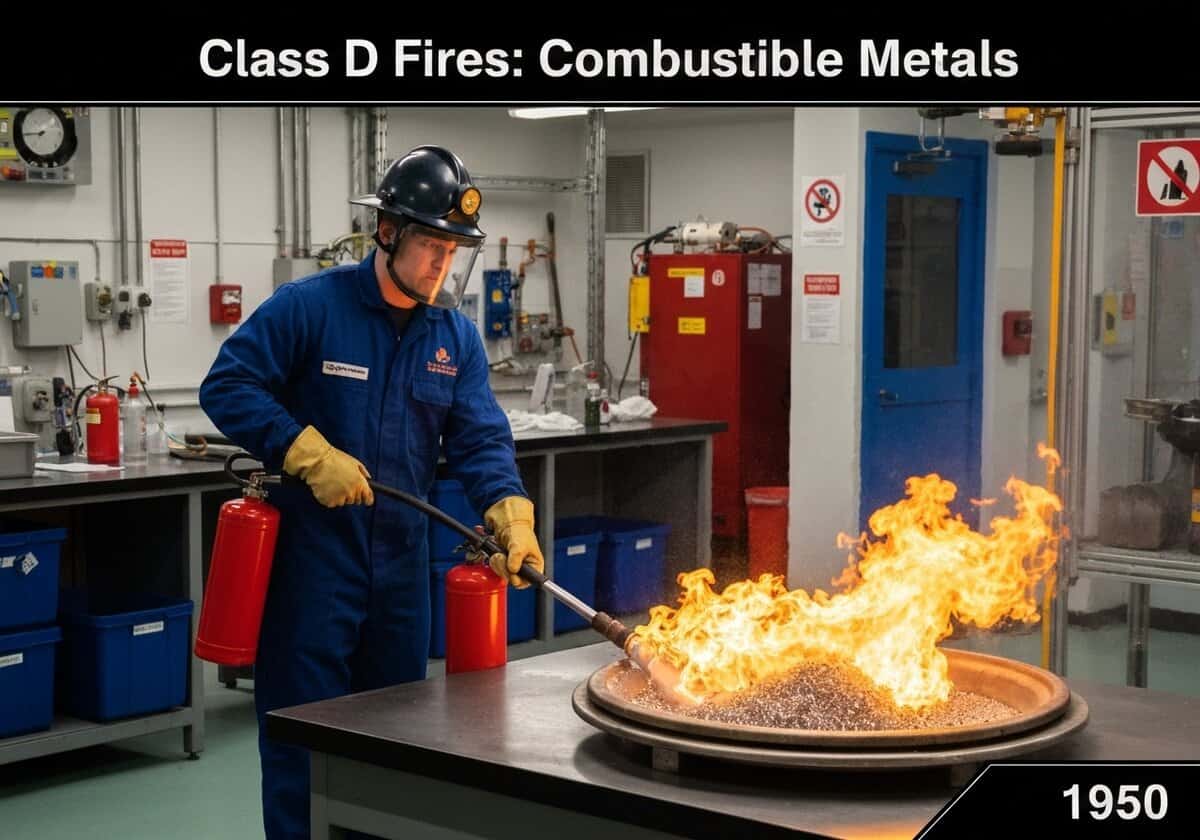
» D类火灾:可燃金属

D类火灾:可燃金属

1950
消防安全工程师在实验室演示使用干粉灭火剂扑灭镁火。

(图片仅供参考)

D 类火灾涉及可燃金属、合金或金属化合物,例如镁、 , sodium, and . These fires are exceptionally hazardous as they burn at extremely high temperatures and can react explosively with common extinguishing agents like water or carbon dioxide. Water, for instance, 在某些情况下, 与 p 相反普遍认为,它会分解成氢气和氧气,助长火势。灭火需要专门的干粉灭火剂。
The unique danger of Class D fires stems from the chemical reactivity of the burning metal. Unlike carbon-based fuels, many metals are powerful reducing agents and can strip oxygen from water (H₂O) or carbon dioxide (CO₂). For example, burning magnesium reacts with water in a highly exothermic reaction: [latex]Mg (s) + H_2O (g) rightarrow MgO (s) + H_2 (g)[/latex]. The hydrogen gas produced is itself extremely flammable, leading to a violent explosion. This makes traditional firefighting methods not only ineffective but dangerously counterproductive.

扑灭D类火灾需要使用不会与燃烧金属发生反应的灭火剂。这些灭火剂通常是干粉,不要与用于扑灭A、B和C类火灾的干粉化学灭火剂混淆。D类灭火剂的作用原理是抑制火焰,形成一层隔绝氧气的外壳,并吸收热量。常见的灭火剂包括氯化钠 (NaCl) 基灭火剂(例如 Met-LX)、石墨基灭火剂 (G-1) 和铜基灭火剂,具体选择取决于燃烧的金属类型。例如,铜粉对锂离子火灾尤其有效。

随着锂离子电池等技术的兴起,D级防火安全问题日益受到关注。电池火灾虽然复杂,但通常涉及锂的燃烧,需要D级灭火剂和灭火策略。

UNESCO Nomenclature: 3305
- 化学工程

类型

化学过程

中断

递增

用法

小众/专业

前体

  • 活性碱金属和碱土金属的发现和分离
  • 使用粉末或熔融金属的工业流程的开发(例如航空和弹药)
  • 对放热氧化还原反应的科学理解
  • 涉及灾难性金属火灾的工业事故分析

应用程序

  • 航空航天和汽车行业使用轻质金属的消防安全规程
  • 化学研究和制造中碱金属的处理程序
  • 金属铸造厂和使用金属粉末的 3D 打印设施中的专用灭火系统
  • 大型电池储能系统(如锂离子电池)的安全设计
  • 烟火制造和储存安全

专利:

NA

潜在创新理念

由于机器人流量被拦截(目前每天超过 4 万),此内容仅限社区成员查看。
> 登录 > 或者 > 注册 < (100% 免费)即可访问此内容,以及所有其他受限内容和工具。

Related to: class D fire, combustible metal, magnesium, lithium, sodium, dry powder extinguisher, water-reactive, metal fire, pyrophoric, special hazard.

历史背景

D类火灾:可燃金属

1950
1950
1950
1950
1955
1956
1960
1950
1950
1950
1950
1950
1955
1958
1960

(如果日期未知或不相关,例如“流体力学”,则提供其显著出现的近似估计)

相关发明、创新和技术原理

只有注册会员才能免费获得 100% 的全尺寸图片和下载。.

> 登录 <