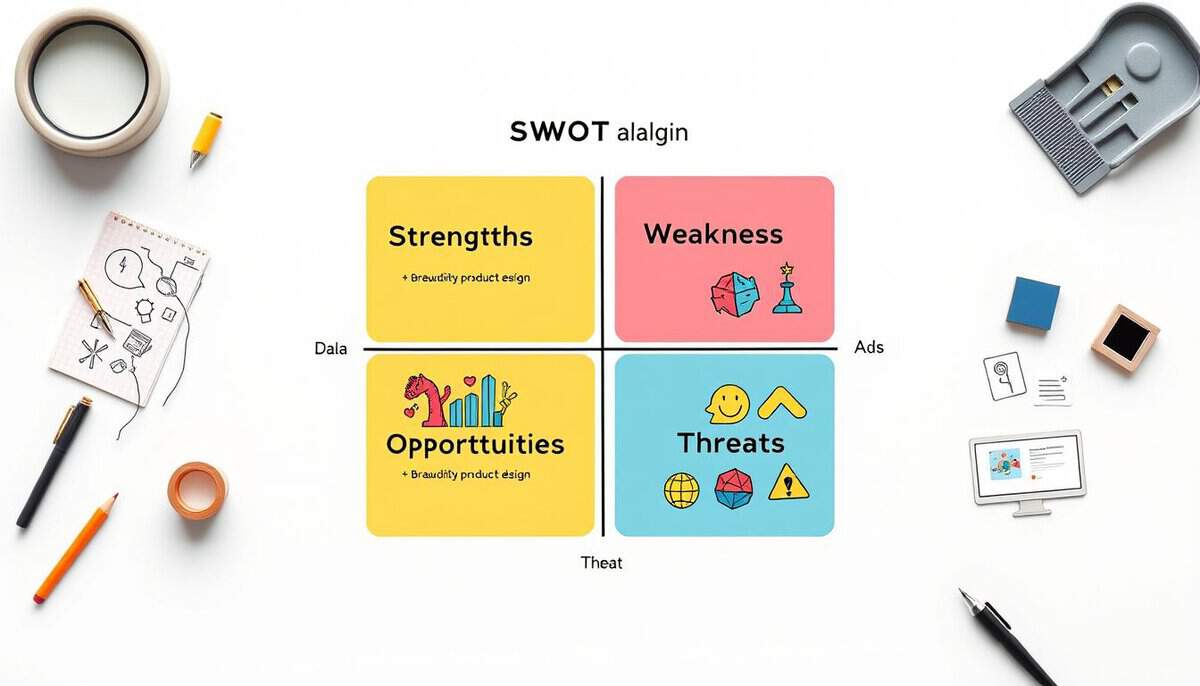
Ever wondered why top brands always beat their rivals in product design? They use a strategic tool known as SWOT analysis. This guide will show you how SWOT analysis in product design leads to innovation and efficiency.
SWOT analysis helps understand both the strong points, like an intuitive interface do usuário, and the weak ones, such as slow loading times. It helps equipes grab opportunities and handle threats. As markets and customer needs change, relying on SWOT keeps your design strategies competitive and innovative. Let’s explore how this estrutura is key in strategic product design, ensuring you stay ahead and satisfy users.
Principais conclusões
- SWOT analysis aids in evaluating internal and external factors affecting product design.
- Regularly updated SWOT analysis keeps design strategies aligned with market trends.
- User satisfaction and performance metrics are crucial for identifying design strengths.
- Cross-functional collaboration enhances the SWOT analysis process in product development.
- Opportunities for design improvement can be explored through competitive analysis and monitoring technological advancements.
What is SWOT Analysis?
Do you want to grasp SWOT Analysis? It’s crucial for planning and evaluating product designs. “SWOT” stands for Strengths, Weaknesses, Opportunities, and Threats. This framework helps businesses understand their situation both inside and out.
Defining SWOT: Strengths, Weaknesses, Opportunities, and Threats
A SWOT analysis sorts factors into four categories. Strengths are what a business does well, like having a top-notch product or customer service. Weaknesses point out where a company might fall short, such as in designing products.
Opportunities look at external chances for growth, like new tech or market gaps. Threats consider outside challenges, including rivals or shifts in what customers want.
Origins and Evolution of SWOT Analysis
SWOT Analysis came about in the 1960s, thanks to Albert Humphrey’s research at Stanford. It has grown into a key tool for business strategy and product design. With time, SWOT has embraced new methods. It now uses market studies and tech trends for better insight.
Importance of SWOT Analysis in Strategic Planning
Doing a SWOT Analysis is vital for businesses looking to match their strategies with the market. It highlights what’s working and what’s not in product design. This guides key decisions. Plus, exploring various SWOT tactics lets companies get ahead. They can spot opportunities and dodge threats more effectively.
| Data Source | Contribution to SWOT Analysis |
|---|---|
| Pesquisa de mercado | Identifies unmet needs and opportunities |
| User Trends and Preferences | Enhances product design by staying updated on evolving preferences |
| Emerging Technologies | Incorporates innovative features addressing user pain points |
| Competitor Insights | Identifies strategies to counteract potential threats |
| User Feedback Analysis | Improves product by addressing common complaints and recurring issues |
| Usabilidade Testing Metrics | Evaluates technical strengths and experiência do usuário |
| Collaborative Workshops | Engages diverse teams for enriched analysis |
| Benchmarking competitivo | Compares with competitors to identify improvement areas |
When to Perform SWOT Analysis in the Product Design Process
Using SWOT analysis in product design is crucial. It helps to make your product efficient and effective. And it guides your product from just an idea to a big hit in the market.
Timing and Integration with New Product Design
It’s best to use SWOT analysis at the start of designing a new product. It’s really important in the brainstorming stage. This is when we think about lots of different ideas.
This early use of SWOT helps check if ideas are good. It sees if they match what people want and what the company can do.
Looking at strengths, weaknesses, opportunities, and threats from the start helps map out a good plan. Keeping the SWOT analysis updated as the product develops helps stay flexible. This way, the product can change as needed to do well in the market.
Stages of Product Development Benefiting from SWOT Analysis
SWOT analysis is useful at different points in making a product:
- Idea generation: this filters ideas, so only the good ones that fit the market and our strengths go forward.
- Concept development: knowing weaknesses and threats helps improve the product. This happens before spending a lot of money on it.
- Market testing: keeping the SWOT in mind helps adjust the product based on what customers think and what competitors do.
- Commercialization: the final SWOT check makes sure the product can enter the market strongly. It helps plan good marketing and growth strategies.
This method highlights why it’s important to do SWOT analysis in product design. It really helps a product succeed. Here is a SWOT matrix template used for product development:
| Strengths | Weaknesses | |
|---|---|---|
| Internal Factors | Unique features Strong brand reputação | High production costs Limited market presence |
| Opportunities | Threats | |
| External Factors | Emerging market trends Customer feedback | Competitive pressures Economic downturn |
The rest of this article is reserved for members
To limit scraping bots (currently 40,000 hits per day!),
we had to restrict access to full articles and tools to registered members only.
to access all the rest.
Perguntas frequentes
What is SWOT Analysis?
A Análise SWOT é uma ferramenta de planejamento. Ela identifica os pontos fortes, pontos fracos, oportunidades e ameaças de um projeto ou negócio. É utilizada para aprimorar as estratégias de produto, considerando fatores internos e externos. Surgiu nas décadas de 1960 e 1970 no Instituto de Pesquisa de Stanford. Os pesquisadores a criaram para ajudar as empresas a compreenderem seu posicionamento estratégico. Tornou-se fundamental no planejamento e na avaliação do design de produtos.
Por que a análise SWOT é importante no planejamento estratégico?
É fundamental porque avalia os ambientes interno e externo de uma empresa de forma estruturada. Isso ajuda a identificar áreas de melhoria e oportunidades de crescimento. É crucial para o planejamento de produtos e seu desenvolvimento. Ajuda a adaptar-se às mudanças do mercado, aprimorar a segmentação de clientes e desenvolver uma vantagem competitiva. Isso mantém os produtos alinhados às demandas do mercado e às necessidades dos clientes.
Quando deve ser realizada a análise SWOT no processo de projeto do produto?
It should be used in the product development process, especially in the idea and pre-commercialization phases. This helps match the product with market needs and the company’s strengths. Its benefits are boosting design efficiency, reducing risks early, and increasing innovation. SWOT tools help improve product design continuously.<br />
Glossário de termos utilizados
Key Performance Indicator (KPI): Um valor mensurável que demonstra a eficácia com que uma organização está atingindo seus principais objetivos de negócios, frequentemente usado para avaliar o sucesso no alcance de metas.
User experience (UX): the overall satisfaction and perception of a user when interacting with a product, system, or service, encompassing usability, accessibility, design, and emotional response throughout the entire interaction process.
User Interface (UI): a system that enables interaction between users and software applications, encompassing visual elements, controls, and overall layout to facilitate user tasks and enhance experience.