Ever wondered why top brands always beat their rivals in product design? They use a strategic tool known as SWOT analysis. This guide will show you how SWOT analysis in product design leads to innovation and efficiency.
SWOT analysis helps understand both the strong points, like an intuitive 사용자 인터페이스, and the weak ones, such as slow loading times. It helps 팀 grab opportunities and handle threats. As markets and customer needs change, relying on SWOT keeps your design strategies competitive and innovative. Let’s explore how this 뼈대 is key in strategic product design, ensuring you stay ahead and satisfy users.
핵심 요약
- SWOT analysis aids in evaluating internal and external factors affecting product design.
- Regularly updated SWOT analysis keeps design strategies aligned with market trends.
- User satisfaction and performance metrics are crucial for identifying design strengths.
- Cross-functional collaboration enhances the SWOT analysis process in product development.
- Opportunities for design improvement can be explored through competitive analysis and monitoring technological advancements.
What is SWOT Analysis?
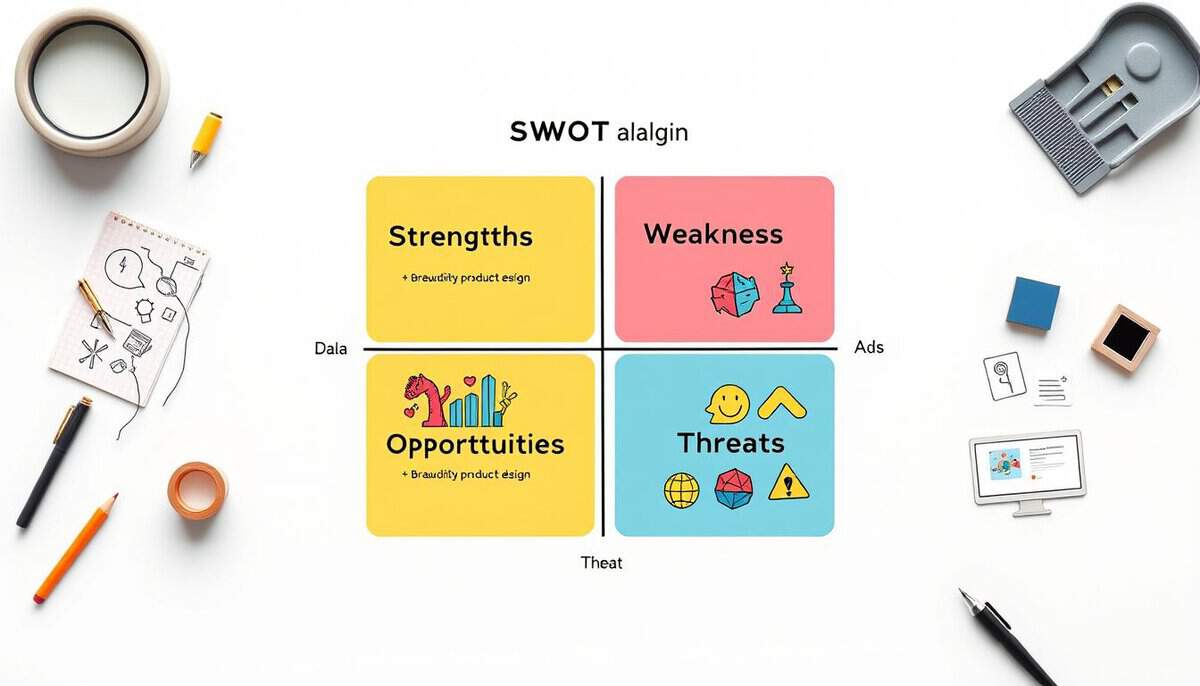
Do you want to grasp SWOT Analysis? It’s crucial for planning and evaluating product designs. “SWOT” stands for Strengths, Weaknesses, Opportunities, and Threats. This framework helps businesses understand their situation both inside and out.
Defining SWOT: Strengths, Weaknesses, Opportunities, and Threats
A SWOT analysis sorts factors into four categories. Strengths are what a business does well, like having a top-notch product or customer service. Weaknesses point out where a company might fall short, such as in designing products.
Opportunities look at external chances for growth, like new tech or market gaps. Threats consider outside challenges, including rivals or shifts in what customers want.
Origins and Evolution of SWOT Analysis
SWOT Analysis came about in the 1960s, thanks to Albert Humphrey’s research at Stanford. It has grown into a key tool for business strategy and product design. With time, SWOT has embraced new methods. It now uses market studies and tech trends for better insight.
Importance of SWOT Analysis in Strategic Planning
Doing a SWOT Analysis is vital for businesses looking to match their strategies with the market. It highlights what’s working and what’s not in product design. This guides key decisions. Plus, exploring various SWOT tactics lets companies get ahead. They can spot opportunities and dodge threats more effectively.
| Data Source | Contribution to SWOT Analysis |
|---|---|
| 시장 조사 | Identifies unmet needs and opportunities |
| User Trends and Preferences | Enhances product design by staying updated on evolving preferences |
| Emerging Technologies | Incorporates innovative features addressing user pain points |
| Competitor Insights | Identifies strategies to counteract potential threats |
| User Feedback Analysis | Improves product by addressing common complaints and recurring issues |
| 사용성 Testing Metrics | Evaluates technical strengths and 사용자 경험 |
| Collaborative Workshops | 풍부한 분석을 위해 다양한 팀 참여 |
| Competitive Benchmarking | Compares with competitors to identify improvement areas |
When to Perform SWOT Analysis in the Product Design Process
Using SWOT analysis in product design is crucial. It helps to make your product efficient and effective. And it guides your product from just an idea to a big hit in the market.
Timing and Integration with New Product Design
It’s best to use SWOT analysis at the start of designing a new product. It’s really important in the brainstorming stage. This is when we think about lots of different ideas.
This early use of SWOT helps check if ideas are good. It sees if they match what people want and what the company can do.
Looking at strengths, weaknesses, opportunities, and threats from the start helps map out a good plan. Keeping the SWOT analysis updated as the product develops helps stay flexible. This way, the product can change as needed to do well in the market.
Stages of Product Development Benefiting from SWOT Analysis
SWOT analysis is useful at different points in making a product:
- Idea generation: this filters ideas, so only the good ones that fit the market and our strengths go forward.
- Concept development: knowing weaknesses and threats helps improve the product. This happens before spending a lot of money on it.
- Market testing: keeping the SWOT in mind helps adjust the product based on what customers think and what competitors do.
- Commercialization: the final SWOT check makes sure the product can enter the market strongly. It helps plan good 마케팅 and growth strategies.
This method highlights why it’s important to do SWOT analysis in product design. It really helps a product succeed. Here is a SWOT matrix template used for product development:
| Strengths | Weaknesses | |
|---|---|---|
| Internal Factors | Unique features Strong brand 평판 |
High production costs Limited market presence |
| Opportunities | Threats | |
| External Factors | Emerging market trends Customer feedback |
Competitive pressures Economic downturn |
The rest of this article is reserved for members
To limit scraping bots (currently 40,000 hits per day!),
we had to restrict access to full articles and tools to registered members only.
to access all the rest.
자주 묻는 질문
What is SWOT Analysis?
SWOT 분석은 계획 수립을 위한 도구입니다. 프로젝트나 사업의 강점, 약점, 기회, 위협 요소를 파악하는 데 도움을 줍니다. 내부 및 외부 요인을 분석하여 더 나은 제품 전략을 수립하는 데 활용됩니다. SWOT 분석은 1960년대와 70년대 스탠퍼드 연구소에서 개발되었으며, 기업의 전략적 위치를 파악하는 데 도움을 주기 위한 목적으로 만들어졌습니다. 현재 제품 설계 계획 및 평가에 있어 핵심적인 도구로 자리 잡았습니다.
SWOT 분석은 전략 계획 수립에 왜 중요한가?
이는 기업의 내부 및 외부 환경을 체계적인 방식으로 평가하기 때문에 매우 중요합니다. 이를 통해 개선 영역과 성장 기회를 파악할 수 있습니다. 제품 기획 및 개발에 필수적이며, 시장 변화에 적응하고 고객 타겟팅을 개선하며 경쟁 우위를 확보하는 데 도움이 됩니다. 결과적으로 제품이 시장 수요와 고객 요구에 부합하게 됩니다.
제품 설계 과정에서 SWOT 분석은 언제 수행해야 할까요?
It should be used in the product development process, especially in the idea and pre-commercialization phases. This helps match the product with market needs and the company’s strengths. Its benefits are boosting design efficiency, reducing risks early, and increasing innovation. SWOT tools help improve product design continuously.<br />
사용된 용어집
Key Performance Indicator (KPI): a measurable value that demonstrates how effectively an organization is achieving key business objectives, often used to evaluate success at reaching targets.
User experience (UX): the overall satisfaction and perception of a user when interacting with a product, system, or service, encompassing usability, accessibility, design, and emotional response throughout the entire interaction process.
User Interface (UI): a system that enables interaction between users and software applications, encompassing visual elements, controls, and overall layout to facilitate user tasks and enhance experience.