Address: Av. Robert Koch, 60, 86038-350 Londrina, Paraná, Brazil
Engineering, Life Sciences, Food Science
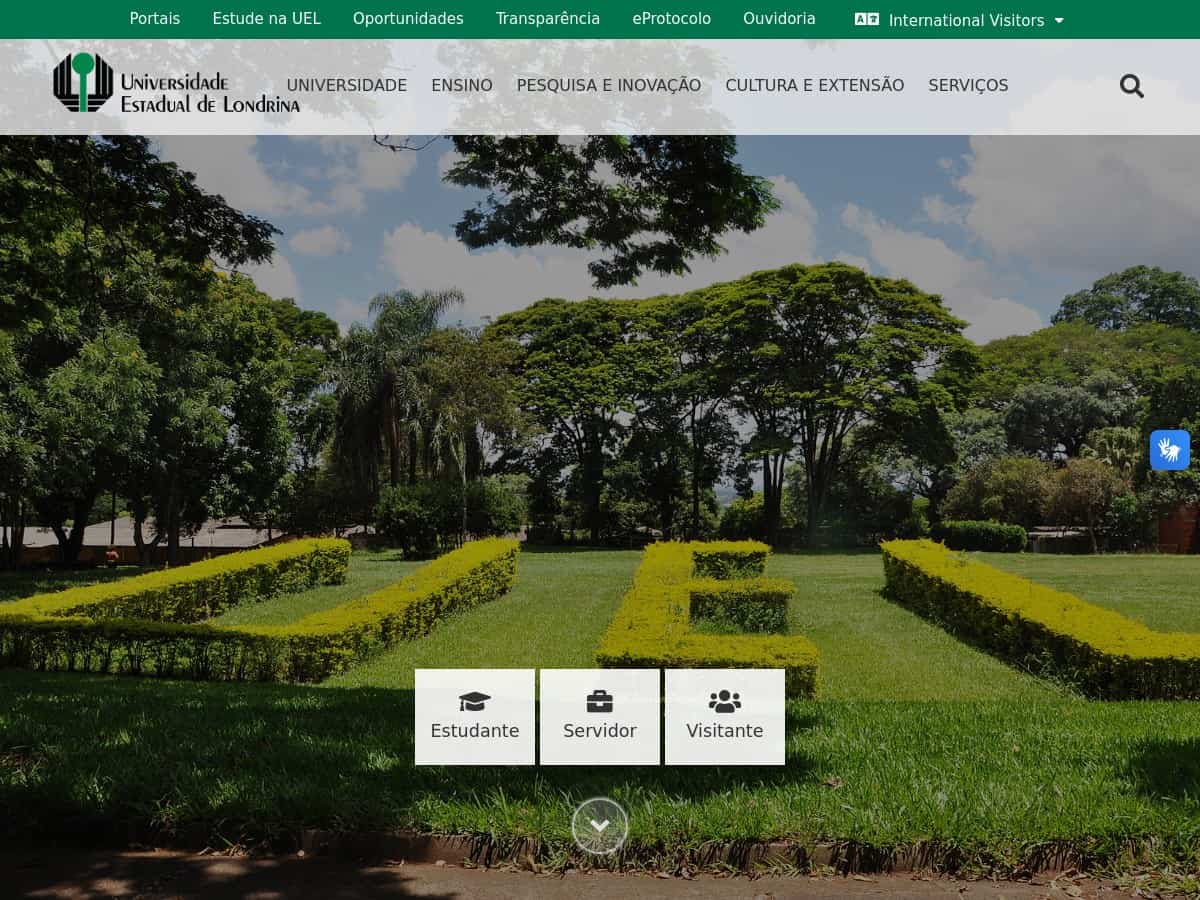
The State University of Londrina, known as UEL (Universidade Estadual de Londrina), is located in Londrina in the state of Paraná, Brazil. It was set up by the Paraná state government in 1970, and official recognition followed in 1971.
UEL grew out of isolated faculties that already existed in Londrina during the 1960s; five faculties were brought together when the university was formed. Its academic work is organised in nine study centres.
The university campus covers about 235 hectares. UEL offers undergraduate and postgraduate programmes.
Domains taught:
Engineering, Food Science, Life Sciences
Diplomas*:
Bachelor, Doctor, Master
Status:
Public
Partnerships:
Regional and national academic partnerships
Research:
Research in health, food technology, and engineering
Universität Hohenheim in Stuttgart, Germany, lists Agricultural Sciences and Bioeconomy, Food Science and Biotechnology.
University of Milan in Milan, Italy, lists Agriculture and Food Sciences among a broad range of fields including Medicine and Law.
*our own picks (our criteria: a mix between domains, diploma delivered, reputation and size), but obviously too many criteria for an apple-to-apple ranking.
FAQ
What does UEL stand for?
UEL abbreviates Universidade Estadual de Londrina, in English the State University of Londrina. It is located in the city of Londrina in Paraná.
In what year did the university come into being?
It was set up by the Paraná state government in 1970. Official recognition followed in 1971.
From which institutions did UEL originate?
It grew out of isolated faculties in Londrina, and five faculties were united when the university was formed. Those faculties already operated in the city before 1970.
How is the university structured academically?
Teaching and research are organised in nine study centres.
How large is the campus?
The campus covers about 235 hectares.
Which degree levels does UEL offer?
It offers undergraduate courses as well as postgraduate programmes.
Engineering, Environmental Engineering, Environmental Impact, Food, Food Safety, Health Sciences, Research and Development, Sustainable Development
*: without any judgment of the quality, readers are strongly encouraged to check the official status of the exact diploma envisioned as many universities have a mix of recognized diplomas, not recognized, “co-delivered,” “equivalent to”, “some pathways” (…), can change over time, and can be named differently from one country to another.
**: international reputation: is based on some criteria that do not mean much in some domains or specialties (number of researchers, of scientific publications, on budget ….). Our approximate 1-4 scale:
known locally
known locally and internationally
is listed in some of the world university’s classifications
is listed among the 20 firsts in some of world university’s classifications
***: estimated numbers, based on online sources and/or feedbacks. The numbers can vary greatly depending on school organisation (ex.: school is part of a group, it employs internal staff or external consultants or has public staff without employing them …). Refer to all the links provided to have accurate and updated numbers.
Innovation.world is not affiliated with this school/university. We recommend to contact them directly on their website for any special request.
To complete or correct any information here or share your opinion, please comment below or > send us a direct message <.