Product Design, Manufacturing & Innovation Resources
Home » Indian Institute of Information Technology Nagpur (IIITN)

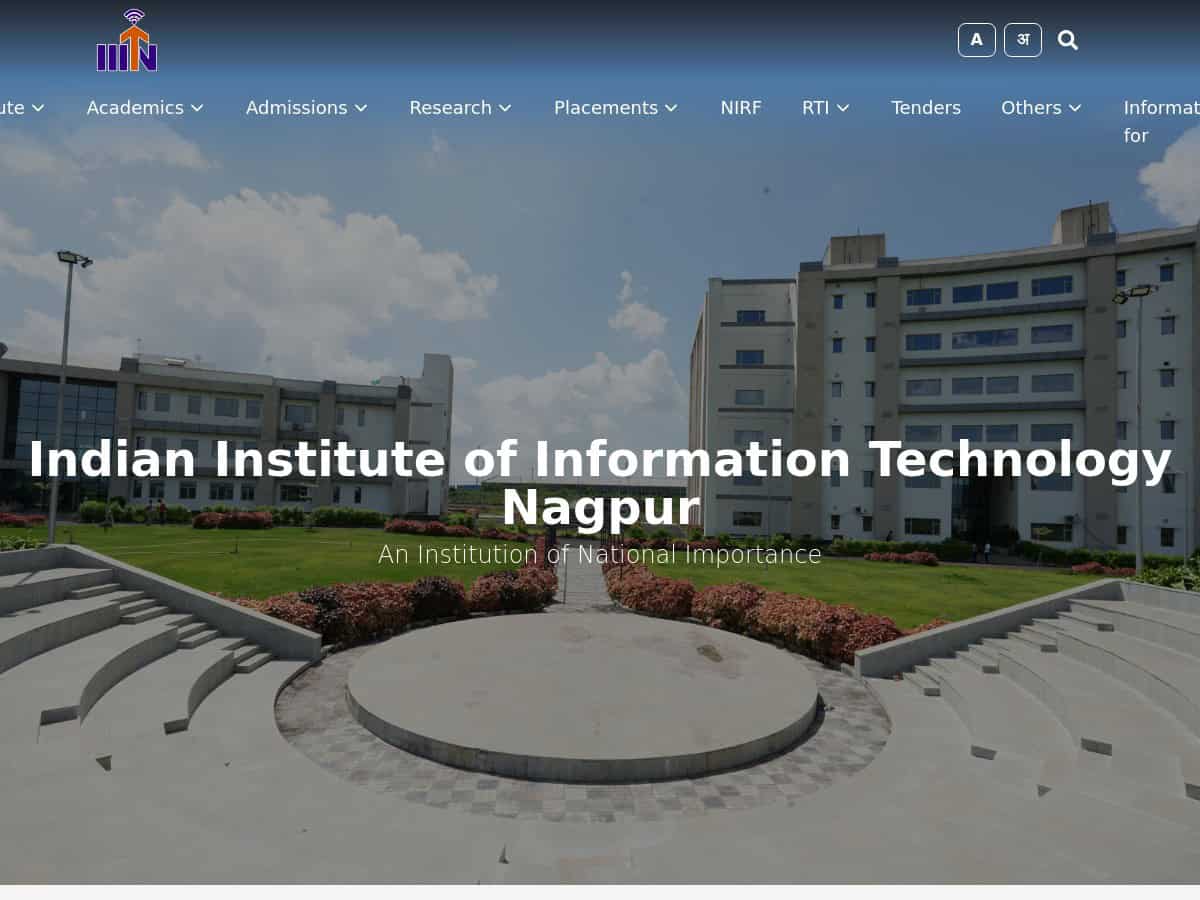
Indian Institute of Information Technology Nagpur (IIITN)

Indian Institute of Information Technology Nagpur (IIITN)
Address: Survey No. 140,141/1 behind Br. Sheshrao Wankhade Shetkari Sahakari Soot Girni, Village – Waranga, PO – Dongargaon(Butibori), Tahsil- Nagpur (Rural), 441108 Nagpur, Maharashtra, India
Computer Science and Engineering, Electronics and Communication Engineering

Established in 2016 under a Public-Private Partnership (PPP) model, IIIT Nagpur is an Institute of National Importance, focusing on Information Technology education and research.

Domains taught:

Diplomas*:

Status:

Partnerships:

Industry partners include Tata Consultancy Services (TCS) and ADCC Infocad. Mentored by VNIT Nagpur. Focus on industry-relevant IT education.

Research:

Developing research in areas like AI, IoT, data analytics, and VLSI design.

Famous Alumnis:

N/A

International recognition**:

Number of staff***:

100

Current students***:

900

Foreign students***:

1%

Cumulative former students***:

N/A

Pros

Located in Nagpur, a major city in Maharashtra; industry involvement in curriculum and projects; focus on specialized IT fields.

Cons

Newer institute, still building its permanent campus and full range of facilities and research ecosystem.

Best For

Students seeking specialized IT and electronics education in Central India, with an emphasis on industry collaboration at a developing IIIT.

Most Similar Schools Locally

  • Indian Institute of Information Technology Ranchi follows much the same lines as this school, with computer vision, telecommunications and robotics as common ground, and it teaches at the same levels, namely bachelor's, master's and doctoral, and is smaller, enrolling about 600 students against roughly 900 here.
  • Also strong in computer vision, telecommunications and robotics, Indian Institute of Information Technology Dharwad makes a sensible second look at home; it is slightly smaller, at about 700 students against roughly 900 here, and is also a public institution.
  • A good alternative in the same country is Indian Institute of Information Technology Tiruchirappalli, which likewise covers computer vision, telecommunications and robotics; it is also a public institution, and teaches at the same levels, namely bachelor's, master's and doctoral.
  • Indian Institute of Information Technology Kalyani sits close to this institution on computer vision, telecommunications and robotics; it is also a public institution, and teaches at the same levels, namely bachelor's, master's and doctoral.
  • Another national school that puts computer vision, telecommunications and robotics at the centre is Indian Institute of Information Technology Pune, and it has almost the same size, at about 800 students, and is also a public institution.

Most Similar Schools Abroad

  • Escola de Enxeñaría de Telecomunicación in Spain shares the computer vision, telecommunications and robotics orientation of this school, and it is larger, enrolling about 1,500 students against roughly 900 here, and is also a public institution.
  • La Salle Campus Barcelona - Escuela Técnica Superior de Ingeniería La Salle in Spain pursues a similar profile in computer vision, telecommunications and robotics, and it teaches at the same levels, namely bachelor's, master's and doctoral, and covers bioengineering and engineering as well.
  • If this school is on your list for computer vision, telecommunications and data analytics, IT University of Copenhagen in Denmark deserves a comparison, because it runs the same bachelor's, master's and doctoral programmes, and covers ergonomics and UX and project management as well.
  • Abroad, Innopolis University (Russia) covers computer vision, telecommunications and robotics in a comparable way, and it covers signal processing as well, and has almost the same size, at about 1,000 students.
  • On content, Odesa State University of Internal Affairs in Ukraine and this institution are close, as both teach computer vision, telecommunications and robotics; it is far larger, with about 4,000 students against roughly 900 here, and is also a public institution.

*our own picks (our criteria: a mix between domains, diploma delivered, reputation and size), but obviously too many criteria for an apple-to-apple ranking.

*: without any judgment of the quality, readers are strongly encouraged to check the official status of the exact diploma envisioned as many universities have a mix of recognized diplomas, not recognized, “co-delivered,” “equivalent to”,  “some pathways” (…), can change over time, and can be named differently from one country to another.


**: international reputation: is based on some criteria that do not mean much in some domains or specialties (number of researchers, of scientific publications, on budget ….). Our approximate 1-4 scale: 

  1. known locally
  2. known locally and internationally
  3. is listed in some of the world university’s classifications
  4. is listed among the 20 firsts in some of world university’s classifications

***: estimated numbers, based on online sources and/or feedbacks. The numbers can vary greatly depending on school organisation (ex.: school is part of a group, it employs internal staff or external consultants or has public staff without employing them …). Refer to all the links provided to have accurate and updated numbers.

Innovation.world is not affiliated with this school/university.
We recommend to contact them directly on their website for any special request.


To complete or correct any information here or share your opinion, please comment below or > send us a direct message <.

10th year anniversary

Full size images and downloads are only available, 100% free, for registered members.

> Login <















