Address: Rua XV de Novembro, 1299, 80060-000 Curitiba, Paraná, Brazil
Engineering, Computer Vision, Life Sciences
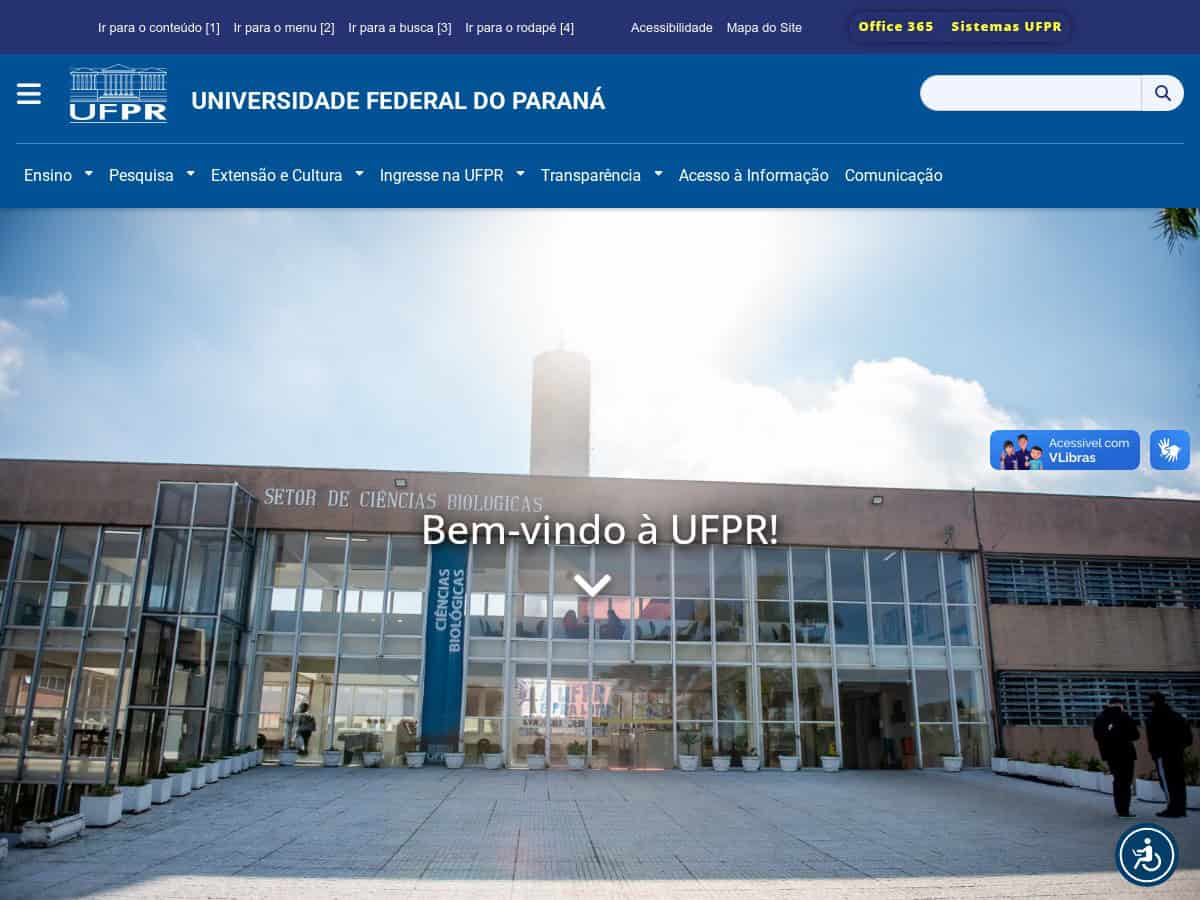
The Federal University of Paraná was created on 19 December 1912 and began teaching in 1913 as a private institution in Curitiba, in southern Brazil. Its history therefore starts well before the federal university system, and it was only in the early 1950s that it was federalised.
After federalisation it became a free public institution, which remains the model: it does not charge tuition. Curitiba is the home of the university.
Prospective students and researchers looking for courses, research centres or exam calendars should use the university’s official Portuguese-language pages, since details such as vacancies and application windows are decided every year. Students comparing Brazilian universities can use the founding date, the federal status and the location in Curitiba as a starting point, then check each course page for its curriculum, duration and requirements.
Domains taught:
Computer Vision, Engineering, Life Sciences
Diplomas*:
Bachelor, Doctor, Master
Status:
Public
Partnerships:
Active collaborations with EMBRAPA and industry
Research:
Research on computing, biomedical sciences, and engineering
Federal University of Santa Catarina is a public university in Santa Catarina whose fields include engineering, computer vision and ecology and sustainability.
Federal University of Rio Grande do Sul is a public university in Rio Grande do Sul with engineering, materials and physics as main fields.
Federal University of São Carlos is a public university in São Paulo state listing engineering, life sciences and computer vision.
Federal University of Minas Gerais is a public university in Minas Gerais with engineering, life sciences and computer vision as fields.
Pontifical Catholic University of Paraná is a private university in the same state, with engineering, life sciences and computer vision as listed fields.
Most Similar Schools Abroad
National University of La Plata in Argentina is a public university with engineering, computer science and natural sciences.
National University of Córdoba in Argentina is a public university where engineering, astronomy and chemical sciences are main fields.
Università degli Studi di Padova in Italy is a public university listing engineering, physics and life sciences.
Universiteit Utrecht in the Netherlands is a public university with earth sciences, life sciences and chemistry as main fields.
University of Granada in Spain is a public university in which sciences, health sciences and pharmacy are among the main fields.
*our own picks (our criteria: a mix between domains, diploma delivered, reputation and size), but obviously too many criteria for an apple-to-apple ranking.
FAQ
When was the Federal University of Paraná founded?
The university was created on 19 December 1912 and opened for classes in 1913. It started as a private institution.
How did it become a federal institution?
It was federalised in the early 1950s, with the date given as 1950 on the university site and 1951 elsewhere. From then on it was a free public university.
Where is its headquarters?
The university is headquartered in Curitiba, the capital of Paraná state in southern Brazil.
Does it charge tuition?
It has been a free public institution since federalisation, so it does not charge tuition.
How does admission work?
Admission rules are published on the official site of the university, and they should be checked for each year.
Where can an international visitor find official information?
The university website has Portuguese and English pages, including one on its history. Checking them is the safest way to confirm current programmes.
Bioengineering, Biomedical Sensors, Computer Aided Design (CAD), Engineering, Research and Development, Robotics, Sustainable Development
*: without any judgment of the quality, readers are strongly encouraged to check the official status of the exact diploma envisioned as many universities have a mix of recognized diplomas, not recognized, “co-delivered,” “equivalent to”, “some pathways” (…), can change over time, and can be named differently from one country to another.
**: international reputation: is based on some criteria that do not mean much in some domains or specialties (number of researchers, of scientific publications, on budget ….). Our approximate 1-4 scale:
known locally
known locally and internationally
is listed in some of the world university’s classifications
is listed among the 20 firsts in some of world university’s classifications
***: estimated numbers, based on online sources and/or feedbacks. The numbers can vary greatly depending on school organisation (ex.: school is part of a group, it employs internal staff or external consultants or has public staff without employing them …). Refer to all the links provided to have accurate and updated numbers.
Innovation.world is not affiliated with this school/university. We recommend to contact them directly on their website for any special request.
To complete or correct any information here or share your opinion, please comment below or > send us a direct message <.