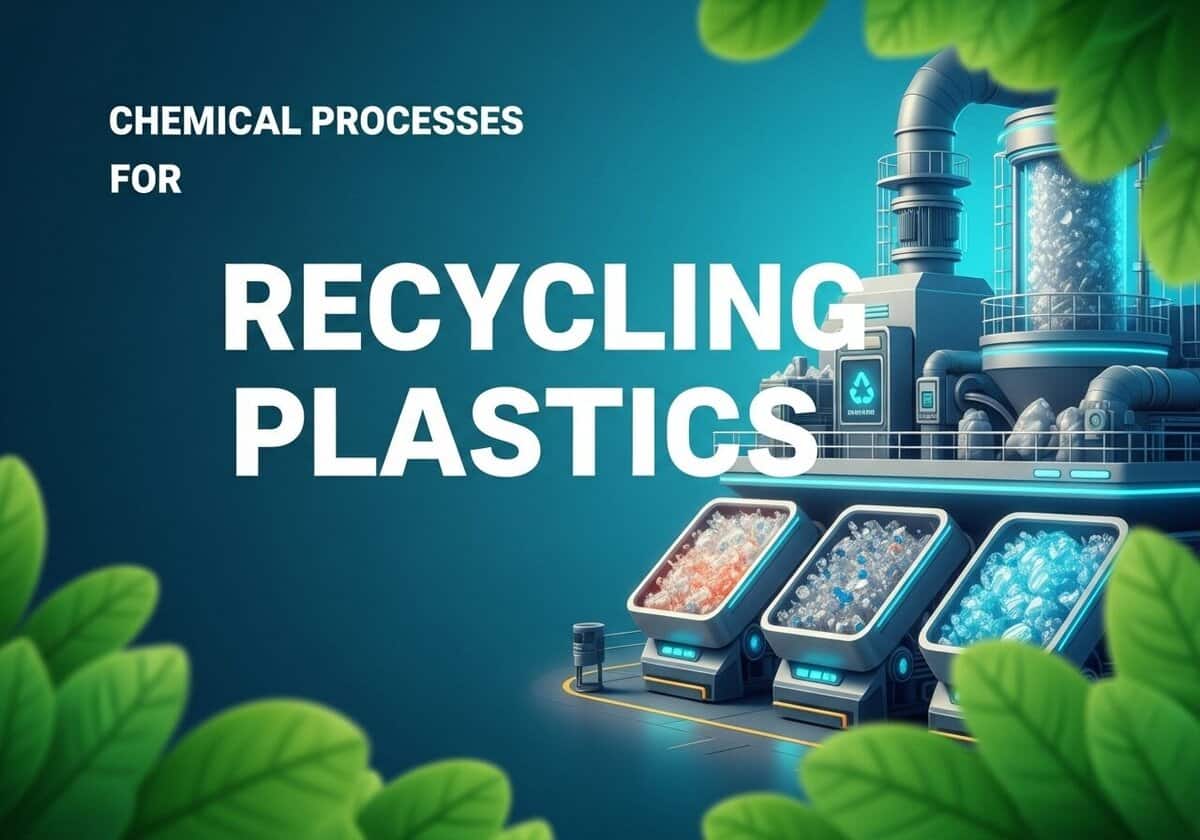
Com a quantidade de resíduos plásticos em nível global atingindo patamares alarmantes — estima-se que sejam produzidas 380 milhões de toneladas anualmente, das quais apenas 9% são recicladas —, a urgência por soluções eficazes de reciclagem nunca foi tão grande. A reciclagem química surge como uma abordagem transformadora, distinta dos métodos mecânicos convencionais, oferecendo o potencial de recuperar matéria-prima valiosa de uma variedade de materiais. plásticosEste artigo fornecerá uma visão geral abrangente das principais tecnologias de reciclagem química, incluindo pirólise e gaseificação, e avaliaremos suas necessidades de matéria-prima para diferentes tipos de plástico. Avaliaremos os produtos finais, como monômeros e combustíveis, discutiremos os níveis atuais de prontidão tecnológica e a escalabilidade desses processos, e analisaremos suas implicações ambientais e viabilidade econômica.
Principais conclusões
- A reciclagem química difere significativamente dos processos mecânicos.
- A pirólise pode converter plásticos em combustível e outros produtos.
- A gaseificação transforma plásticos em gás de síntese para geração de energia.
- Os requisitos de matéria-prima variam de acordo com os tipos de plástico processados.
- Os produtos finais incluem monômeros, nafta e combustíveis.
- O impacto ambiental e os fatores econômicos influenciam a viabilidade.
Visão geral da reciclagem química e sua distinção da reciclagem mecânica.
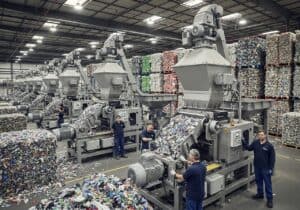
A reciclagem química é uma abordagem transformadora que envolve a quebra de plásticos em nível molecular para regenerar matérias-primas adequadas para diversas aplicações. Ao contrário de outros processos, como a reciclagem química, a reciclagem de plásticos em nível molecular pode levar à regeneração de matérias-primas adequadas para diversas aplicações.
A reciclagem mecânica processa fisicamente os plásticos em pedaços menores sem alterar sua estrutura química, enquanto a reciclagem química visa decompor os polímeros, convertendo-os novamente em monômeros ou outros componentes químicos básicos. Esse processo permite a produção de materiais reciclados de alta qualidade que podem ser reutilizados na fabricação de novos produtos com propriedades semelhantes às dos materiais virgens.
Por exemplo, um estudo indicou que a reciclagem química poderia potencialmente recuperar mais de 90% dos plásticos, transformando-os em materiais utilizáveis e resolvendo os problemas de qualidade frequentemente associados aos materiais reciclados mecanicamente.
Em contrapartida, a reciclagem mecânica frequentemente apresenta limitações devido à contaminação, à complexidade da composição da matéria-prima e à degradação das propriedades do material após repetidas reciclagens. Por exemplo, os processos mecânicos podem levar à perda de algumas características físicas dos plásticos, geralmente resultando em aplicações de menor valor agregado. Isso pode ser quantificado por uma queda significativa na resistência à tração, que por vezes ultrapassa 50% para certos polímeros após apenas dois ciclos de reciclagem mecânica.
Geralmente, a reciclagem química pode ser dividida em dois métodos principais:
- despolimerização, que se concentra em retornar os plásticos aos seus estados monoméricos.
- A pirólise os converte em combustíveis e produtos químicos. Cada método tem sua respectiva adequação, dependendo do tipo de plástico que está sendo processado.
Por exemplo, o PET (polietileno tereftalato), comumente usado em garrafas de bebidas, pode ser despolimerizado de forma eficaz para recuperar seus monômeros constituintes, enquanto poliolefinas como o polipropileno podem ser processadas de forma mais eficiente por meio de pirólise.
Apesar de promissora, a implementação da reciclagem química enfrenta alguns desafios, incluindo a prontidão tecnológica e os entraves regulatórios. Diversos projetos-piloto em andamento na Europa e na América do Norte relataram rendimentos em torno de 80-90% para plásticos específicos, demonstrando sua viabilidade potencial. À medida que as tecnologias evoluem, a clara diferenciação entre os processos de reciclagem química e mecânica desempenhará um papel significativo na determinação da eficácia de nossos sistemas de gestão de resíduos e reciclagem.
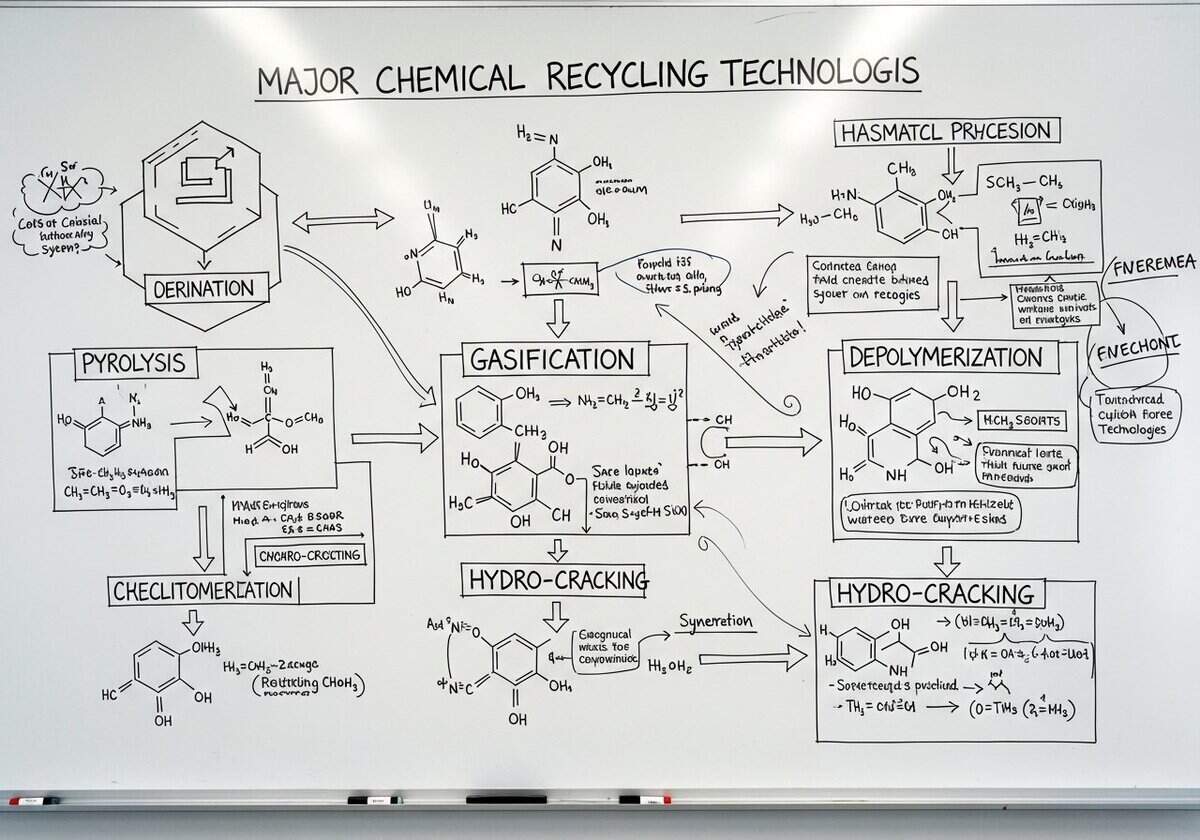
Major Chemical Recycling Technologies: Pyrolysis, Gasification, Depolymerization, and Hydro-cracking
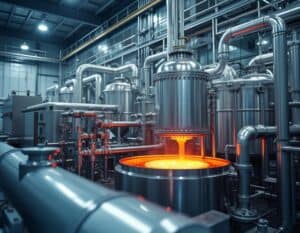
Pyrolysis process: it involves the thermal decomposition of organic materials in the absence of oxygen, converting waste plastics into valuable hydrocarbons. The typical operating temperature ranges from 300°C to 900°C, depending on the type of feedstock and desired end products. Pyrolytic oil can be used as an alternative fuel or upgraded to produce diesel and raw materials for chemical synthesis. A notable example is the conversion of polystyrene into styrene monomer, which has applications in the production of various plastics and resins. Production metrics suggest that pyrolysis can achieve an efficiency rate of up to 80%, recovering significant amounts of energy from waste plastics.
Gasification: it operates on the principle of converting carbonaceous materials into syngas (a mixture of carbon monoxide, hydrogen, and some carbon dioxide) by reacting the materials at high temperatures (around 700°C to 1,600°C) with a controlled amount of oxygen and/or steam. The syngas produced can serve as a fuel source for electricity generation or as a precursor for chemicals like methanol and ammonia. An established facility in Germany, operated by BASF, efficiently gasifies mixed plastic waste with a reported energy recovery of about 60% of the original energy content.
Depolymerization: it requires specific catalysts and conditions to cleave polymer chains into monomers or oligomers. This method is selective for certain types of plastics, such as PET and polyolefins. Recent advancements have improved yields and reduced reaction times, making depolymerization a promising method for reclaiming high-quality raw materials. The Massachusetts Institute of Technology (MIT) has successfully developed a novel catalyst that can increase the depolymerization rate for PET, significantly enhancing recovery efficiency.
Hydro-cracking: it involves the use of hydrogen and specific catalysts to convert larger hydrocarbons into smaller, more valuable ones, typically under high pressão and moderate temperatures (around 300°C to 400°C). Commonly, this method is applied to heavy oils and can also be harnessed for processing plastic waste into usable fuels. For instance, several refinery operations in South Korea effectively utilize hydro-cracking techniques, achieving yields of over 85% in liquid fuels from plastic residues. This significantly reduces landfill reliance while converting waste into economically viable products.
| Technology | Temperature (°C) | End Products | Efficiency (%) |
|---|---|---|---|
| Pyrolysis | 300-900 | Oils, waxes | 80 |
| Gasification | 700-1600 | Syngas | 60 |
| Depolymerization | Varies | Monomers | Up to 95 |
| Hydro-cracking | 300-400 | Liquid fuels | 85 |
Feedstock Requirements and Suitability for Different Plastic Types
The selection of feedstock for chemical recycling processes is dependent on the type of plastic being processed. Different plastics, categorized by their resin identification codes, possess distinct characteristics that affect their suitability for various recycling methods. For example, polyethylene terephthalate (PET), commonly used in beverage bottles, is more amenable to processes like depolymerization, yielding high-quality virgin-like materials. In contrast, polyolefins such as polyethylene (PE) and polypropylene (PP) can be effectively recycled through pyrolysis, converting them into crude oil-like substances.
Polyethylene, with its varying densities (LDPE and HDPE), presents diverse challenges. While LDPE has a lower melting point, making it less stable for thermal processes, HDPE exhibits higher strength and can sustain higher temperatures, enhancing its viability for gasification. The optimal feedstock requirements focus on particle size and impurity levels; feedstock must be sorted to remove contaminants, ensuring high conversion efficiency while minimizing feedstock degradation during processing.
Dica: for optimal results in pyrolysis, maintaining a consistent feedstock composition with a high proportion of termoplásticos improves oil yield and quality. Aim for contamination levels below 5% for better efficiency.
Statistical data indicates that mixed plastics, often viewed as problematic waste, can still contribute to viable feedstock sources, particularly in pyrolysis and gasification. Industry studies show that processing mixed plastics rather than singular types leads to a slightly lower yield but offers a 30% increase in the overall recovery of energy, making it warranted from both an economic and environmental standpoint.
The moisture content of feedstock also influences chemical recycling efficiency. Preferably, feedstock should maintain a moisture level below 10% to prevent energy losses during processing. Water content can create thermal inefficiencies; thus, reclaimed plastics need thorough drying protocols for effective gasification or pyrolysis.
| Plastic Type | Chemical Recycling Method | Feedstock Requirement | Yield |
|---|---|---|---|
| PET | Depolymerization | Low contamination, sorted flakes | High-quality monomers |
| PE/PP | Pyrolysis | Consistent, low-ash content | Oil-like products |
| Mixed Plastics | Gasification | Pre-sorted to minimize impurities | 30% energy recovery |
Output Products and Their Potential Applications in Industry
Products derived from chemical recycling processes vary depending on the technology utilized and the input material. For instance, pyrolysis typically converts plastics into synthetic crude oil, char, or gases, which can subsequently undergo further processing. These synthetic fuels can replace fossil fuels in refineries or power generation, contributing to energy systems. Furthermore, the synthetic crude oil can be upgraded to high-quality fuels or feedstocks for petrochemical production.

Gasification generates syngas, a mixture of hydrogen and carbon monoxide from various plastic waste types. This syngas has multiple applications: it can be converted into methanol or used to produce electricity via gas turbines. Companies utilizing gasification technology have successfully developed power plants that run solely on syngas from waste plastics. For example, a facility in Germany produces approximately 16 MW of energy from the gasification of plastic waste.
Depolymerization is particularly applicable for certain polymer types like polystyrene and polyesters. The process breaks polymers back to their monomers, thus allowing the production of virgin-equivalent materials. These recovered monomers can then serve as feedstock in manufacturing new products, such as packaging and textile fibers. With an increasing focus on economia circular principles, the textile industry has just begun integrating recycled monomers derived from chemical recycling into the production process.
Hydro-cracking transforms heavy plastics into lighter hydrocarbons, which can be processed into diesel or jet fuel. This technology has spurred significant interest as it addresses both plastic waste and fuels in an eco-friendly manner. Notably, companies developing hydro-cracking facilities report yields of up to 90% conversion efficiency, significantly impacting the waste management and energy sectors.
Dica: evaluate the local economic conditions for chemical recycling technologies before implementation. Facility size and output volume should match regional material availability and resultant product demand to optimize financial sustainability.
Current Technological Readiness Levels and Scalability of Chemical Recycling Processes
The Technological Readiness Levels (TRL) of chemical recycling processes vary significantly depending on the specific technology employed.
- Pyrolysis and gasification are recognized at higher TRLs, typically around 7 to 8, as they have been implemented at pilot and commercial scales in several facilities.
- Emerging methods like enzymatic recycling remain at TRL 3 to 4, indicating they are still in the developmental phase requiring further research and optimization before scaling up to commercial applicability.
Scaling chemical recycling processes involves several challenges, including feedstock availability, infrastructure development, and regulatory compliance. Pyrolysis facilities, for instance, require substantial investment in terms of capital and operational expenses. A recent study indicated that the cost of establishing a pyrolysis plant can range from $10 million to $30 million, depending on the capacity and location.
| Technology | TRL | Cost Estimate (USD) | Output Quality |
| Pyrolysis | 7-8 | $10M – $30M | Synthetic crude oil, petrochemical feedstock |
| Gasification | 7-8 | $20M – $50M | Syngas, chemical intermediates |
| Enzymatic Recycling | 3-4 | $5M – $15M | Monomers for new polymers |
Dica: Envolver early with regulatory bodies to ensure compliance and anticipate any potential hazards associated with chemical recycling processes, facilitating smoother market entry and scaling efforts.
Environmental Considerations and Economic Viability of Chemical Recycling Solutions
The sustainability of chemical recycling processes, particularly concerning their environmental footprint, is a significant aspect of the technology. Many chemical recycling methods emit fewer greenhouse gases compared to traditional landfilling or incineration.
For instance, pyrolysis can convert plastics into fuels with up to 75% lower CO2 emissions than incineration. This difference arises from the direct conversion processes used in chemical recycling, where fossil fuel inputs are minimized and waste is effectively repurposed.
Water usage is another environmental factor to consider. Processes such as gasification typically require significant amounts of water, particularly for steam generation. This input can strain local water resources, especially in arid regions. Contrastingly, hydro-cracking processes can integrate circuito fechado water systems, allowing for reduced withdrawal from natural bodies, promoting a more sustainable operation overall.
Economic viability hinges on the cost of raw materials and technology implementation. A recent study indicated that chemical recycling could achieve cost parity with virgin plastics at oil prices above $65/barrel.
Regulatory frameworks are increasingly supportive of chemical recycling technologies. Countries and regions implementing stringent plastic waste regulamentos enhance the economic landscape for these solutions. For example, the European Union’s Circular Economy Action Plan promotes investment in advanced recycling technologies, thus facilitating an ecossistema where chemical recycling can economically thrive.
| Criteria | Mechanical Recycling | Reciclagem de produtos químicos |
|---|---|---|
| Custo | Lower (< $50/ton) | Higher (up to $100/ton) |
| Environmental Footprint | Higher emissions | Lower emissions |
| Feedstock Versatility | Limitado | More versatile |
Research indicates that the circular economy could facilitate market growth for chemical recycling components. Anticipated market size for chemical recycling is projected to reach $20 billion by 2030. This statistic underscores the economic potential, driven by increased demand for recycled content in consumers’ goods … while experience has proved that this is arguable from a marketing point of view, at least at a large scale.
Dica: implement vida útil assessments (LCAs) in the early design stages of chemical recycling technologies to quantify potential impacts on the environment and economy, ensuring data-driven decision-making for sustainable development.
Conclusão
As the staggering statistics surrounding plastic waste continue to challenge our global approach to sustainability, the spotlight on chemical recycling reveals a pathway toward a more responsible management of resources. This article has showcased a variety of advanced processes, including pyrolysis, gasification, depolymerization, and hydro-cracking, highlighting their distinct qualities and the types of plastics suitable for each. Understanding the intricacies of feedstock requirements and the nature of output products enables engineers to anticipate the integration of these technologies into existing manufacturing systems, thereby enhancing the applicability of recovered materials across industries.
Frequently Asked Questions
What is chemical recycling and how does it differ from mechanical recycling?
Chemical recycling involves breaking down plastic waste into its chemical building blocks or raw materials through various processes, allowing for the recycling of a wider range of plastics beyond what mechanical recycling can handle. Mechanical recycling typically involves the physical processing of plastics into flakes or pellets, which may result in degradation of material quality over time.
What are the major chemical recycling technologies?
Key chemical recycling technologies include pyrolysis, gasification, depolymerization (also known as solvolysis), and hydro-cracking. Each technology uses different methods to convert waste plastics back into valuable products, such as fuels or raw materials for new plastic production.
What feedstock requirements do chemical recycling processes have?
The suitability of feedstock varies significantly between chemical recycling methods, with each technology best suited for specific types of plastics. For instance, pyrolysis is effective for mixed plastic waste, while depolymerization excels with polyesters or polyamides, requiring better classificação.
What products can be generated from chemical recycling processes?
Chemical recycling can produce a range of output products, including monomers, naphtha, syngas, and alternative fuels. These products can be repurposed within the chemical industry, either for the production of new plastics or to create energy sources.
How does chemical recycling fit into plastics waste management and the circular economy?
Chemical recycling plays a significant role in plastics waste management by enabling the recovery and reuse of plastics that would otherwise be discarded. This supports circular economy initiatives, where materials are continually reused, reducing landfill dependency and optimizing resource utilization.
Tópicos relacionados
- Emerging Chemical Recycling Technologies: new and innovative methods being developed in the field of chemical recycling.
- Feedstock Quality Assessment: evaluation criteria for determining the suitability of feedstock in recycling processes.
- Avaliação do Ciclo de Vida (Avaliação do ciclo de vida (ACV)): an analysis method to assess the environmental impacts of chemical recycling throughout its life cycle.
- Policy and Regulatory Frameworks: guidelines and laws influencing the practice and development of chemical recycling technologies.
- Community Engagement in Recycling Programs: the role of public awareness and participation in enhancing recycling initiatives.
- Infrastructure Development for Recycling Facilities: the necessary physical resources and systems required for supporting chemical recycling operations.
- Recyclability Evaluation Padrões: metrics and criteria used to determine the recyclability of various materials.
- End-of-Life Solutions for Plastic Products: strategies addressing the disposal and recycling of plastics at their lifecycle’s end.
- Consumer Perception of Recycling: insights into how public attitudes affect recycling behaviors and program success.
- Circular Supply Chains: systems designed to maintain materials within the economy for as long as possible through recycling.
External Links on Plastics Recycling
Normas internacionais
(Passe o cursor sobre o link para ver nossa descrição do conteúdo)
Glossário de termos utilizados
Life Cycle Assessment (LCA): Uma análise sistemática dos impactos ambientais associados a todas as etapas do ciclo de vida de um produto, desde a extração da matéria-prima até a produção, o uso e o descarte, com o objetivo de identificar oportunidades de melhoria e subsidiar a tomada de decisões.
Positron Emission Tomography (PET): Uma técnica de imagem médica que detecta raios gama emitidos pela aniquilação de pósitrons, usada para visualizar processos metabólicos em tecidos, frequentemente empregando radiotraçadores para avaliar condições como câncer, distúrbios neurológicos e doenças cardiovasculares.
Technological Readiness Levels (TRL): Uma escala utilizada para avaliar a maturidade de uma tecnologia, desde a pesquisa e desenvolvimento básicos até a implantação completa, normalmente categorizada de 1 (conceito) a 9 (uso operacional), facilitando a avaliação e a tomada de decisões nos processos de desenvolvimento tecnológico.