지속적인 개선, 능률, Just-in-Time (JIT), 린 제조, Lean Production, 종합 설비 효율(OEE), 프로세스 개선, 생산 효율성, 단일 분 금형 교환(SMED)
목적:
스메드 (Single-Minute Exchange of Die), to drastically reduce the time taken for equipment changeovers or setups, ideally to less than 10 minutes (‘single-minute’).
사용 방법:
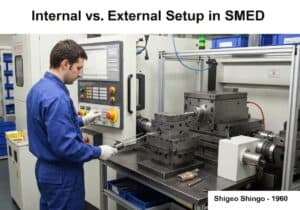
Involves analyzing the changeover process, separating internal setup operations (done when machine is stopped) from external setup operations (done while machine is running), converting internal to external steps, and streamlining all remaining operations.
장점
Increases machine uptime and production flexibility, reduces manufacturing lot sizes and inventory, improves responsiveness to customer demand, lowers production costs.
단점
Requires significant initial effort for analysis and implementation, may require investment in tooling or equipment modifications, needs strong operator training and discipline, benefits may be less significant if changeovers are already infrequent or fast.
카테고리:
공학, 린 시그마, 조작, 품질
다음과 같은 경우에 가장 적합합니다:
Manufacturing environments with frequent equipment changeovers, aiming to improve efficiency, reduce lead times, and enable smaller batch production.
SMED is widely applicable across various manufacturing sectors that necessitate rapid changeovers, particularly in industries such as automotive, aerospace, electronics, and food processing where production flexibility and responsiveness to market fluctuations are paramount due to high competitiveness. This methodology is particularly effective during the production planning and scheduling phases of projects, where teams collaborate in cross-functional groups, including engineers, production managers, and quality assurance personnel, to optimize the changeover process. For instance, in an automotive assembly line, implementing SMED can reduce the time taken for die changes from hours to mere minutes, enabling manufacturers to shift between different vehicle models more efficiently. Participants in SMED projects typically focus on mapping the current changeover process, identifying bottlenecks, and employing techniques like training operators to perform tasks in parallel with machine operation, thereby reducing idle time. Lean principles often intertwine with SMED practices, as both aim to minimize waste and enhance productivity; this can lead to significant reductions in work-in-progress inventory and enhanced product quality. Implementing SMED not only benefits manufacturers directly by lowering production costs and improving customer satisfaction through faster delivery times but also has broader implications such as contributing to sustainable manufacturing practices by reducing resource waste associated with larger production runs.
이 방법론의 주요 단계
Identify all setup operations involved in the changeover process.
Separate internal setup operations from external setup operations.
Convert as many internal setup operations to external ones as possible.
Streamline remaining internal setup operations for efficiency.
Standardize setup procedures to ensure consistency.
Implement visual aids and tools to assist in setup processes.
Continuously train personnel on new setup procedures and practices.
Regularly review and refine changeover processes for ongoing improvement.
프로 팁
Utilize pre-setup checklists to ensure all components for changeover are prepared in advance, minimizing time spent during the internal setup phase.
Implement color-coded tools and parts to increase operator awareness and reduce errors in the setup process, enhancing speed and accuracy of changeovers.
Conduct regular training sessions and simulations for operators on the changeover process to identify bottlenecks and continually improve operational efficiency.