Product Design, Manufacturing & Innovation Resources

SMED (تبادل القوالب في دقيقة واحدة)

حداد

SMED (تبادل القوالب في دقيقة واحدة)

الهدف:

حداد (تبديل القوالب في دقيقة واحدة)، لتقليل الوقت المستغرق في تبديل المعدات أو الإعدادات بشكل كبير، ومن الناحية المثالية إلى أقل من 10 دقائق ("دقيقة واحدة").


كيفية استخدامه:

الايجابيات

سلبيات

الفئات:

الأفضل لـ:

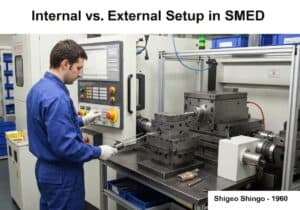
SMED is widely applicable across various manufacturing sectors that necessitate rapid changeovers, particularly in industries such as automotive, aerospace, electronics, and food processing where production flexibility and responsiveness to market fluctuations are paramount due to high competitiveness. This methodology is particularly effective during the production planning and scheduling phases of projects, where teams collaborate in cross-functional groups, including engineers, production managers, and quality assurance personnel, to optimize the changeover process. For instance, in an automotive assembly line, implementing SMED can reduce the time taken for die changes from hours to mere minutes, enabling manufacturers to shift between different vehicle models more efficiently. Participants in SMED projects typically focus on mapping the current changeover process, identifying bottlenecks, and employing techniques like training operators to perform tasks in parallel with machine operation, thereby reducing idle time. Lean principles often intertwine with SMED practices, as both aim to minimize waste and enhance productivity; this can lead to significant reductions in work-in-progress inventory and enhanced product quality. Implementing SMED not only benefits manufacturers directly by lowering production costs and improving customer satisfaction through faster delivery times but also has broader implications such as contributing to sustainable manufacturing practices by reducing resource waste associated with larger production runs.

الخطوات الرئيسية لهذه المنهجية

  1. تحديد جميع عمليات الإعداد المتضمنة في عملية التغيير.
  2. افصل عمليات الإعداد الداخلي عن عمليات الإعداد الخارجي.
  3. تحويل أكبر عدد ممكن من عمليات الإعداد الداخلي إلى عمليات إعداد خارجية.
  4. تبسيط عمليات الإعداد الداخلي المتبقية لتحقيق الكفاءة.
  5. توحيد إجراءات الإعداد القياسية لضمان الاتساق.
  6. تنفيذ الوسائل والأدوات البصرية للمساعدة في عمليات الإعداد.
  7. تدريب الموظفين باستمرار على إجراءات وممارسات الإعداد الجديدة.
  8. مراجعة عمليات التغيير وتنقيحها بانتظام من أجل التحسين المستمر.

نصائح للمحترفين

  • استخدم قوائم مراجعة ما قبل الإعداد لضمان إعداد جميع مكونات التغيير مسبقًا، مما يقلل من الوقت المستغرق أثناء مرحلة الإعداد الداخلي.
  • تنفيذ أدوات وقِطع مرمزة بالألوان لزيادة وعي المشغل وتقليل الأخطاء في عملية الإعداد، مما يعزز سرعة ودقة عمليات التغيير.
  • إجراء دورات تدريبية منتظمة وعمليات محاكاة للمشغلين على عملية التبديل لتحديد الاختناقات وتحسين الكفاءة التشغيلية باستمرار.

لقراءة عدة منهجيات ومقارنتها, نوصي باستخدام

> مستودع المنهجيات الشامل  <
مع أكثر من 400 منهجية أخرى.

نرحب بتعليقاتكم على هذه المنهجية أو المعلومات الإضافية على قسم التعليقات أدناه ↓، وكذلك أي أفكار أو روابط متعلقة بالهندسة.

السياق التاريخي

1950
1955
1956
1960
1960
1960
1960
1950
1950
1955
1958
1960
1960
1960
1960

(إذا كان التاريخ غير معروف أو غير ذي صلة، على سبيل المثال "ميكانيكا الموائع"، يتم توفير تقدير تقريبي لظهوره الملحوظ)


الصور بالحجم الكامل والتنزيلات متاحة فقط 100% مجاناً للأعضاء المسجلين.