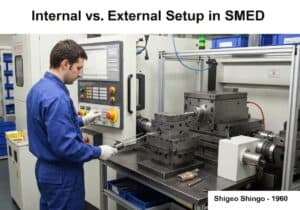
SMED is widely applicable across various manufacturing sectors that necessitate rapid changeovers, particularly in industries such as automotive, aerospace, electronics, and food processing where production flexibility and responsiveness to market fluctuations are paramount due to high competitiveness. This methodology is particularly effective during the production planning and scheduling phases of projects, where teams collaborate in cross-functional groups, including engineers, production managers, and quality assurance personnel, to optimize the changeover process. For instance, in an automotive assembly line, implementing SMED can reduce the time taken for die changes from hours to mere minutes, enabling manufacturers to shift between different vehicle models more efficiently. Participants in SMED projects typically focus on mapping the current changeover process, identifying bottlenecks, and employing techniques like training operators to perform tasks in parallel with machine operation, thereby reducing idle time. Lean principles often intertwine with SMED practices, as both aim to minimize waste and enhance productivity; this can lead to significant reductions in work-in-progress inventory and enhanced product quality. Implementing SMED not only benefits manufacturers directly by lowering production costs and improving customer satisfaction through faster delivery times but also has broader implications such as contributing to sustainable manufacturing practices by reducing resource waste associated with larger production runs.