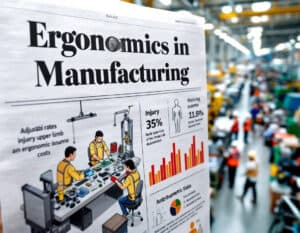
Physical and cognitive strain on a person using a product or a workstation can be measured rather than guessed at, and this course covers the assessment methods that do it. It opens with a full workstation ergonomic assessment, the Revised NIOSH lifting equation for manual material handling, and the graphical symbol and color coding standards that keep a workspace legible, then moves into 洗浄性 as a design constraint, an applied paraglider parachute extraction ergonomics study, and the Steffen aircraft boarding 方法 as an example of ergonomic thinking applied outside a factory floor.
人間工学 is one of the few engineering disciplines with a direct, measurable link to injury rates and insurance cost, which makes this course a priority for any manufacturer running a manual assembly line, and equally relevant to a product developer designing a tool or appliance a consumer will hold repeatedly. This pool of existing content is thinner than the other コース on this list, and the missing items below, Rapid Upper Limb Assessment, Rapid Entire Body Assessment and formal 人体計測 data, are the ones that would need to be written first to bring the course to full professional depth.