Address: North Avenue NW, 30332 Atlanta, Georgia, United States
Engineering, Computer Science, Aerospace
Established in 1885, Georgia Tech is a public research university in Atlanta, renowned for its programs in engineering, computing, sciences, design, and business. It has a strong focus on research, innovation, and co-operative education.
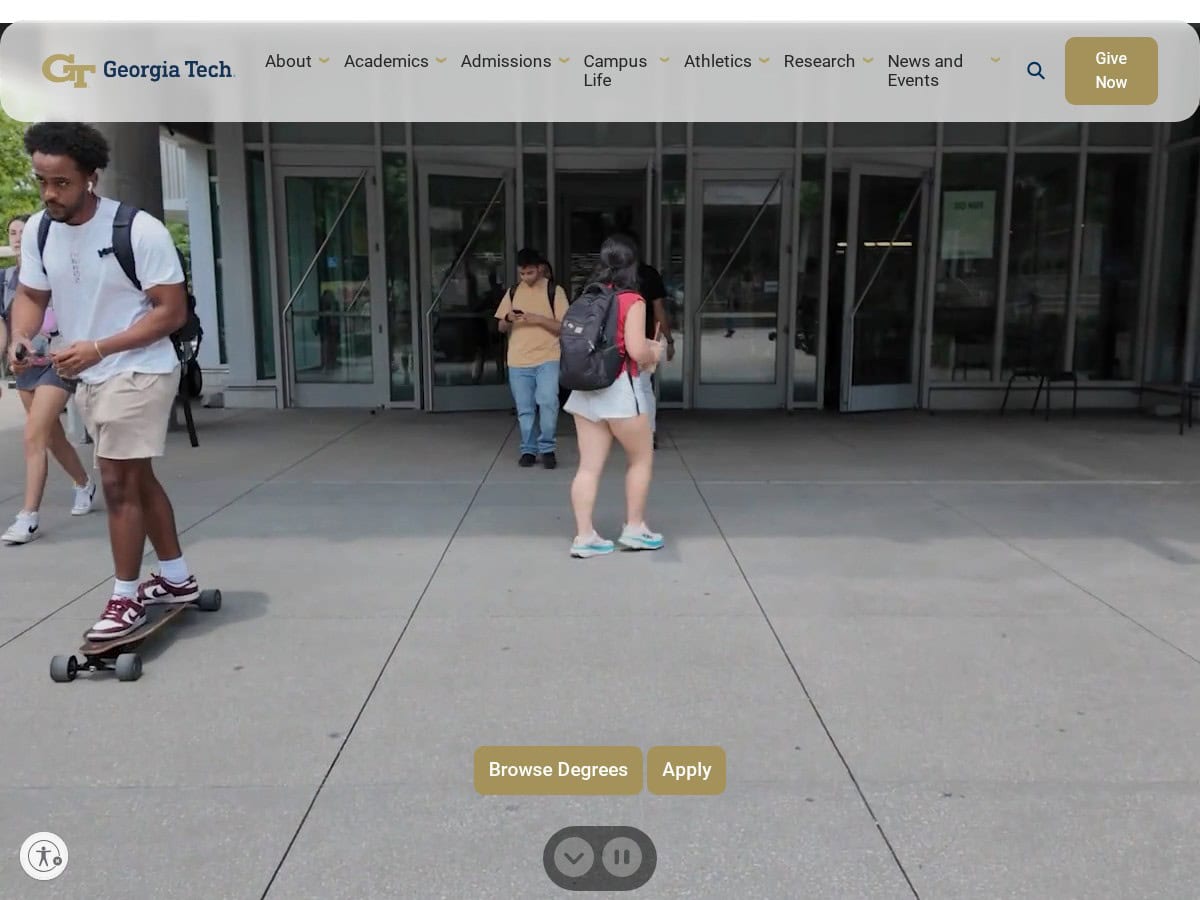
Georgia Tech was founded in 1885 as the Georgia School of Technology, to support the industrial development of the South after the Civil War, and it opened in 1888 with a single programme in mechanical engineering. It took its present name in 1948. The campus lies in Midtown Atlanta, close to the downtown skyline, with brick buildings, the Tech Tower and a mix of modern facilities. It has about 45,000 students, including a large online population, and roughly 6,000 staff.
The institute is organised in colleges of computing, design, engineering, sciences, business and liberal arts. Its engineering college is one of the largest in the country, and its programmes in industrial, aerospace, electrical and biomedical engineering are well regarded. The online master’s degree in computer science, launched in 2014 at a low price, attracted thousands of students and became an international model for low-cost graduate education.
Georgia Tech has a long cooperative education tradition, which began in 1912 and lets students alternate semesters of study and paid work with companies. The Georgia Tech Research Institute carries out contract research for government and industry, and the Technology Square district, next to the campus, hosts startups and corporate laboratories. The 1996 Olympic Games used the campus for the Olympic Village and the aquatic centre, which left a legacy of facilities and housing.
Admission is selective, and tuition differs for Georgia residents and for out-of-state and international students, who pay much more. Check the current tariff. Teaching is in English. Scholarships exist, and cooperative placements help to finance studies.
The athletic teams are the Yellow Jackets, and the rivalry with the University of Georgia is long-standing. The MARTA rail system stops at the North Avenue and Midtown stations, so students can reach downtown and the airport without a car.
Domains taught:
Aerospace, AI and Machine Learning, Data Analytics, Engineering, Manufacturing, Robotics, Software Engineering
Diplomas*:
Bachelor, Doctor, Master, MBA
Status:
Private
Partnerships:
Extensive co-op program and partnerships with industry (e.g., Coca-Cola, Delta, Home Depot, Google). Strong connections with government research (e.g., GTRI – Georgia Tech Research Institute). International campuses (e.g., France, China).
Research:
A leading research university with significant contributions in engineering (aerospace, industrial, biomedical), computing (AI, cybersecurity, robotics), advanced materials, and sustainable systems. High research expenditure.
Famous Alumnis:
Jimmy Carter, Mike Duke, Chris Bosh, Nomar Garciaparra, Jeff Glover, Mayim Bialik (PhD from UCLA, but BS from here cited sometimes, incorrect)
International recognition**:
Number of staff***:
6100
Current students***:
45300
Foreign students***:
20%
Cumulative former students***:
185000
Pros
Top-ranked engineering and computing programs, strong co-op and career services, vibrant innovation ecosystem (Technology Square), diverse student body, strong athletics.
Cons
Academically rigorous and demanding curriculum, large student population, urban campus with some associated challenges, can be competitive for popular majors.
Best For
Students passionate about engineering, computing, or technology, seeking a rigorous, research-oriented education with strong industry connections, co-op opportunities, and an innovative spirit.
Carnegie Mellon University shares the core fields of this institution, namely robotics, data analytics and AI and machine learning; it runs the same bachelor's, master's, doctoral and mba programmes, and covers industrial design and computer vision as well.
Massachusetts Institute of Technology sits close to this school on robotics, AI and machine learning and software engineering; it runs the same bachelor's, master's, doctoral and mba programmes, and covers physics and mathematics as well.
On content, University of Texas at Austin and this institution are close, as both teach data analytics, AI and machine learning and software engineering; it is slightly larger, at about 52,400 students against roughly 45,300 here, and is public, whereas this institution is private.
The comparison with Purdue University, West Lafayette is straightforward on subjects, since both focus on aerospace, manufacturing and AI and machine learning, and it is public, whereas this school is private, and runs the same bachelor's, master's, doctoral and mba programmes.
Anyone who wants a second school in the same country with a similar spread of data analytics, AI and machine learning and software engineering can consider Johns Hopkins University, and it covers bioengineering and project management as well, and is slightly smaller, at about 31,500 students against roughly 45,300 here.
Most Similar Schools Abroad
A foreign alternative with a similar emphasis on robotics, data analytics and AI and machine learning is University of Waterloo in Canada, and it covers nanotechnologies and mathematics as well, and has almost the same size, at about 42,500 students.
Indian Institute of Technology Bombay in India shares the robotics, AI and machine learning and software engineering orientation of this institution, and it teaches at the same levels, namely bachelor's, master's, doctoral and mba, and covers nanotechnologies and bioengineering as well.
For aerospace, AI and machine learning and software engineering outside the home country, Indian Institute of Technology Kanpur in India is a natural reference; it is public, whereas this institution is private, and teaches at the same levels, namely bachelor's, master's, doctoral and mba.
Seen from abroad, McMaster University (Canada) is a close relative on subject matter, since data analytics, AI and machine learning and software engineering are central to both, and it is slightly smaller, at about 37,500 students against roughly 45,300 here, and is public, whereas this institution is private.
Yonsei University, in South Korea, takes a similar route through data analytics, software engineering and engineering; it is also a private institution, and teaches at the same levels, namely bachelor's, master's, doctoral and mba.
*our own picks (our criteria: a mix between domains, diploma delivered, reputation and size), but obviously too many criteria for an apple-to-apple ranking.
FAQ
Where is Georgia Tech?
In Midtown Atlanta, Georgia, close to the downtown skyline.
When was it founded?
In 1885 as the Georgia School of Technology, and it opened in 1888.
How large is it?
About 45,000 students, including a large online population, and roughly 6,000 staff.
What colleges does it have?
Computing, design, engineering, sciences, business and liberal arts.
What is the online master's in computer science?
A low-cost graduate degree launched in 2014 that attracted thousands of students.
What is the co-op programme?
A cooperative education tradition, begun in 1912, in which students alternate study with paid work in companies.
What is GTRI?
The Georgia Tech Research Institute, which does contract research for government and industry.
What is the link with the 1996 Olympics?
The campus hosted the Olympic Village and the aquatic centre.
How does tuition differ?
Georgia residents pay less than out-of-state and international students. Check the current tariff.
How do you reach downtown without a car?
By MARTA rail from the North Avenue and Midtown stations.
*: without any judgment of the quality, readers are strongly encouraged to check the official status of the exact diploma envisioned as many universities have a mix of recognized diplomas, not recognized, “co-delivered,” “equivalent to”, “some pathways” (…), can change over time, and can be named differently from one country to another.
**: international reputation: is based on some criteria that do not mean much in some domains or specialties (number of researchers, of scientific publications, on budget ….). Our approximate 1-4 scale:
known locally
known locally and internationally
is listed in some of the world university’s classifications
is listed among the 20 firsts in some of world university’s classifications
***: estimated numbers, based on online sources and/or feedbacks. The numbers can vary greatly depending on school organisation (ex.: school is part of a group, it employs internal staff or external consultants or has public staff without employing them …). Refer to all the links provided to have accurate and updated numbers.
Innovation.world is not affiliated with this school/university. We recommend to contact them directly on their website for any special request.
To complete or correct any information here or share your opinion, please comment below or > send us a direct message <.