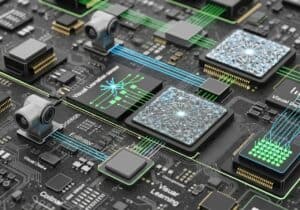
Computer vision focuses on the automated extraction, analysis, and interpretation of visual information from images and videos. This discipline integrates image processing, pattern recognition, and machine learning to address tasks such as object detection, segmentation, recognition, and 3D reconstruction. Research explores advancements in convolutional neural networks, optical flow, depth estimation, and scene understanding, enabling applications across robotics, surveillance, medical imaging, and autonomous systems. The following collection presents recent scholarly publications and patented tecnologie that advance methodologies and applications within computer vision:
Questa è la nostra ultima selezione di pubblicazioni e brevetti in lingua inglese sulla Computer Vision, tra numerose riviste scientifiche online, classificate e focalizzate su segmentazione di immagini, rilevamento di oggetti, estrazione di caratteristiche, rete neurale convoluzionale, classificazione di immagini, flusso ottico, visione stereo, stima della profondità, riconoscimento di immagini, comprensione della scena, ricostruzione dell'immagine, miglioramento dell'immagine, riconoscimento di pattern, riconoscimento facciale, traccia del movimento, ricostruzione 3D, registrazione dell'immagine, Computer Vision, segmentazione semantica, segmentazione di istanze, SLAM visivo, stitching di immagini, analisi di texture, rilevamento di bordi, tracciamento di oggetti, super-risoluzione, denoising di immagini, analisi di video, rilevamento di anomalie e didascalie di immagini.
A study on consumer behavior pattern recognition in a low-carbon economy based on deep learning
Published on 2026-07-08 by @OXFORD
Abstract: AbstractThis paper proposes a novel low-carbon consumer behavior recognition method based on multilevel deep learning. By leveraging an Adaptive Temporal Convolutional Network (ATCN), a Mixed Prior Variational Autoencoder (MP-VAE), and a context-aware gated fusion mechanism, the model dynamically adapts to interindividual heterogeneity and temporal dynamics. The ATCN models multiscale behavior patterns, the MP-VAE captures heterogeneous latent motivational factors, and the fusion mechanism integ[...]
Our summary: This study introduces a method for recognizing consumer behavior in a low-carbon economy using multilevel deep learning techniques. It employs an Adaptive Temporal Convolutional Network and a Mixed Prior Variational Autoencoder to model behavior patterns and motivational factors. The approach enhances robustness through uncertainty-aware fusion and adaptive imputation, demonstrating effectiveness in real-world applications.
deep learning, consumer behavior, low-carbon economy, pattern recognition
Publication
Stationary object collision avoidance system
Patent published on the 2026-07-02 in US under Ref US20260188130 by SOUTHWEST RESEARCH INST [US] (Lee Peter Mark [us])
Abstract: In an approach to detecting stationary objects in a traffic alert and collision avoidance system. The method includes supplying an aircraft with a collision avoidance system (CAS) wherein the CAS provides a display for stationary object detection; providing a stationary object with a transponder where the CAS interrogates the stationary object transponder and determines a height and distance of the stationary object relative to the aircraft; wherein the CAS determines a range, bearing and relati[...]
Our summary: The system detects stationary objects to prevent collisions. It uses a transponder to determine the object s height and distance. Alerts are issued visually or audibly, and lighting systems can be activated for increased visibility.
collision avoidance, stationary object detection, transponder system, traffic alert
Patent
Method and system for checking tyres
Patent published on the 2026-07-02 in WO under Ref WO2026139758 by PIRELLI TYRE S P A [IT] (Bianchi Silvano [it], Bignoli Andrea [it], Monti Stefano [it], Sangiovanni Stefano [it], Regoli Fabio [it])
Abstract: Method for checking tyres, comprising: providing an initial image representative of a finished tyre, said initial image comprising first pixels, representative of plain or decorated first background areas, and second pixels, representative of second areas containing writings and/or logos; applying a segmentation algorithm to said initial image, thereby obtaining a corresponding segmented image, wherein said segmentation algorithm is based on a first neural network. The first neural network is tr[...]
Our summary: The method checks tyres by analyzing an initial image through a segmentation algorithm powered by a neural network. It processes the segmented image to fill in areas and applies another neural network for anomaly detection. A notification signal is generated if any anomalies are detected in the resulting image.
image processing, neural networks, anomaly detection, segmentation
Patent
Information processing device
Patent published on the 2026-07-02 in WO under Ref WO2026140328 by PIONEER CORP [JP] (Gu Zhiming [jp])
Abstract: The present invention obtains an appropriate analysis result. The present invention: acquires a moving image captured from a moving body in a prescribed period including the occurrence timepoint of an accident that has occurred in the moving body; acquires travel data of the moving body in the prescribed period; by using a dedicated object detection model for detecting the state of a traffic light and a traffic sign and on the basis of the moving image, detects the positions of the traffic sign [...]
Our summary: The invention analyzes accidents by acquiring moving images and travel data from a moving body. It detects traffic signs and lights using dedicated and zero shot object detection models. The analysis combines the detected states of traffic elements with the moving image and travel data.
object detection, traffic analysis, moving image processing, accident analysis
Patent
Method for determining values of a convolution kernel for an iterative statistical reconstruction procedure used in pet imaging
Patent published on the 2026-07-02 in US under Ref US20260187886 by CZESTOCHOWA UNIV OF TECHNOLOGY [PL] (Cierniak Robert [pl])
Abstract: [0000] A method for determining a convolution kernel for an iterative statistical algorithm based on a continuous-to-continuous data model for image reconstruction from radiation measurements obtained in emission tomography, specifically in a Positron Emission Tomography (PET) scanner. The method improves the resolution of reconstructed images, reduces the radiation dose absorbed by patients during PET examinations, and/or shortens the measurement acquisition time without significant loss in the[...]
Our summary: The method determines a convolution kernel for iterative statistical reconstruction in PET imaging. It enhances image resolution, reduces patient radiation dose, and shortens acquisition time. The design considers statistical properties of measurement signals to maintain functional image quality.
convolution kernel, iterative statistical reconstruction, Positron Emission Tomography, image quality
Patent
Methods and systems for use in computer vision for shadow mitigation
Patent published on the 2026-07-02 in US under Ref US20260187972 by VANTOR INC [US] (Danforth Charles [us], Bader Brett W [us], Aschenbeck Michael [us])
Abstract: [0000] Systems and methods for mitigating shadow segments from images are provided. One example computer-implemented method includes accessing an original image of a geospatial location including a first shadow segment and generating, using a model architecture, a matte for the original image. The method also includes generating a first histogram of tones of shadow pixels of the first shadow segment in the original image, generating a second histogram of tones of an adjacent region of the origin[...]
Our summary: The method mitigates shadow segments in images by generating a matte for the original image. It creates histograms for shadow pixels and adjacent regions to define a lookup table. Finally, it relights the original image using the lookup table.
computer vision, shadow mitigation, histogram matching, image relighting
Patent
Layout agnostic image segmentation
Patent published on the 2026-07-02 in US under Ref US20260188036 by OPTUM INC [US] (Bajaj Dinesh [in], Saxena Anant [in], Chauhan Mayank [in])
Abstract: [0000] Various embodiments of the present disclosure provide agnostic image segmentation techniques that improves the functionality of a computer in various aspects. The techniques comprise receiving image segmentation data that identifies a set of bounding boxes within an image; generating, using a clustering algorithm, and based on a y-axis distance between at least two bounding boxes within the set of bounding boxes, an initial bounding box cluster that comprises a first subset of bounding bo[...]
Our summary: The content describes techniques for layout agnostic image segmentation. It involves generating bounding box clusters using x-axis and y-axis distances. The process includes creating feature vectors and segment classifications for refined clusters.
Image segmentation, Clustering algorithm, Bounding boxes, Feature vector
Patent
Learning-based segmentation of diffusion-weighted MR images with arbitrary q -space samplings
Published on 2026-06-02 by @MIT
Abstract: AbstractSegmenting anatomical regions is a crucial step in many diffusion-weighted MRI (dMRI) workflows, such as region-of-interest analysis or anatomically-constrained tractography, which enable in vivo studies of brain microstructure and connectivity. However, convolutional neural networks (CNNs)—the foundation of most state-of-the-art segmentation models—require structured inputs with a fixed number of channels. This makes them ill-suited for dMRI, where acquisition protocols vary widely [...]
Our summary: This work presents a novel method for segmenting diffusion-weighted MRI data using geometric deep learning. It directly maps unstructured dMRI data to anatomical segmentations without requiring diffusion model fits. The proposed approach achieves robust generalization and superior performance compared to existing methods.
segmentation, diffusion-weighted MRI, geometric deep learning, convolutional neural networks
Publication