Product Design, Manufacturing & Innovation Resources
Home » Spectroscopy

Spectroscopy

1672
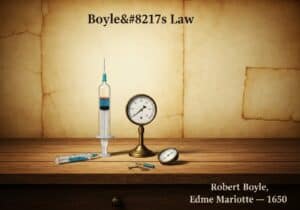
  • Isaac Newton
Isaac Newton conducting spectroscopy experiments with prisms and light in a historical laboratory.

(generated image for illustration only)

Spectroscopy is the study of the interaction between matter and electromagnetic radiation as a function of the radiation’s wavelength or frequency. A spectroscopic instrument produces a spectrum by dispersing the radiation according to its wavelength. This spectrum reveals how the matter absorbs, emits, or scatters the radiation, providing information about the matter’s composition, structure, and physical properties.

The core idea of spectroscopy is that different materials interact with light (or any electromagnetic radiation) in unique ways. When radiation passes through a substance or is emitted by it, specific wavelengths are absorbed or emitted, creating a characteristic pattern or “spectrum”. This pattern is like a fingerprint for the atoms, molecules, or ions in the substance. The positions of the spectral lines (dark for absorption, bright for emission) correspond to the energy differences between quantum states of the material. For example, an electron in an atom can jump to a higher energy level by absorbing a photon of a specific energy, or it can fall to a lower level by emitting a photon. The energy of this photon is directly related to its frequency and wavelength. By analyzing the intensity and position of these lines, scientists can deduce the chemical composition, temperature, density, and motion of the object being studied. This principle applies across the entire electromagnetic spectrum, from radio waves to gamma rays, leading to a vast array of spectroscopic techniques tailored for different types of analysis.

UNESCO Nomenclature: 2209
– Optics

Type

Abstract System

Disruption

Revolutionary

Usage

Widespread Use

Precursors

  • Isaac Newton’s experiments with prisms demonstrating the dispersion of white light (1672)
  • Discovery of wave nature of light by Christiaan Huygens (1678)
  • Development of the concept of atoms and elements

Applications

  • astronomical observation of celestial bodies
  • chemical analysis
  • medical diagnostics
  • materials science
  • environmental monitoring

Patents:

NA

Potential Innovations Ideas

Due to scrapping bot traffic, currently more than 40k per day, this content is reserved to community members.
> Login < or > Register < (100% free) to access this, so as all other restricted content and tools.

Related to: spectroscopy, electromagnetic radiation, spectrum, wavelength, absorption, emission, chemical analysis, matter-light interaction, quantum states, frequency.

Historical Context

Spectroscopy

1650
1650
1672
1687
1687
1738
1750
1600
1650
1650
1678
1687
1687
1738
1750

(if date is unknown or not relevant, e.g. "fluid mechanics", a rounded estimation of its notable emergence is provided)

Related Invention, Innovation & Technical Principles

Full size images and downloads are only available, 100% free, for registered members.

> Login <