Protein Synthesis (Translation)
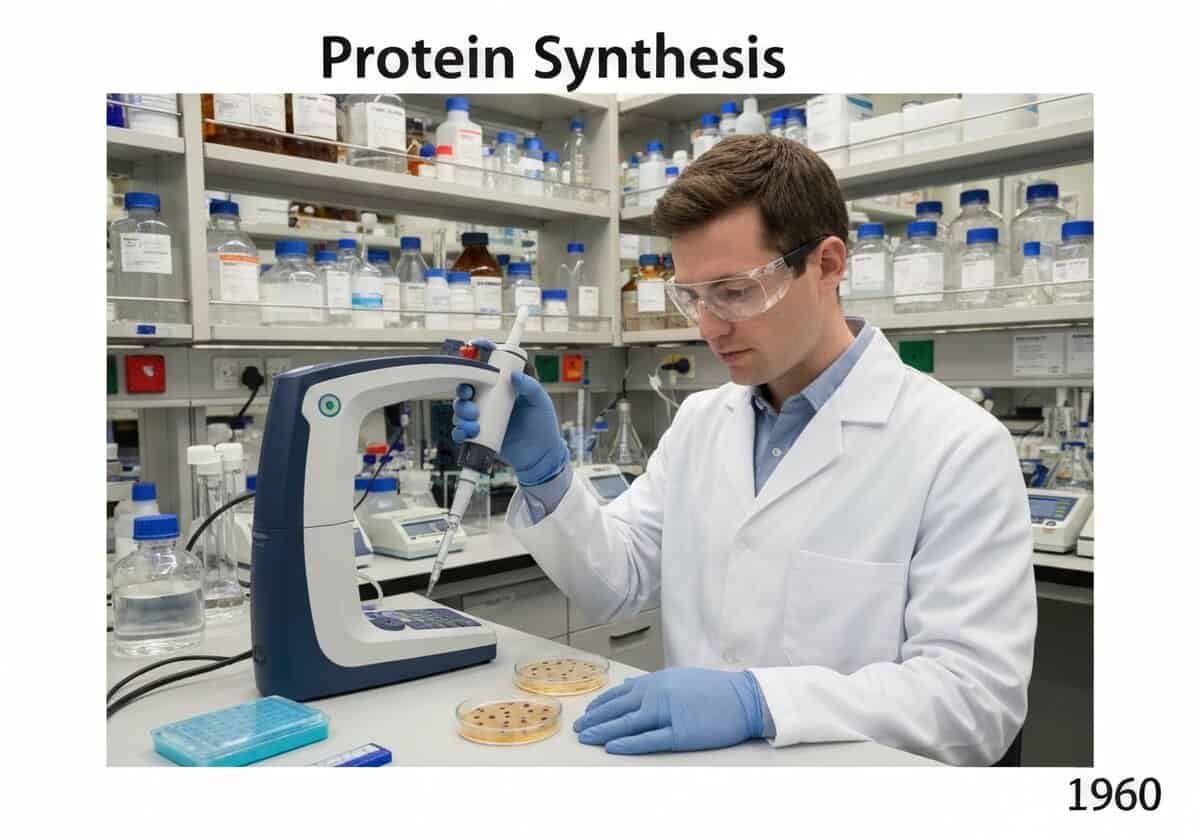
Translation is the biological process in which ribosomes in the cytoplasm or endoplasmic reticulum synthesize proteins. It follows transcription, where the DNA sequence is copied into a messenger RNA (mRNA) molecule. During translation, the ribosome reads the mRNA sequence in three-nucleotide units called codons, and with the help of transfer RNA (tRNA), assembles the corresponding amino acid chain.
The process of translation occurs in three main stages: initiation, elongation, and termination. During initiation, the ribosomal subunits assemble on the mRNA molecule, typically at a start codon (AUG). In the elongation phase, the ribosome moves along the mRNA, codon by codon. For each codon, a specific tRNA molecule with a complementary anticodon brings the correct amino acid. The ribosome catalyzes the formation of a peptide bond between the new amino acid and the growing polypeptide chain. This cycle repeats, extending the protein. Finally, when the ribosome encounters a stop codon (UAA, UAG, or UGA) on the mRNA, termination occurs. Release factors bind to the ribosome, causing the completed polypeptide chain to be released and the ribosomal subunits to dissociate.
This intricate process is a marvel of molecular machinery, ensuring high fidelity in converting genetic information into functional proteins. The discovery of the mechanisms of translation, including the roles of mRNA, tRNA, and the ribosome, and the cracking of the genetic code by Marshall Nirenberg, Har Gobind Khorana, and others, were landmark achievements of 20th-century biology. This understanding forms the basis of the central dogma of molecular biology and has enabled the entire field of genetic engineering and biotechnology.
UNESCO Nomenclature: 2409
– Molecular biology
Precursors
- discovery of dna as the genetic material (avery-macleod-mccarty experiment)
- elucidation of the dna double helix structure by watson and crick
- the central dogma hypothesis proposed by francis crick
- discovery of ribosomes as the site of protein synthesis
- isolation and characterization of mrna and trna
Applications
- production of recombinant proteins like insulin and growth hormone in bacteria or yeast
- development of antibiotics that target bacterial ribosomes (e.g., tetracyclines, macrolides)
- mrna vaccines (e.g., for covid-19), which hijack the cell’s translation machinery to produce viral antigens
- in vitro protein synthesis kits for research and diagnostics
- understanding and potentially treating genetic diseases caused by translation errors
Potential Innovations Ideas
Due to scrapping bot traffic, currently more than 40k per day, this content is reserved to community members.
> Login < or > Register < (100% free) to access this, so as all other restricted content and tools.
Related to: translation, protein synthesis, ribosome, mrna, trna, codon, genetic code, central dogma, polypeptide, gene expression.