Product Design, Manufacturing & Innovation Resources
Home » Design for the Environment (DfE)

Design for the Environment (DfE)

1992
  • United States Environmental Protection Agency (EPA)
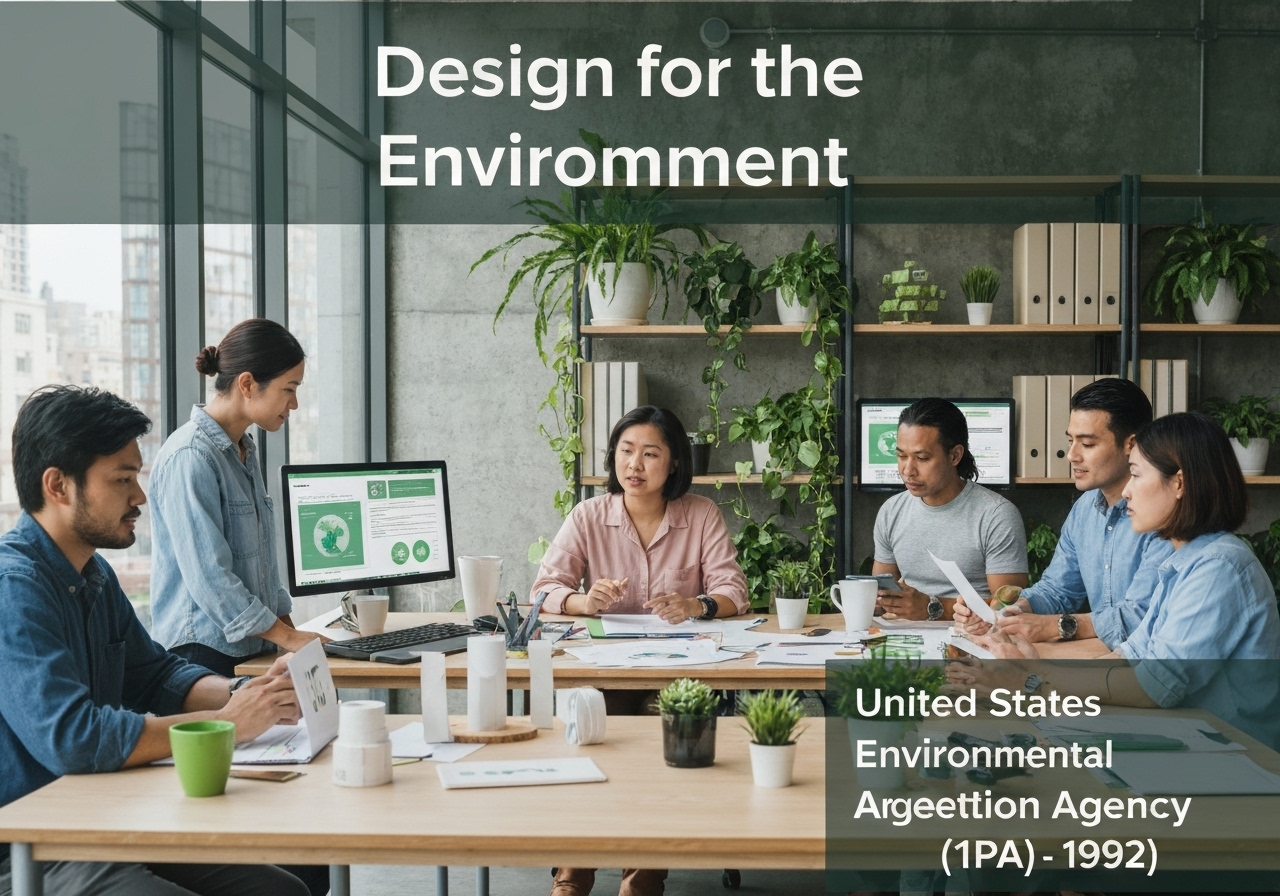
Environmental engineers collaborating on ecodesign in a modern office.

(generated image for illustration only)

Design for the Environment (DfE), also known as ecodesign, is a proactive approach to product and process development that minimizes environmental and human health impacts across the entire product life cycle. It integrates environmental considerations into the earliest design stages, alongside traditional factors like cost and performance, to prevent pollution and conserve resources from the outset.

DfE emerged from the realization that end-of-pipe pollution controls were inefficient and costly. Instead of treating waste after its creation, DfE focuses on prevention by making smarter choices during design. This holistic approach employs life-cycle thinking, evaluating everything from raw material extraction (‘cradle’) to manufacturing, use, and final disposal (‘grave’). Key principles include selecting low-impact, non-toxic, and recycled materials; minimizing overall material and energy usage during production and operation; and designing for longevity, repairability, and disassembly. By considering a product’s end-of-life at its beginning, DfE facilitates recycling, remanufacturing, and safe decomposition, forming a cornerstone of the circular economy. The novelty of DfE was its fundamental shift from a reactive to a proactive and systemic view of environmental protection within industry, embedding sustainability as a core criterion of innovation and quality, rather than an afterthought or a regulatory burden. It transformed environmental management from a compliance issue into a strategic business opportunity.

UNESCO Nomenclature: 3308
– Environmental Engineering

Type

Abstract System

Disruption

Substantial

Usage

Widespread Use

Precursors

  • the environmental movement of the 1960s and 1970s
  • the concept of pollution prevention (p2)
  • early life cycle assessment (lca) methodologies
  • the ‘limits to growth’ report (1972)
  • the brundtland report ‘our common future’ (1987) defining sustainable development

Applications

  • epa safer choice label
  • epeat (electronic product environmental assessment tool)
  • cradle to cradle certification
  • circular economy business models
  • sustainable supply chain management

Patents:

NA

Potential Innovations Ideas

Due to scrapping bot traffic, currently more than 40k per day, this content is reserved to community members.
> Login < or > Register < (100% free) to access this, so as all other restricted content and tools.

Related to: design for the environment, DfE, ecodesign, sustainable design, life cycle assessment, green design, circular economy, pollution prevention, product stewardship, industrial ecology.

Historical Context

Design for the Environment (DfE)

1990
1990
1990
1992
1992
1993-07-22
1996
1990
1990
1990
1991
1992
1993
1994
1997

(if date is unknown or not relevant, e.g. "fluid mechanics", a rounded estimation of its notable emergence is provided)

Related Invention, Innovation & Technical Principles

Full size images and downloads are only available, 100% free, for registered members.

> Login <