Product Design, Manufacturing & Innovation Resources
घर » सर्पिल मॉडल (एसडब्ल्यू प्रक्रिया)

सर्पिल मॉडल (एसडब्ल्यू प्रक्रिया)

1986-01-01
  • Barry Boehm
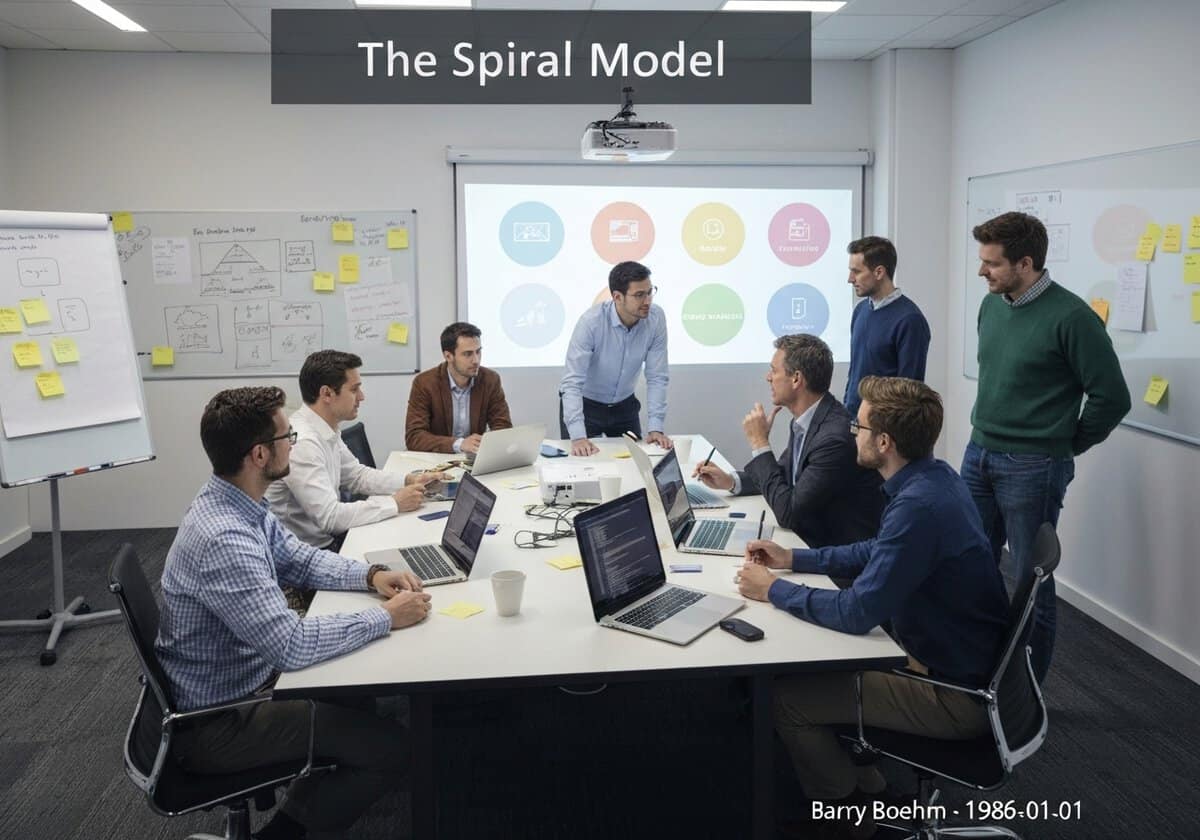
Software engineering team discussing the Spiral Model in a modern office setting.

(यह छवि केवल उदाहरण के लिए बनाई गई है)

The Spiral Model is a risk-driven software development process model that combines elements of both prototyping and the जलप्रपात मॉडलयह एक प्रकार का पुनरावर्ती विकास है जिसमें परियोजना प्रत्येक पुनरावृति में चार चरणों (सर्पिल) से गुजरती है: उद्देश्यों का निर्धारण, जोखिमों की पहचान और समाधान, विकास और परीक्षण, और अगली पुनरावृति की योजना बनाना। यह निरंतर जोखिम विश्लेषण पर जोर देता है।


Introduced by Barry Boehm in 1986, the Spiral Model was designed to address the shortcomings of the traditional Waterfall model, particularly for large, complex projects. Each loop of the spiral represents a phase of the software process. Unlike other models, it doesn’t start with a full set of requirements. Instead, the initial spiral might focus on developing a proof-of-concept to test feasibility. Each subsequent loop builds upon the last, moving from a conceptual level to a fully engineered product. The four key activities in each cycle are: 1) Determine objectives, alternatives, and constraints for the iteration. 2) Evaluate alternatives; identify and resolve risks. This is the most critical part, involving activities like prototyping, simulation, and benchmarking to mitigate high-risk elements. 3) Develop and verify the next-level product. This involves the actual coding, integration, and testing, similar to a mini-waterfall process for that iteration’s deliverable. 4) Plan the next iteration. The project is reviewed, and plans are drawn up for the next spiral. This model allows for the incremental release of the product and refinement of requirements throughout the development lifecycle, making it highly flexible and suitable for projects where risk management is paramount.

UNESCO Nomenclature: 1208
– सॉफ्टवेयर

Type

सार प्रणाली

व्यवधान

इंक्रीमेंटल

उपयोग

विशिष्ट/विशेषज्ञ

शगुन

  • जलप्रपात मॉडल
  • प्रोटोटाइपिंग मॉडल
  • जोखिम प्रबंधन सिद्धांत
  • वृद्धिशील विकास मॉडल

आवेदन

  • बड़ी, महंगी और जटिल सरकारी परियोजनाएं
  • उच्च जोखिम वाला सॉफ्टवेयर विकास
  • ऐसे प्रोजेक्ट जिनमें आवश्यकताएँ अस्पष्ट या जटिल हों
  • अनुसंधान एवं विकास परियोजनाएं

पेटेंट:

NA

संभावित नवाचार विचार

  • बाजार जोखिम पर केंद्रित व्यावसायिक रणनीति विकास के लिए सर्पिल मॉडल
  • ऐसा शैक्षिक सॉफ्टवेयर जो छात्रों की असफलता की संभावना के आधार पर अपने शिक्षण चक्र को अनुकूलित करता है।
  • iterative नैदानिक परीक्षण design that spirals through phases based on risk-benefit analysis
  • जटिल उपप्रणालियों के लिए सर्पिल विकास का उपयोग करते हुए एयरोस्पेस परियोजना प्रबंधन
  • नियामक और बाजार जोखिमों के प्रबंधन के लिए सर्पिल मॉडल का उपयोग करके वित्तीय उत्पाद विकास।
  • जोखिम-मूल्यांकन के आधार पर योजनाबद्ध बड़े पैमाने पर अवसंरचना परियोजनाएं (जैसे, स्मार्ट शहर)
  • साइबर सुरक्षा system development that iteratively adds layers of defense based on evolving threat analysis
  • आपदा प्रतिक्रिया योजना जो अधिक जानकारी और जोखिमों के स्पष्ट होने के साथ-साथ सर्पिल रूप में विकसित होती रहती है
  • एआई मॉडल विकास जिसमें प्रत्येक चरण एक विशिष्ट प्रकार के पूर्वाग्रह या त्रुटि को कम करने पर केंद्रित होता है।
  • विधायी विकास जिसमें विधेयकों का मसौदा सर्पिलाकार रूप में तैयार किया जाता है और प्रत्येक चरण में जोखिम विश्लेषण किया जाता है।
संबंधित विषय: स्पाइरल मॉडल, बैरी बोहेम, जोखिम-संचालित, सॉफ्टवेयर विकास, पुनरावृत्ति, प्रोटोटाइपिंग, वॉटरफॉल मॉडल, जोखिम विश्लेषण, सॉफ्टवेयर इंजीनियरिंग, परियोजना प्रबंधन।

ऐतिहासिक संदर्भ

सर्पिल मॉडल (एसडब्ल्यू प्रक्रिया)

1980
1980
1980
1986-01-01
1990
1990
1993
1980
1980
1980
1982-07-01
1988-06-01
1990
1993
1997-04-23

(यदि तिथि अज्ञात है या प्रासंगिक नहीं है, उदाहरण के लिए "द्रव यांत्रिकी", तो इसके उल्लेखनीय उद्भव का एक अनुमानित आंकड़ा प्रदान किया गया है)

नवीनतम परिवर्धन

शीर्ष पोस्ट और लेख

शीर्ष मूल उपकरण

10वां वर्ष सालगिरह

पंजीकृत सदस्यों के लिए पूर्ण आकार की छवियाँ और डाउनलोड 100% निःशुल्क उपलब्ध हैं।