Product Design, Manufacturing & Innovation Resources
بيت » النموذج الحلزوني (عملية SW)

النموذج الحلزوني (عملية SW)

1986-01-01
  • Barry Boehm
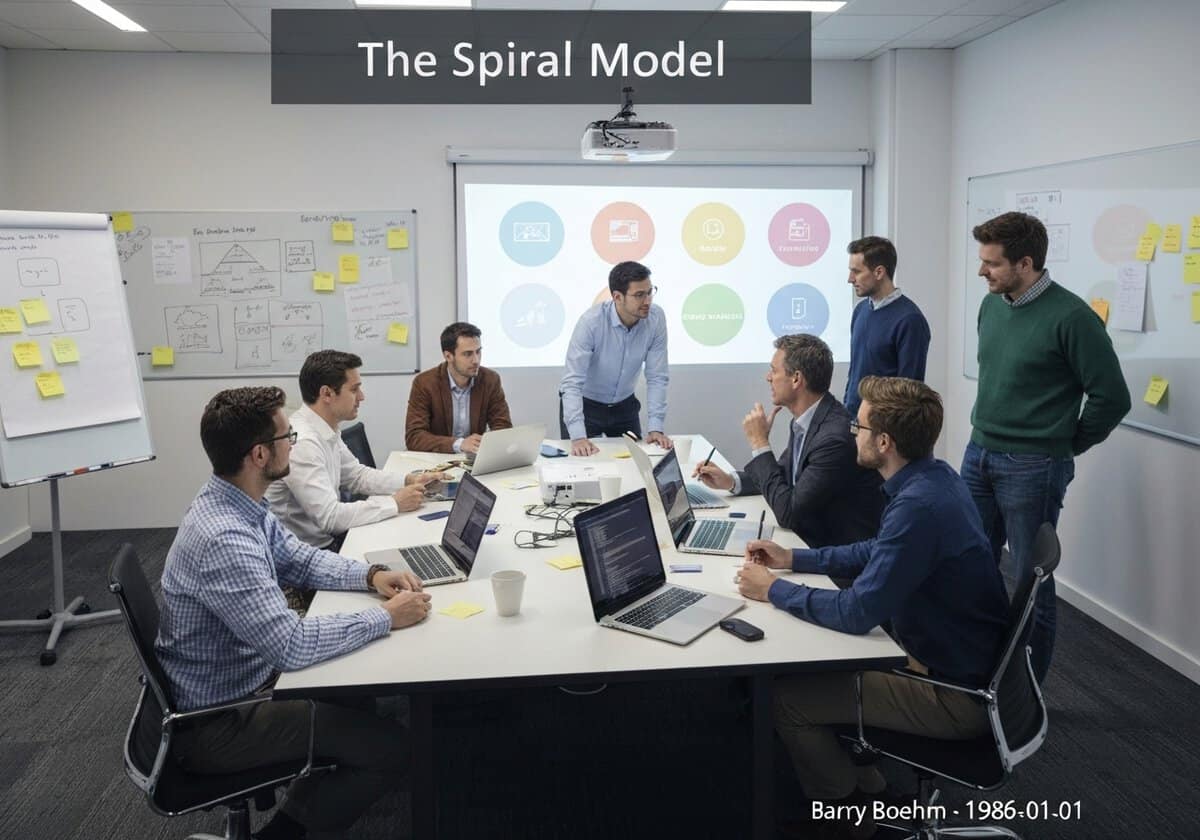
Software engineering team discussing the Spiral Model in a modern office setting.

(صورة توضيحية فقط)

The Spiral Model is a risk-driven software development process model that combines elements of both prototyping and the نموذج الشلال. It is a type of iterative development where the project passes through four phases in each iteration (spiral): determine objectives, identify and resolve risks, develop and test, and plan the next iteration. It emphasizes continuous risk analysis.


Introduced by Barry Boehm in 1986, the Spiral Model was designed to address the shortcomings of the traditional Waterfall model, particularly for large, complex projects. Each loop of the spiral represents a phase of the software process. Unlike other models, it doesn’t start with a full set of requirements. Instead, the initial spiral might focus on developing a proof-of-concept to test feasibility. Each subsequent loop builds upon the last, moving from a conceptual level to a fully engineered product. The four key activities in each cycle are: 1) Determine objectives, alternatives, and constraints for the iteration. 2) Evaluate alternatives; identify and resolve risks. This is the most critical part, involving activities like prototyping, simulation, and benchmarking to mitigate high-risk elements. 3) Develop and verify the next-level product. This involves the actual coding, integration, and testing, similar to a mini-waterfall process for that iteration’s deliverable. 4) Plan the next iteration. The project is reviewed, and plans are drawn up for the next spiral. This model allows for the incremental release of the product and refinement of requirements throughout the development lifecycle, making it highly flexible and suitable for projects where risk management is paramount.

UNESCO Nomenclature: 1208
– Software

يكتب

نظام مجرد

خلل

Incremental

الاستخدام

Niche/Specialized

مقدمات

  • نموذج الشلال
  • نماذج أولية
  • مبادئ إدارة المخاطر
  • نماذج التنمية التدريجية

التطبيقات

  • مشاريع حكومية كبيرة ومكلفة ومعقدة
  • تطوير البرمجيات عالية المخاطر
  • المشاريع التي تكون فيها المتطلبات غير واضحة أو معقدة
  • مشاريع البحث والتطوير

براءات الاختراع:

NA

أفكار ابتكارية محتملة

  • نماذج حلزونية لتطوير استراتيجيات الأعمال مع التركيز على مخاطر السوق
  • برنامج تعليمي يكيف دوامة التدريس الخاصة به بناءً على مخاطر فشل الطلاب
  • iterative تجربة سريرية design that spirals through phases based on risk-benefit analysis
  • إدارة مشاريع الفضاء الجوي باستخدام التطوير الحلزوني للأنظمة الفرعية المعقدة
  • تطوير المنتجات المالية باستخدام نموذج حلزوني لإدارة المخاطر التنظيمية والسوقية
  • مشاريع البنية التحتية واسعة النطاق (على سبيل المثال، المدن الذكية) المخطط لها في دوامات يتم تقييم المخاطر فيها
  • الأمن السيبراني system development that iteratively adds layers of defense based on evolving threat analysis
  • تخطيط الاستجابة للكوارث الذي يتطور بشكل حلزوني مع تزايد وضوح المعلومات والمخاطر
  • تطوير نموذج الذكاء الاصطناعي حيث يركز كل حلزوني على التخفيف من نوع معين من التحيز أو الخطأ
  • التطوير التشريعي حيث يتم صياغة مشاريع القوانين بشكل حلزوني مع تحليل المخاطر في كل مرحلة
Related to: spiral model, barry boehm, risk-driven, software development, iterative, prototyping, waterfall model, risk analysis, software engineering, project management.

السياق التاريخي

النموذج الحلزوني (عملية SW)

1980
1980
1980
1986-01-01
1990
1990
1993
1980
1980
1980
1982-07-01
1988-06-01
1990
1993
1997-04-23

(إذا كان التاريخ غير معروف أو غير ذي صلة، على سبيل المثال "ميكانيكا الموائع"، يتم توفير تقدير تقريبي لظهوره الملحوظ)

أحدث الإضافات

أهم المنشورات والمقالات

أفضل الأدوات الأصلية

السنة العاشرة عيد

الصور والتنزيلات بالحجم الكامل متاحة فقط، ومجانية تمامًا، للأعضاء المسجلين.