Product Design, Manufacturing & Innovation Resources
घर » शीतलन द्वारा अग्नि शमन

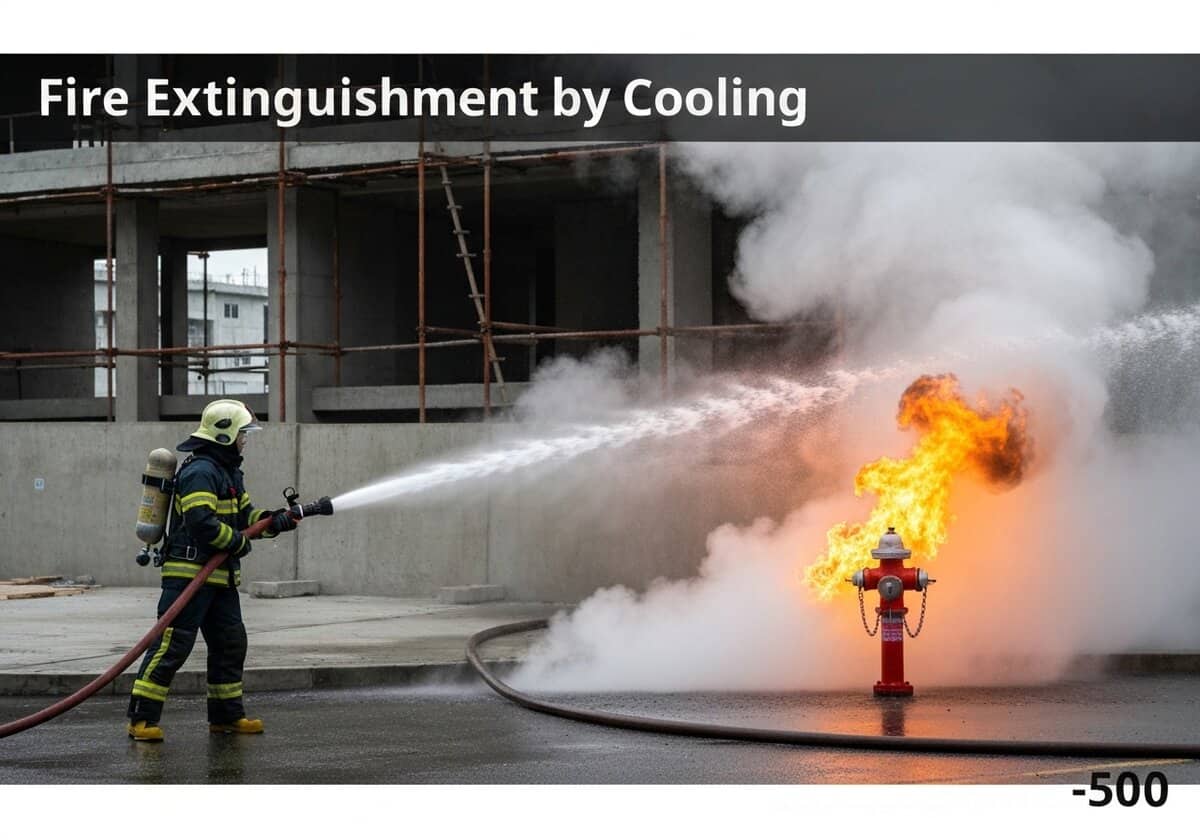
शीतलन द्वारा अग्नि शमन

-500
Firefighter extinguishing flames with water hose in a controlled environment, chemical engineering application.

(यह छवि केवल उदाहरण के लिए बनाई गई है)

A primary method of fire extinguishment involves removing the ‘heat’ component of the अग्नि त्रिकोण. This is most commonly achieved by applying a substance that absorbs a large amount of heat, such as water (despite water also have other effects in the fire triangle -refer to dedicated post-). Water’s high specific heat and latent heat of vaporization make it highly effective at cooling a fire below its self-sustaining temperature.

Extinguishment by cooling is a fundamental firefighting tactic that directly targets the ‘heat’ side of the अग्नि त्रिकोण. The goal is to reduce the temperature of the burning material to a point where it no longer produces sufficient flammable vapor to sustain combustion. This point is known as the fire point. Water is the most common cooling agent due to its unique thermal properties. It has a high specific heat capacity, meaning it can absorb a significant amount of thermal energy before its own temperature rises substantially. More importantly, it has a very high latent heat of vaporization. When liquid water turns into steam at 100°C, it absorbs a massive amount of energy from the fire without any change in temperature. This phase change is extremely efficient at drawing heat away from the fuel. The resulting steam also helps to displace oxygen, contributing to extinguishment by smothering. However, using water is not always appropriate. It can be ineffective or dangerous on grease fires (it can spread the burning grease) and electrical fires (due to conductivity), and it can react violently with certain metal fires.

UNESCO Nomenclature: 3305
रासायनिक इंजीनियरिंग

Type

भौतिक प्रक्रिया

व्यवधान

इंक्रीमेंटल

उपयोग

व्यापक उपयोग

शगुन

  • आग पर पानी के प्रभाव का अवलोकन
  • ऊष्मा और तापमान की समझ
  • development of thermodynamics, specifically concepts of specific heat and latent heat
  • पानी की आपूर्ति के लिए पंप और होज़ का आविष्कार

आवेदन

  • फायर हाइड्रेंट और होज़
  • इमारतों में स्प्रिंकलर सिस्टम
  • जंगल की आग बुझाने के लिए पानी गिराने वाले विमान
  • व्यक्तिगत जल अग्निशामक यंत्र
  • भाप निष्क्रिय करने वाली प्रणालियाँ

पेटेंट:

NA

संभावित नवाचार विचार

  • अल्ट्रासोनिक water mist systems with smaller droplets for more efficient heat absorption
  • आग बुझाने वाले जैल जो सतहों पर चिपक जाते हैं और लंबे समय तक ठंडक प्रदान करते हैं
  • ऐसे ड्रोन जो उच्च सटीकता के साथ लक्षित शीतलन एजेंटों को तैनात करते हैं
  • विशेष औद्योगिक अग्नि शमन के लिए चरण-परिवर्तन सामग्री घोल
  • self-activating cooling systems embedded in लिथियम-आयन बैटरी packs
  • ध्वनिक अग्निशामक यंत्र जो दबाव में परिवर्तन उत्पन्न करने और आग की लपटों को ठंडा करने के लिए ध्वनि तरंगों का उपयोग करते हैं।
  • संवेदनशील इलेक्ट्रॉनिक वातावरणों के लिए क्रायोजेनिक तरल नाइट्रोजन अग्निशामक यंत्र
  • स्मार्ट स्प्रिंकलर सिस्टम जो आग की तीव्रता के आधार पर पानी के प्रवाह और बूंदों के आकार को समायोजित करते हैं।
  • बायोडिग्रेडेबल कूलिंग फोम जो वाष्प अवरोधक के रूप में भी कार्य करते हैं
  • उच्च-तकनीकी उपकरणों में स्थानीय अग्नि निवारण के लिए थर्मोइलेक्ट्रिक कूलिंग पैनल
संबंधित विषय: शीतलन, आग बुझाना, पानी, वाष्पीकरण की ऊष्मा, विशिष्ट ऊष्मा, अग्नि शमन, स्प्रिंकलर प्रणाली, अग्निशमन, ऊष्मा निष्कासन, अग्नि त्रिकोण।

ऐतिहासिक संदर्भ

शीतलन द्वारा अग्नि शमन

-500
1700
1761
1807-01-01
1850
1850
1850
-250
-500
1750
1788
1834
1850
1850
1850

(यदि तिथि अज्ञात है या प्रासंगिक नहीं है, उदाहरण के लिए "द्रव यांत्रिकी", तो इसके उल्लेखनीय उद्भव का एक अनुमानित आंकड़ा प्रदान किया गया है)

नवीनतम परिवर्धन

शीर्ष पोस्ट और लेख

शीर्ष मूल उपकरण

10वां वर्ष सालगिरह

पंजीकृत सदस्यों के लिए पूर्ण आकार की छवियाँ और डाउनलोड 100% निःशुल्क उपलब्ध हैं।