Product Design, Manufacturing & Innovation Resources

Équilibrage de la chaîne de montage

Équilibrage de la chaîne de montage

Équilibrage de la chaîne de montage

Objectif :

Processus d'attribution de tâches aux postes de travail de manière à minimiser le temps total d'inactivité.

Comment il est utilisé :

Avantages

Inconvénients

Catégories :

Idéal pour :

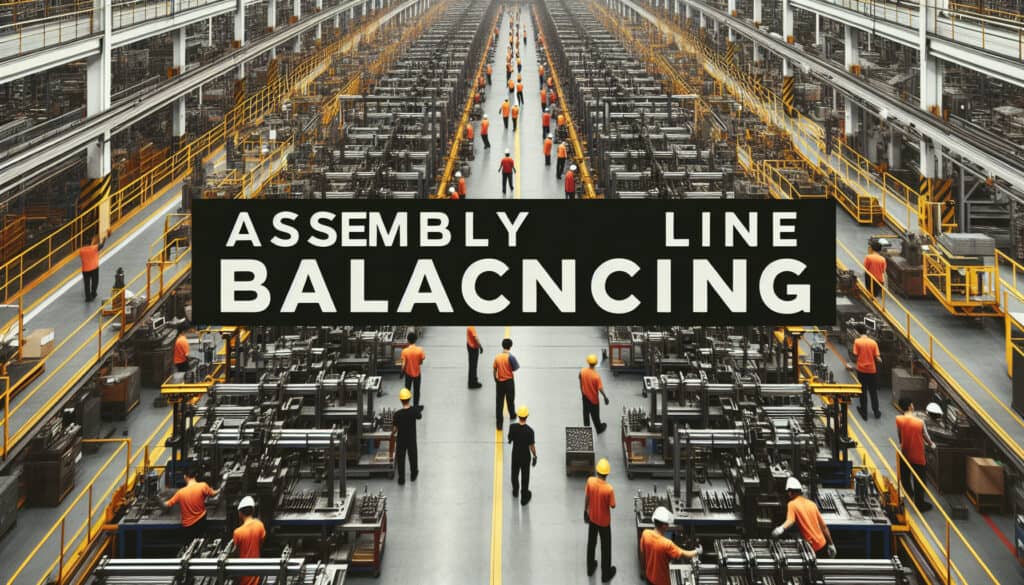
Assembly line balancing finds extensive application in industries such as automotive manufacturing, electronics, appliance assembly, and consumer goods production, where the combination of efficiency and quality is paramount. In these sectors, the method is implemented during the design and configuration phases of production systems, particularly when establishing new assembly lines or reconfiguring existing ones to adapt to demand fluctuations or new product introductions. Different stakeholders are involved in this process, including industrial engineers, production managers, and operations researchers, who collaborate to analyze work tasks, determine cycle times, and allocate resources effectively. Tools such as Work Element Analysis, which breaks down tasks into smaller components, and software applications designed for optimization algorithms, support the balancing process. By applying assembly line balancing techniques, firms can achieve a more equitable distribution of work among stations, reducing bottlenecks and minimizing waste through more effective use of labor and machinery. The methodology not only enhances production rates but can also lead to improved quality control measures by allowing for more consistent workflow and better monitoring at various stages of the assembly process. Additionally, it plays a significant role in lean manufacturing initiatives aimed at reducing lead times and increasing responsiveness to market changes. Implementing these strategies requires continuous feedback and adjustment, making it imperative for teams to establish clear communication channels among all participants involved, ensuring that performance metrics and production goals align with the overall objectives of the organization.

Principales étapes de cette méthodologie

  1. Define workstations based on tasks and their dependencies.
  2. Calculate task times for each operation to determine workload.
  3. Identify the cycle time based on desired production rate.
  4. Analyze the workload distribution across workstations.
  5. Implement balancing algorithms, such as the Largest Candidate Rule or Rank Positional Weight Method.
  6. Evaluate the balance efficiency using the calculated efficiency metrics.
  7. Adjust assignments and re-evaluate to optimize the layout.
  8. Finalize the assembly line configuration based on simulations or pilot runs.
  9. Monitor performance and make iterative improvements as necessary.

Conseils de pro

  • Utilize algorithmic approaches, such as genetic algorithms or ant colony optimization, to explore non-linear solutions for balancing problems, particularly for large-scale assembly lines.
  • Implement simulation tools to model different scenarios and identify bottlenecks, allowing adjustments before real-world implementation.
  • Incorporate ergonomic assessments into the balancing process, ensuring that tasks are not only efficient but also conducive to worker well-being and productivity.

Lire et comparer plusieurs méthodologies, nous recommandons le

> Référentiel méthodologique étendu  <
ainsi que plus de 400 autres méthodologies.

Vos commentaires sur cette méthodologie ou des informations supplémentaires sont les bienvenus sur le site web de la Commission européenne. section des commentaires ci-dessous ↓ , ainsi que toute idée ou lien en rapport avec l'ingénierie.

Contexte historique

1950
1955
1956
1960
1960
1960
1960
1950
1950
1955
1958
1960
1960
1960
1960

(si la date est inconnue ou non pertinente, par exemple « mécanique des fluides », une estimation arrondie de son émergence notable est fournie)

Articles Similaires

Les images en pleine résolution et les téléchargements sont uniquement disponibles, et 100% gratuits, pour les membres inscrits.