Product Design, Manufacturing & Innovation Resources
Hogar » Teoría de Ginzburg-Landau

Teoría de Ginzburg-Landau

1950
  • Vitaly Ginzburg
  • Lev Landau
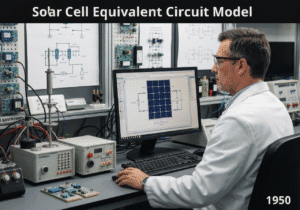
Experimento de laboratorio sobre superconductores que ilustra las aplicaciones de la Teoría de Ginzburg-Landau.

(Imagen generada únicamente con fines ilustrativos)

Developed in 1950 by Vitaly Ginzburg and Lev Landau, this is a phenomenological theory that describes superconductividad near the phase transition. It introduces a complex order parameter, [latex]\Psi[/latex], to represent the density of superconducting electrons. The theory successfully describes effects like the Meissner effect and predicts the distinction between Type I and Type II superconductors based on a single parameter, [latex]\kappa[/latex].
The Ginzburg-Landau theory is a macroscopic theory, meaning it does not explain the microscopic origin of superconductividad (which was later done by BCS theory), but it brilliantly describes the behavior of superconductors. It is based on Landau’s general theory of second-order phase transitions. The central idea is to write the free energy of the system as an expansion in powers of the order parameter [latex]\Psi[/latex] and its gradient. The order parameter is zero in the normal state and non-zero in the superconducting state. The free energy density is given by [latex]f = f_n + \alpha|\Psi|^2 + \frac{\beta}{2}|\Psi|^4 + \frac{1}{2m^*}|(-i\hbar\nabla – e^*\mathbf{A})\Psi|^2 + \frac{|\mathbf{B}|^2}{2\mu_0}[/latex], where [latex]\alpha[/latex] and [latex]\beta[/latex] are phenomenological parameters, [latex]\mathbf{A}[/latex] is the magnetic vector potential, and [latex]e^*[/latex] and [latex]m^*[/latex] are the effective charge and mass of the superconducting charge carriers. Minimizing this free energy yields the Ginzburg-Landau equations, which describe the spatial variation of [latex]\Psi[/latex] and the supercurrents. The theory defines two characteristic length scales: the coherence length [latex]\xi[/latex], over which [latex]\Psi[/latex] can vary significantly, and the London penetration depth [latex]\lambda[/latex]. Their ratio, the Ginzburg-Landau parameter [latex]\kappa = \lambda/\xi[/latex], determines the type of superconductor. If [latex]\kappa 1/\sqrt{2}[/latex], it’s Type II. This prediction of a second type of superconductor, which allows partial magnetic field penetration in a vortex lattice, was a major success of the theory, confirmed experimentally by Abrikosov in 1957.

UNESCO Nomenclature: 2211
- Física del estado sólido

Tipo

Modelo teórico

Ruptura

Sustancial

Uso

Uso generalizado

Precursores

  • Teoría de Landau sobre las transiciones de fase de segundo orden
  • Ecuaciones de Londres
  • descubrimiento del Meissner effect
  • termodinámica y mecánica estadística

Aplicaciones

  • Clasificación de los superconductores (tipo I vs. tipo II)
  • cálculo de campos y corrientes críticos
  • modeling of vortices in superconductores de tipo II
  • theoretical framework for phase transitions in other fields (e.g., física de partículas, cosmology)

Patentes:

NA

Ideas para posibles innovaciones

  • Diseño computacional de materiales superconductores con campos críticos elevados
  • modeling of domain walls in ferroelectric and ferromagnetic materiales
  • Simulación de la formación de cuerdas cósmicas en el universo temprano
  • desarrollo de teorías para la computación cuántica topológica
  • Predicción del comportamiento de los condensados ​​de Bose-Einstein
  • Diseño de dispositivos superconductores con geometrías específicas para la fijación de flujo
  • modelado de la formación de patrones biológicos
  • Análisis de inestabilidades en dinámica de fluidos
  • Creación de algoritmos avanzados para el modelado de campos de fase en la ciencia de los materiales
  • Comprender el mecanismo de Higgs en la física de partículas (un análogo relativista)
Related to: Ginzburg-Landau theory, order parameter, phase transition, Type I superconductor, Type II superconductor, coherence length, penetration depth, Abrikosov vortex, phenomenological theory, free energy.

Contexto histórico

Teoría de Ginzburg-Landau

1950
1950
1950
1950
1950
1957
1957
1950
1950
1950
1950
1950
1950
1957
1958

(Si la fecha es desconocida o no es relevante, por ejemplo "mecánica de fluidos", se proporciona una estimación redondeada de su aparición notable)

décimo año aniversario

Las imágenes en tamaño completo y las descargas solo están disponibles, de forma totalmente gratuita, para los miembros registrados.

> Acceso <