Product Design, Manufacturing & Innovation Resources
Heim » User Datagram Protocol (UDP)

User Datagram Protocol (UDP)

1980
  • David P. Reed
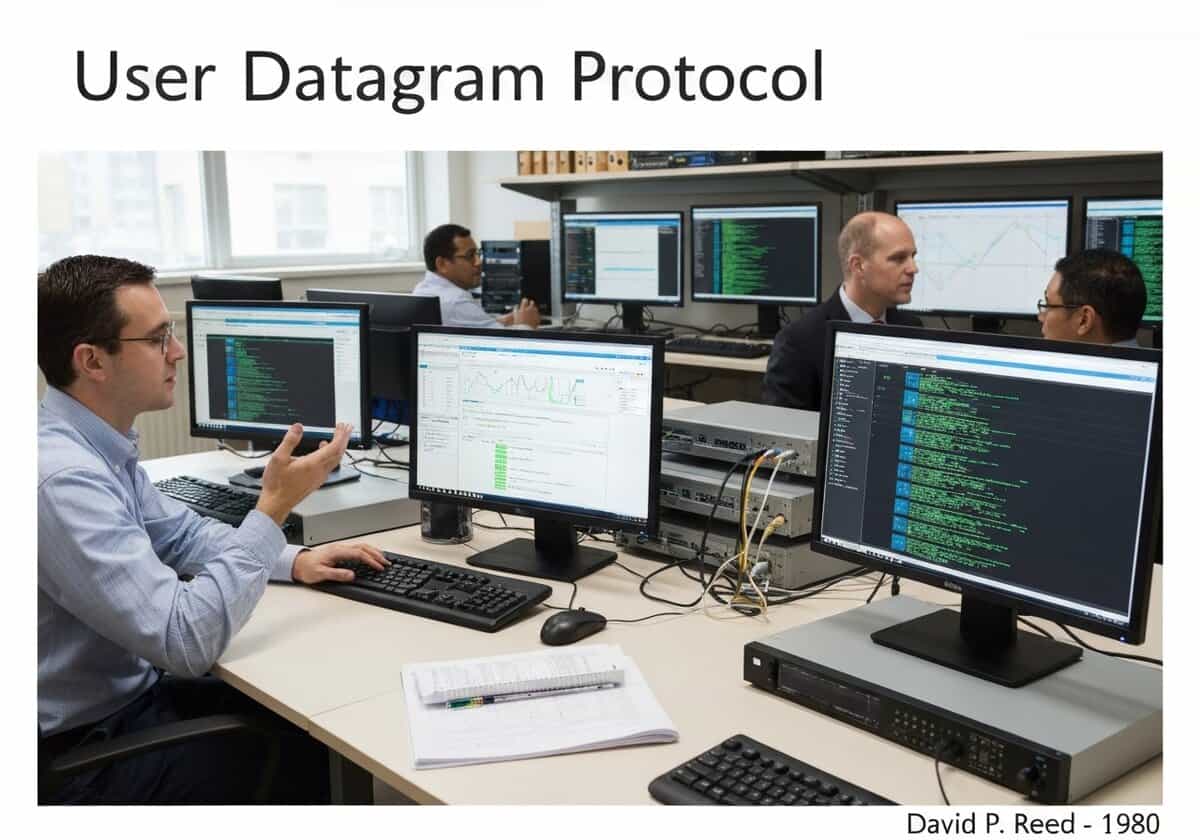
Ingenieure, die in einem Computernetzwerklabor an User Datagram Protocol-Anwendungen arbeiten.

(Abbildung dient nur zur Veranschaulichung)

Das User Datagram Protocol (UDP) ist ein minimales, verbindungsloses Transportprotokoll. Es bietet einen einfachen Datagrammdienst ohne die Zuverlässigkeits-, Sortier- oder Flusskontrollmechanismen von TCPSeine Hauptvorteile sind der geringe Overhead und die niedrige Latenz, wodurch es sich für zeitkritische Anwendungen wie DNS-Lookups, Online-Spiele und Live-Video-Streaming eignet, bei denen Geschwindigkeit wichtiger ist als absolute Zuverlässigkeit.


UDP operates on a ‘fire-and-forget’ basis. An application can send a UDP datagram to a destination without first establishing a connection. The UDP header is very simple, containing only source and destination port numbers, the datagram length, and an optional checksum for error detection. This minimalism translates directly to performance benefits. There is no delay from a connection setup handshake, no state to maintain for connections, and no retransmission of lost packets. This makes UDP ideal for applications that can tolerate some packet loss or have their own mechanisms for handling it. For example, in a VoIP call, losing a few milliseconds of audio is preferable to delaying the entire conversation to retransmit a lost packet. Similarly, in online gaming, receiving slightly outdated game state information is better than pausing the game to wait for a reliable data stream. The QUIC protocol, which underlies HTTP/3, is built on top of UDP to combine its low latency with custom reliability and congestion control mechanisms.

UNESCO Nomenclature: 3307
- Computerwissenschaften

Typ

Software/Algorithmus

Störung

Wesentliche

Verwendung

Weitverbreitete Verwendung

Vorläufer

  • die Notwendigkeit einer einfacheren, schnelleren Alternative zu TCP
  • Erfahrung mit Echtzeit-Paket-Sprachexperimenten auf ARPANET
  • das Design der PUP-Protokollsuite (Parc Universal Packet) bei Xerox Parc

Anwendungen

  • Domänennamensystem (DNS)
  • Voice over IP (VoIP)
  • Online-Gaming
  • Live-Video- und Audio-Streaming
  • Triviales Dateiübertragungsprotokoll (TFTP)
  • Dynamisches Host-Konfigurationsprotokoll (DHCP)

Patente:

NA

Potenzielle Innovationsideen

Aufgrund des hohen Datenverkehrs durch Web-Scraping-Bots, der derzeit mehr als 40.000 Anfragen pro Tag umfasst, ist dieser Inhalt ausschließlich Community-Mitgliedern vorbehalten.
> Anmelden < oder > Registrieren < (100% kostenlos) Zugriff darauf sowie auf alle anderen eingeschränkten Inhalte und Tools.

Verwandt mit: UDP, User Datagram Protocol, Transportschicht, verbindungslos, Datagramm, geringe Latenz, geringer Overhead, DNS, VoIP, Streaming.

Historischer Kontext

User Datagram Protocol (UDP)

1980
1980
1980
1980
1980
1980
1980
1980
1980
1980
1980
1980
1980
1980
1981

(wenn das Datum unbekannt oder nicht relevant ist, z. B. „Strömungsmechanik“, wird eine gerundete Schätzung seines bemerkenswerten Auftretens bereitgestellt)

Verwandte Erfindungen, Innovationen und technische Prinzipien

Bilder in voller Größe und Downloads sind nur für registrierte Mitglieder 100% kostenlos verfügbar.

> Login <