Product Design, Manufacturing & Innovation Resources
Heim » Nickel-Cadmium-Akku (NiCd)

Nickel-Cadmium-Akku (NiCd)

1899
  • Waldemar Jungner
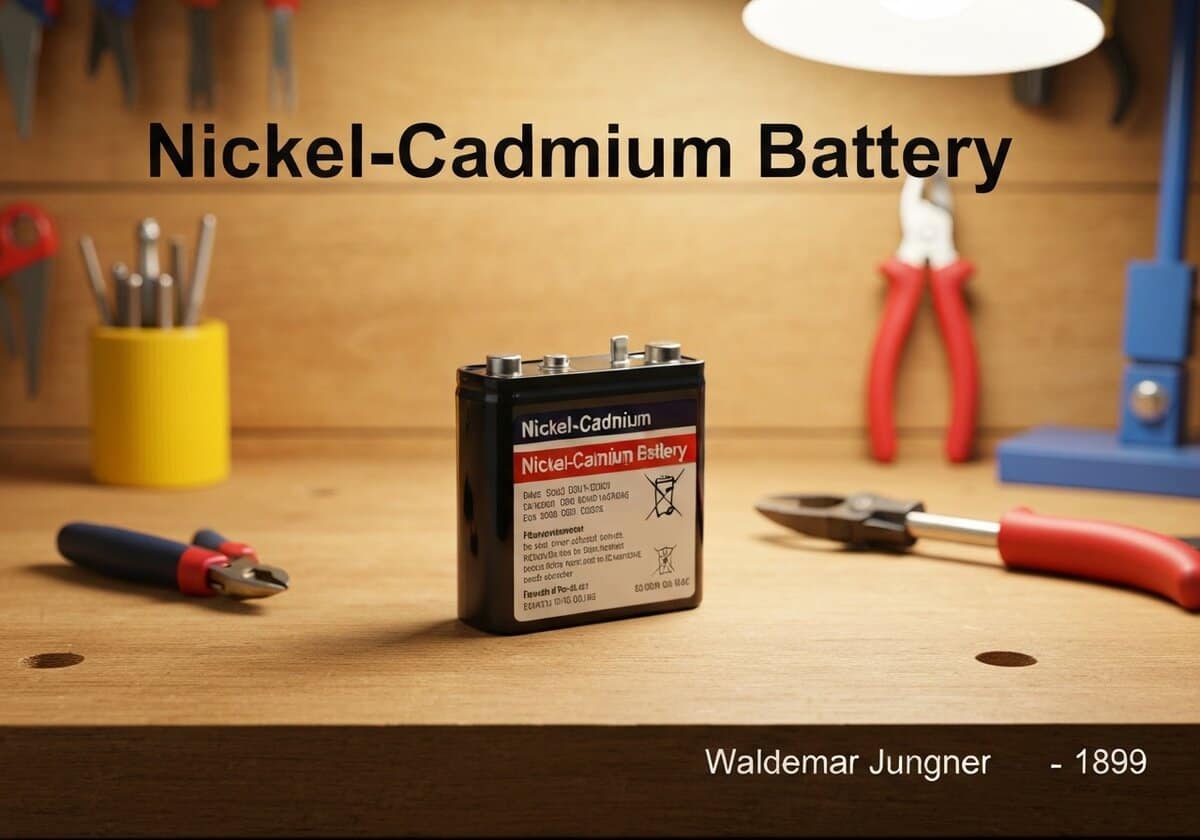
Nickel-Cadmium-Batterie zur Veranschaulichung ihrer elektrochemischen Eigenschaften und Anwendungen in der Elektronik.

(Abbildung dient nur zur Veranschaulichung)

Die 1899 von Waldemar Jungner erfundene NiCd-Batterie verwendet Nickeloxidhydroxid (NiO(OH)) als positive Elektrode und metallisches Cadmium (Cd) als negative Elektrode, wobei Kaliumhydroxid (KOH) als Elektrolyt dient. Sie ist bekannt für ihre lange Lebensdauer und gute Leistung bei niedrigen Temperaturen, leidet jedoch unter … Memory-Effekt und die Toxizität von Cadmium.


The nickel-cadmium battery was a significant step forward from the lead-acid battery, offering a higher energy density and a much longer cycle life in a sealed, maintenance-free package. Waldemar Jungner’s invention provided a robust and reliable power source that became dominant in portable applications for much of the 20th century. The core chemical reaction during discharge is [latex]2 NiO(OH) + Cd + 2 H_2O rightarrow 2 Ni(OH)_2 + Cd(OH)_2[/latex].

The use of an alkaline electrolyte, typically potassium hydroxide, was a key difference from the acidic electrolyte of lead-acid cells. This chemistry allowed for a very flat discharge voltage curve, meaning the battery delivered a nearly constant voltage until it was almost fully depleted. However, its major drawbacks led to its decline. Cadmium is a heavy metal with significant environmental toxicity, making disposal and recycling a critical issue. Furthermore, NiCd batteries are prone to the ‘memory effect,’ where repeated partial discharge/charge cycles can cause a reduction in usable capacity. This necessitated periodic full discharge cycles to maintain performance. Despite being largely replaced by NiMH and Li-ion technologies in consumer goods, its durability ensures it remains in some niche industrial and aviation applications.

UNESCO Nomenclature: 2204
- Elektrochemie

Typ

Physikalisches Gerät

Störung

Wesentliche

Verwendung

Nische/Spezialisiert

Vorläufer

  • Gaston Plantés Blei-Säure-Batterie (1859)
  • Entwicklung alkalischer Elektrolyte
  • Thomas Edisons Arbeit an Nickel-Eisen-Batterien (1901), die eine ähnliche Kathodenchemie aufwiesen.

Anwendungen

  • frühe Akku-Elektrowerkzeuge
  • Notbeleuchtungssysteme
  • Modellflugzeuge und Boote
  • tragbare elektronische Geräte vor Li-Ionen
  • Luftfahrtbatterien

Patente:

NA

Potenzielle Innovationsideen

Aufgrund des hohen Datenverkehrs durch Web-Scraping-Bots, der derzeit mehr als 40.000 Anfragen pro Tag umfasst, ist dieser Inhalt ausschließlich Community-Mitgliedern vorbehalten.
> Anmelden < oder > Registrieren < (100% kostenlos) Zugriff darauf sowie auf alle anderen eingeschränkten Inhalte und Tools.

Verwandte Themen: NiCd, Nickel-Cadmium, Waldemar Jungner, Memory-Effekt, Alkalibatterie, Cadmium, Nickeloxidhydroxid, wiederaufladbar, Zyklenlebensdauer, tragbare Elektronik.

Historischer Kontext

Nickel-Cadmium-Akku (NiCd)

1890
1895
1895
1899
1900
1900
1900
1890
1895
1895
1896
1900
1900
1900
1900

(wenn das Datum unbekannt oder nicht relevant ist, z. B. „Strömungsmechanik“, wird eine gerundete Schätzung seines bemerkenswerten Auftretens bereitgestellt)

Verwandte Erfindungen, Innovationen und technische Prinzipien

Bilder in voller Größe und Downloads sind nur für registrierte Mitglieder 100% kostenlos verfügbar.

> Login <