Product Design, Manufacturing & Innovation Resources
Heim » Proof-Test

Proof-Test

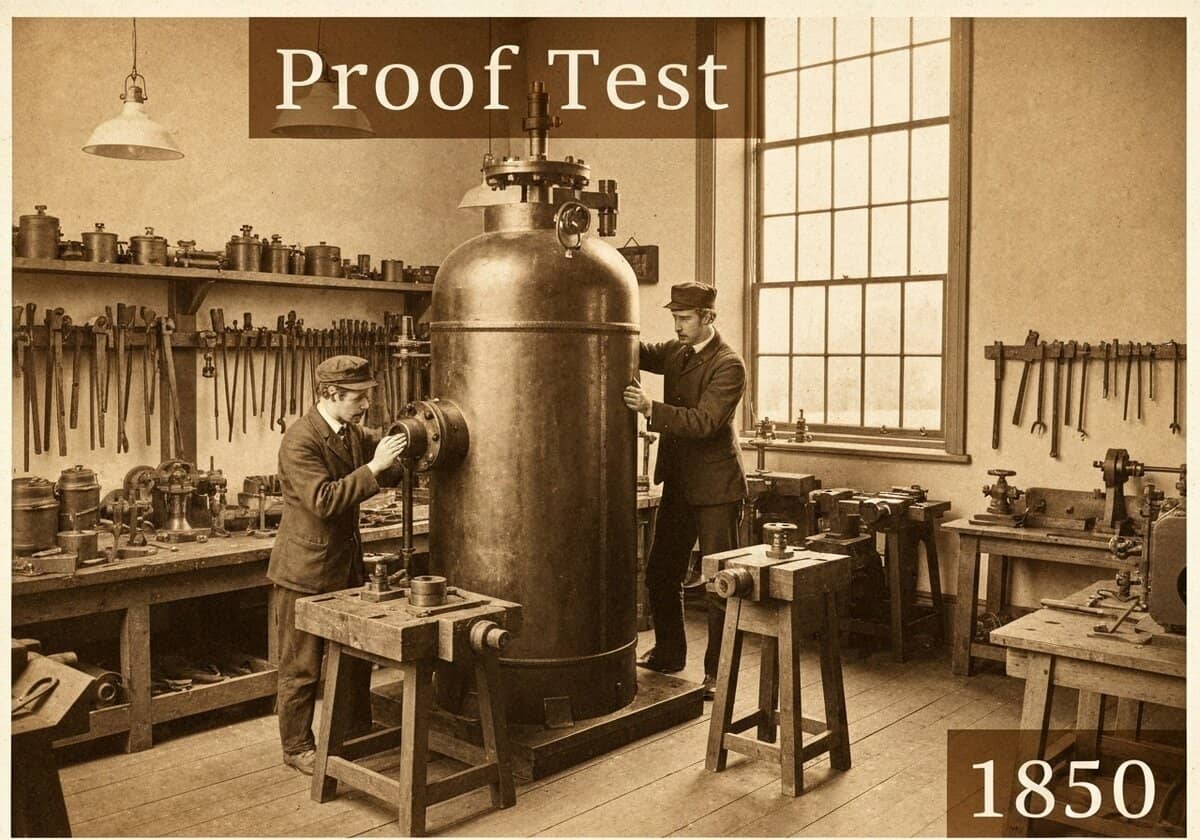
1850
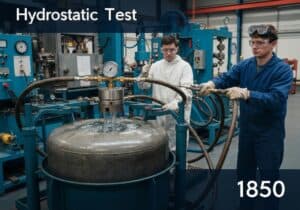
Druckbehälter bei der Abnahmeprüfung in einem Materialprüfungslabor von 1850.

(Abbildung dient nur zur Veranschaulichung)

Ein Proof-Test ist eine Form der Stress Bei dieser Prüfung wird eine Struktur oder ein Bauteil einer Last ausgesetzt, die über der normalen Betriebslast, aber unter der zu erwartenden Bruchlast liegt. Ziel ist es, die Gebrauchstauglichkeit nachzuweisen und die Bauteile auszusortieren. Herstellung Mängel feststellen, ohne einen ordnungsgemäß hergestellten Artikel zu beschädigen, und somit dessen strukturelle Integrität überprüfen.

The fundamental idea behind a proof test, also known as proof loading, is to apply a controlled stress that simulates a worst-case or overload scenario in a safe environment. This stress, the ‘proof load’, is carefully calculated to be a specific percentage above the maximum expected working load. For instance, a crane hook rated for 10 tons might be proof tested to 12.5 or 15 tons. The key is that this proof load must remain below the material’s nominal yield strength. If the component withstands this load without any permanent deformation (plastic deformation), it passes the test. This provides a high degree of confidence that the component is free from significant hidden flaws, such as cracks, voids, improper heat treatment, or incorrect material composition, which could lead to failure under normal operating conditions. It is a practical method to verify both the design and the manufacturing process for every single unit, rather than relying solely on statistical sampling or theoretical calculations.

Historically, the need for such tests became apparent during the Industrial Revolution with the widespread use of steam boilers and iron bridges. Catastrophic failures, often resulting in significant loss of life, highlighted the unreliability of materials and manufacturing techniques of the era. Proof testing was instituted as a mandatory safety measure to ensure that each critical component could handle its intended loads. While modern non-destructive testing (NDT) methods like ultrasonic or X-ray inspection can detect flaws, the proof test remains a definitive ‘go/no-go’ assessment of a component’s actual strength and integrity under load, integrating the effects of all variables in the final product.

UNESCO Nomenclature: 3322
- Werkstoffkunde

Typ

Technische Prüfmethode

Störung

Wesentliche

Verwendung

Weitverbreitete Verwendung

Vorläufer

  • Grundbegriffe von Spannung und Dehnung (Hookesches Gesetz)
  • Verständnis von Materialeigenschaften wie Streckgrenze und Zugfestigkeit
  • Entwicklung von Lastaufbringungs- und Messvorrichtungen (z. B. hydraulische Pressen, Dehnungsmessstreifen)
  • Frühe Industrieunfälle (z. B. Kesselexplosionen), die einen Bedarf an Sicherheitsüberprüfungen schaffen

Anwendungen

  • quality control in manufacturing
  • Sicherheitszertifizierung für Hebezeuge
  • Überprüfung der strukturellen Integrität von Brücken und Gebäuden
  • Druckbehälterzertifizierung

Patente:

NA

Potenzielle Innovationsideen

Aufgrund des hohen Datenverkehrs durch Web-Scraping-Bots, der derzeit mehr als 40.000 Anfragen pro Tag umfasst, ist dieser Inhalt ausschließlich Community-Mitgliedern vorbehalten.
> Anmelden < oder > Registrieren < (100% kostenlos) Zugriff darauf sowie auf alle anderen eingeschränkten Inhalte und Tools.

Verwandt mit: Probelauf, Probebelastung, Belastungstest, Qualitätskontrolle, zerstörungsfreie Prüfung, strukturelle Integrität, Sicherheitsfaktor, Streckgrenze, Herstellungsfehler, Tragfähigkeit.

Historischer Kontext

Proof-Test

1750
1788
1834
1850
1850
1850
1850
1700
1761
1807-01-01
1850
1850
1850
1850
1860

(wenn das Datum unbekannt oder nicht relevant ist, z. B. „Strömungsmechanik“, wird eine gerundete Schätzung seines bemerkenswerten Auftretens bereitgestellt)

Verwandte Erfindungen, Innovationen und technische Prinzipien

Bilder in voller Größe und Downloads sind nur für registrierte Mitglieder 100% kostenlos verfügbar.

> Login <