Product Design, Manufacturing & Innovation Resources
Home » Hochschule für Gestaltung Schwäbisch Gmünd (HfG Schwäbisch Gmünd)

Hochschule für Gestaltung Schwäbisch Gmünd (HfG Schwäbisch Gmünd)

Hochschule für Gestaltung Schwäbisch Gmünd (HfG Schwäbisch Gmünd)
Address: Rektor-Klaus-Straße 100, 73525 Schwäbisch Gmünd, Baden-Württemberg, Germany
Interaction Design & User Experience, Product Design & Engineering, Digital Product Development

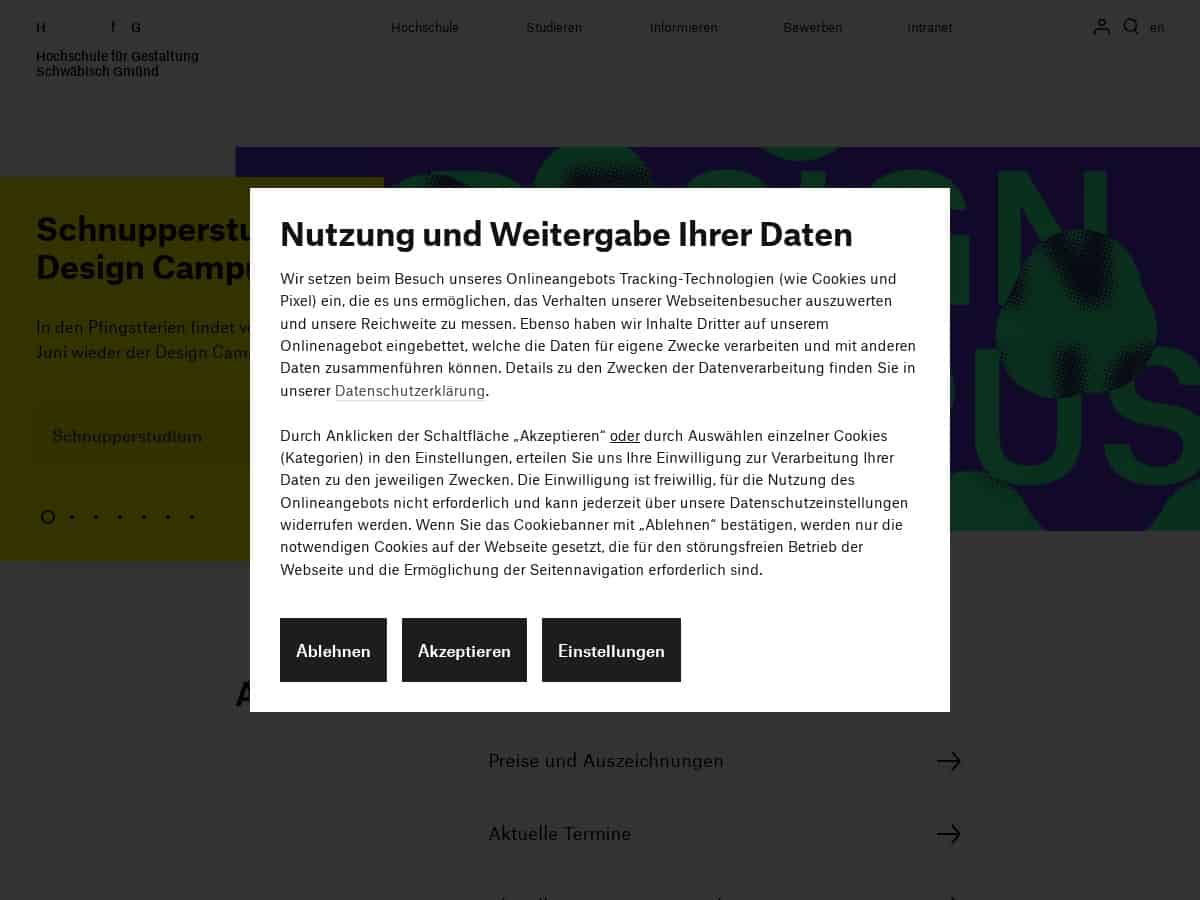
HfG Schwäbisch Gmünd is a public university of applied sciences specializing in design, with a strong focus on interaction design, product design, and communication design, often involving significant technological components.

Domains taught:

Diplomas*:

Status:

Partnerships:

Renowned design school with a focus on user-centered design and digital innovation.

Research:

Human-computer interaction and UX research, Digital product design and prototyping, IoT and smart objects design, Service design and design thinking.

Famous Alumnis:

N/A

International recognition**:

Number of staff***:

100

Current students***:

700

Foreign students***:

N/A%

Cumulative former students***:

N/A

Pros

Leading German design school with a strong emphasis on interaction and product design, innovative and practical approach.

Cons

Primarily a design school, engineering is within the context of product/interaction design.

Best For

Design university specializing in interaction design, product design, and digital product development with strong tech integration.

Most Similar Schools Locally

  • In terms of fields, Hochschule Merseburg is the nearest neighbour, with ergonomics and UX, optics and signal processing again at the core; it is far larger, with about 3,000 students against roughly 700 here, and is also a public institution.
  • On content, Hochschule Harz and this institution are close, as both teach ergonomics and UX, optics and signal processing; it is far larger, with about 3,000 students against roughly 700 here, and is also a public institution.
  • The comparison with Hochschule für Gestaltung Offenbach am Main is straightforward on subjects, since both focus on sound engineering, ergonomics and UX and signal processing, and it covers quality and nanotechnologies as well, and has almost the same size, at about 700 students.
  • For students who like the optics, industrial design and thermodynamics focus of this institution but want another option nearby, Hochschule für Forstwirtschaft Rottenburg fits well: it is also a public institution and runs the same bachelor's and master's programmes.
  • CODE University of Applied Sciences Berlin sits close to this institution on ergonomics and UX, signal processing and industrial design; it is slightly smaller, at about 500 students against roughly 700 here, and is private, whereas this institution is public.

Most Similar Schools Abroad

  • For a study option in Japan with a comparable spread of sound engineering, ergonomics and UX and optics, Sapporo City University is the reference point: it covers ecology and sustainability and life sciences as well, and is slightly larger, at about 800 students against roughly 700 here.
  • Looking internationally, Haute École Arc Ingénierie in Switzerland is where optics, signal processing and industrial design get a comparable treatment; it runs the same bachelor's and master's programmes and covers ergonomics and metrology as well.
  • Students considering a move abroad can look at ISD Flaubert in France, where ergonomics and UX, optics and industrial design also form the core, and it teaches at the same levels, namely bachelor's and master's, and covers transportations and quality as well.
  • If this school is on your list for sound engineering, ergonomics and UX and optics, Future University Hakodate in Japan deserves a comparison, because it covers marine science and bioinformatics as well, and is slightly larger, at about 1,000 students against roughly 700 here.
  • HES-SO Valais-Wallis – Haute Ecole d’Ingénierie, based in Switzerland, is built around optics, signal processing and industrial design much like this school, and it covers metrology and quality as well, and is slightly larger, at about 800 students against roughly 700 here.

*our own picks (our criteria: a mix between domains, diploma delivered, reputation and size), but obviously too many criteria for an apple-to-apple ranking.

*: without any judgment of the quality, readers are strongly encouraged to check the official status of the exact diploma envisioned as many universities have a mix of recognized diplomas, not recognized, “co-delivered,” “equivalent to”,  “some pathways” (…), can change over time, and can be named differently from one country to another.


**: international reputation: is based on some criteria that do not mean much in some domains or specialties (number of researchers, of scientific publications, on budget ….). Our approximate 1-4 scale: 

  1. known locally
  2. known locally and internationally
  3. is listed in some of the world university’s classifications
  4. is listed among the 20 firsts in some of world university’s classifications

***: estimated numbers, based on online sources and/or feedbacks. The numbers can vary greatly depending on school organisation (ex.: school is part of a group, it employs internal staff or external consultants or has public staff without employing them …). Refer to all the links provided to have accurate and updated numbers.

Innovation.world is not affiliated with this school/university.
We recommend to contact them directly on their website for any special request.


To complete or correct any information here or share your opinion, please comment below or > send us a direct message <.

10th year anniversary

Full size images and downloads are only available, 100% free, for registered members.

> Login <















