Product Design, Manufacturing & Innovation Resources
بيت » Formal Verification

Formal Verification

1980
  • Edmund M. Clarke
  • E. Allen Emerson
  • Joseph Sifakis
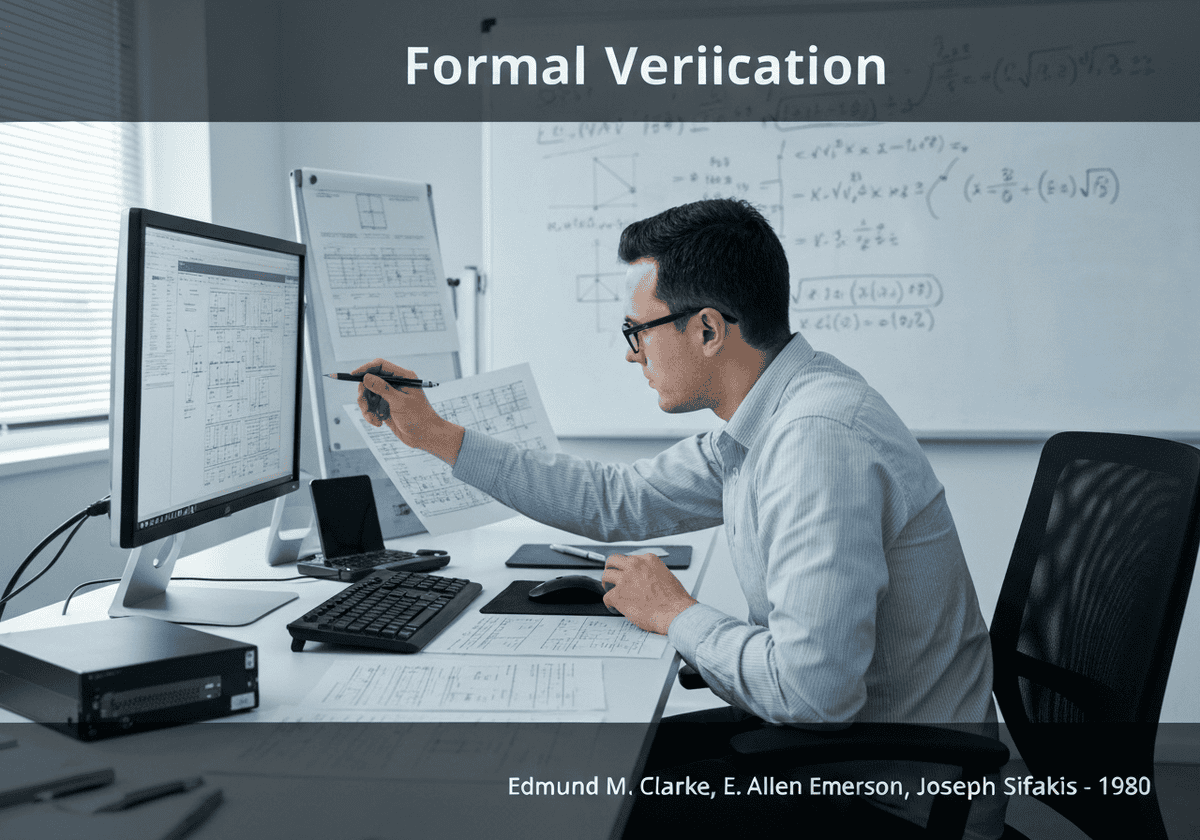
Computer science engineer reviewing formal verification model in office.

(صورة توضيحية فقط)

Formal verification is the use of mathematical methods to prove or disprove the correctness of a system’s design with respect to a formal specification. Unlike testing, which can only show the presence of bugs for specific inputs, formal verification can prove their absence for all possible inputs. It involves creating a formal model of the system and using techniques like model checking or theorem proving.


يُوفر التحقق الرسمي أعلى مستوى من ضمان صحة النظام. تبدأ العملية بإنشاء نموذج رسمي للنظام باستخدام لغة رياضية، مثل المنطق الزمني أو جبر العمليات. كما تُعبّر مجموعة من الخصائص، المستمدة من متطلبات النظام، بلغة رسمية. ثم تستخدم عملية التحقق أدوات آلية لاستكشاف جميع الحالات الممكنة للنموذج بشكل منهجي لتحديد ما إذا كانت الخصائص المحددة صحيحة.

Two primary techniques are used: model checking and theorem proving. Model checking is an automated technique that explores the entire state space of a finite-state model. If a property is violated, the model checker produces a counterexample—a specific execution trace that demonstrates the failure. This is highly effective but can suffer from the ‘state space explosion’ problem for very complex systems. Theorem proving involves representing the system and its properties as logical formulas (theorems) and using automated or interactive provers to construct a formal proof of correctness. This approach can handle infinite-state systems but often requires significant manual effort from experts.

على الرغم من تكلفتها الحسابية العالية واحتياجها لخبرة متخصصة، إلا أن التحقق الرسمي ضروري للأنظمة الحساسة للسلامة أو الأمن، حيث تكون تكلفة الفشل باهظة للغاية. وقد طُبِّق بنجاح للتحقق من صحة وحدات الفاصلة العائمة في المعالجات المركزية، وبروتوكولات الاتصال، وأنظمة التحكم، حيث يكون الاختبار الشامل غير عملي.

UNESCO Nomenclature: 1203
– Computer Science

يكتب

Software/Algorithm

خلل

أساسيات

الاستخدام

Niche/Specialized

مقدمات

  • propositional and predicate logic
  • automata theory
  • lambda calculus
  • program semantics (e.g., hoare logic)
  • computational complexity theory

التطبيقات

  • microprocessor design (e.g., intel pentium fdiv bug fix)
  • برامج إلكترونيات الطيران (مثل أنظمة التحكم الإلكتروني بالطيران)
  • cryptographic protocol analysis
  • railway signaling systems
  • software drivers for critical operating systems

براءات الاختراع:

NA

أفكار ابتكارية محتملة

  • formal verification of الشبكة العصبية properties (e.g., robustness)
  • automated formal verification of smart contracts on blockchains
  • hybrid approaches combining static analysis, testing, and formal verification
  • user-friendly formal verification tools integrated into development environments
  • formal verification of quantum computing algorithms
  • cloud-based formal verification services for scalable analysis
  • verifying fairness and ethical constraints in ai decision-making systems
  • runtime verification to check formal properties in live systems
Related to: formal verification, model checking, theorem proving, formal methods, correctness, software verification, hardware verification, temporal logic.

السياق التاريخي

Formal Verification

1970
1973
1980
1980
1980
1980
1986-01-01
1970
1970-01-01
1975-06-01
1980
1980
1980
1982-07-01
1988-06-01

(إذا كان التاريخ غير معروف أو غير ذي صلة، على سبيل المثال "ميكانيكا الموائع"، يتم توفير تقدير تقريبي لظهوره الملحوظ)

أحدث الإضافات

أهم المنشورات والمقالات

أفضل الأدوات الأصلية

السنة العاشرة عيد

الصور والتنزيلات بالحجم الكامل متاحة فقط، ومجانية تمامًا، للأعضاء المسجلين.