Product Design, Manufacturing & Innovation Resources
بيت » المترجم الأول: نظام A-0

المترجم الأول: نظام A-0

1952
  • Grace Hopper
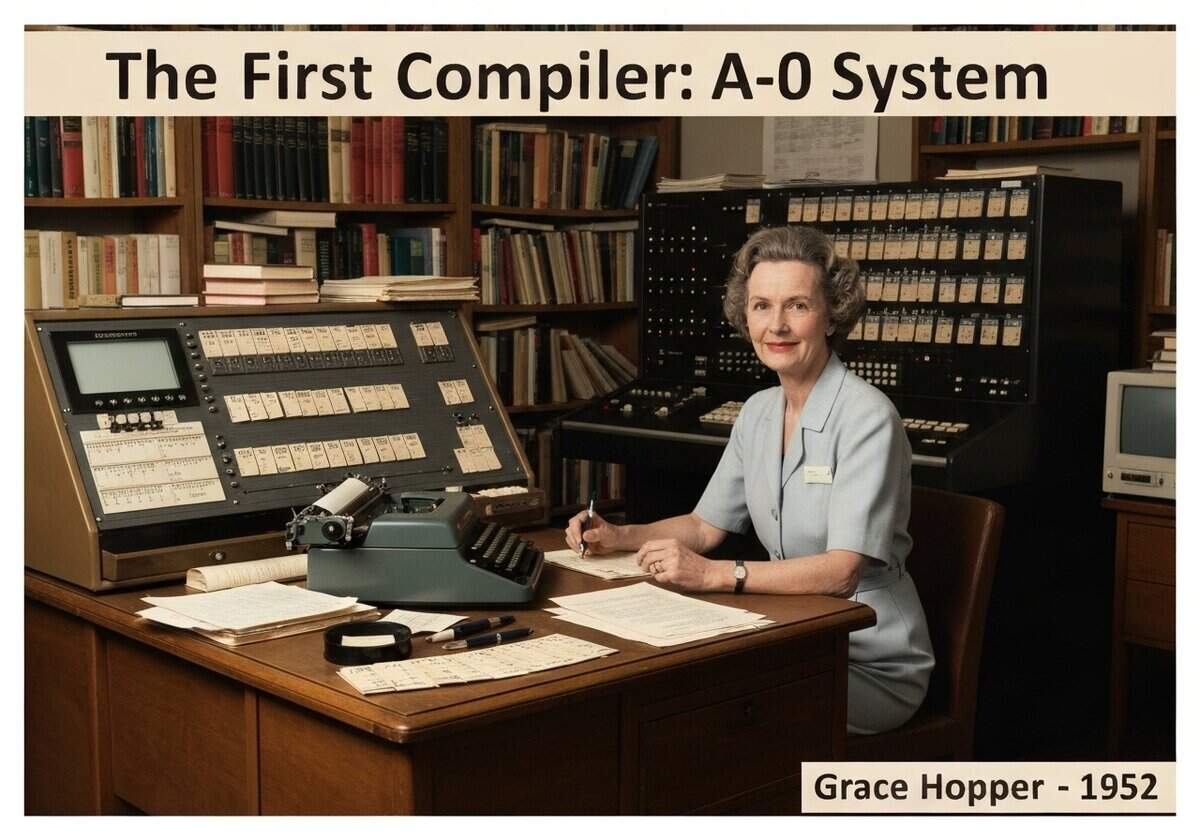
غريس هوبر تعمل على مترجم نظام A-0 في مكتب يعود إلى خمسينيات القرن الماضي.

(صورة توضيحية فقط)

يُعتبر نظام A-0، الذي ابتكرته غريس هوبر عام 1952، على نطاق واسع أول نظام المترجم. It translated a sequence of subroutines and arguments, specified by a mathematical notation, into machine code. This was a foundational step in moving from low-level assembly programming to higher-level, more abstract programming languages, automating the tedious process of manual code translation. Early programming languages research, such as the A-0 System, قاد to the high-level languages used today.

The A-0 System, developed for the UNIVAC I computer, functioned more like a modern linker or loader than a full المترجم as we understand it today. Its primary innovation was automation. Before A-0, programmers had to manually look up the addresses of subroutines from a library and patch them into their main program. This was a slow and highly error-prone process. Hopper’s system automated this by assigning a numeric code to each subroutine in a magnetic tape library.

The programmer would write a program as a sequence of these numeric codes and their arguments. The A-0 System would then read this sequence, look up the corresponding subroutines on the tape, and copy them to the correct locations in memory to form a complete, executable program. While it did not parse complex algebraic expressions or manage control flow structures like a modern compiler, it was the first piece of software that took a high-level specification and automatically generated a low-level executable. This ‘compilation’ of routines was a revolutionary concept that directly led to the development of more sophisticated languages and compilers, including Hopper’s own FLOW-MATIC, which in turn heavily influenced COBOL.

UNESCO Nomenclature: 1203
- علوم الحاسب الآلي

يكتب

البرنامج/الخوارزمية

خلل

ثوري

الاستخدام

عفا عليها الزمن

مقدمات

  • مفهوم أجهزة الكمبيوتر المُخزّنة (هندسة فون نيومان)
  • تطوير البرامج الفرعية والمكتبات
  • لغة التجميع كخطوة أولى فوق الكود الآلي
  • التدوين الرياضي لحل المشكلات

التطبيقات

  • تطوير المترجمين اللاحقين مثل flow-matic
  • إنشاء كوبول لغة البرمجة
  • foundation for all modern high-level programming languages
  • أدوات تطوير البرمجيات الآلية

براءات الاختراع:

NA

أفكار ابتكارية محتملة

  • مترجمو أكواد إرثية مدفوعة بالذكاء الاصطناعي للأجهزة المنقرضة
  • المُجمِّعات التي تُولِّد أوصاف الدوائر الكمومية من الكود الكلاسيكي
  • مُجمِّعات لغة خاصة بالمجال لتوليف التسلسل البيولوجي
  • مُجمِّعات ذاتية التعديل تعمل على تحسين قاعدة الكود الخاصة بها استنادًا إلى أنماط الاستخدام
  • المُجمِّعات التي تُخرِج أكوادًا آلية قابلة للتحقق ومُثبَتة رسميًا للأنظمة الحرجة
  • اللغة الطبيعية لمُجمِّعي التعليمات البرمجية القابلة للتنفيذ لغير المبرمجين
  • compilers that target نيورومورفيك hardware architectures
  • إنشاء مُجمِّع أثناء التنقل للغات التي تم إنشاؤها ديناميكيًا
  • المُجمِّعون الذين يُضمِّنون أدلة التشفير الأصلية داخل الملف الثنائي
  • energy-aware compilers that optimize code for minimal power consumption on آي أو تي الأجهزة
ذات صلة بـ: غريس هوبر، نظام A-0، أول مترجم، التجميع، التحويل البرمجي، اللغة عالية المستوى، الأتمتة، تاريخ البرمجة، UNIVAC i، التدفق الآلي، كوبول.

السياق التاريخي

المترجم الأول: نظام A-0

1940
1950
1950
1952
1956
1960
1967
1940
1943
1950
1950
1953
1960
1960
1967

(إذا كان التاريخ غير معروف أو غير ذي صلة، على سبيل المثال "ميكانيكا الموائع"، يتم توفير تقدير تقريبي لظهوره الملحوظ)

أحدث الإضافات

أهم المنشورات والمقالات

أفضل الأدوات الأصلية

السنة العاشرة عيد

الصور بالحجم الكامل والتنزيلات متاحة فقط 100% مجاناً للأعضاء المسجلين.