Product Design, Manufacturing & Innovation Resources
بيت » القوة الدافعة الكهربائية الكيميائية

القوة الدافعة الكهربائية الكيميائية

1890
  • Walther Nernst
  • Josiah Willard Gibbs
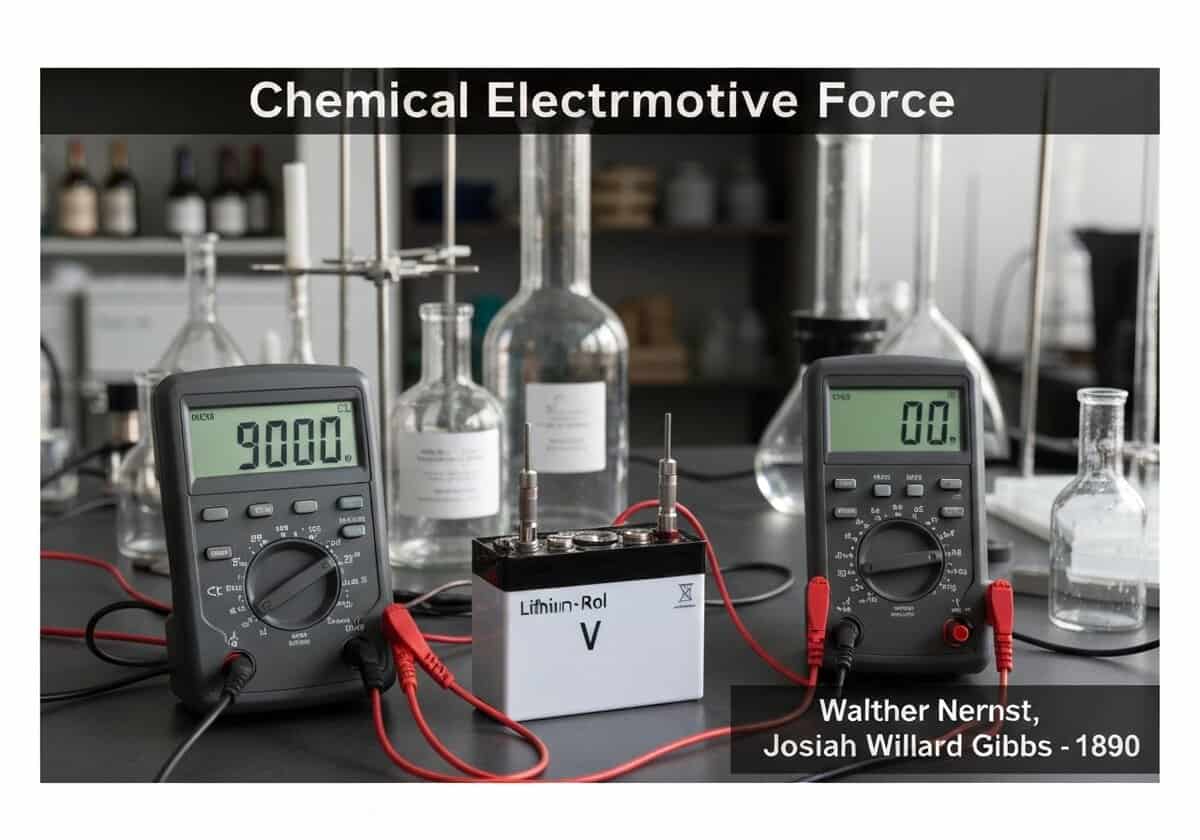
Lithium-ion battery testing in electrochemistry laboratory.

(صورة توضيحية فقط)

في الخلايا الكهروكيميائية مثل البطاريات وخلايا الوقود، EMF تتولد القوة الدافعة الكهربائية من التفاعلات الكيميائية. ويتم فصل الشحنات بواسطة تفاعلات الأكسدة والاختزال التي تحدث عند قطبين كهربائيين مختلفين. وترتبط القوة الدافعة الكهربائية القصوى للخلية بتغير طاقة غيبس الحرة (ΔG) للتفاعل بالعلاقة: E = -ΔG/nF، حيث n هو عدد مولات الإلكترونات وF هو ثابت فاراداي.


ال electromotive force in a chemical source arises from the potential energy difference of electrons in different chemical species. In a galvanic cell, two dissimilar metals (electrodes) are placed in an electrolyte, creating two half-cells. At one electrode (the anode), an oxidation reaction occurs, releasing electrons. At the other electrode (the cathode), a reduction reaction occurs, consuming electrons. This creates an electrical potential difference between the electrodes. The chemical reactions effectively act as a “charge pump,” doing work on the electrons to move them from a lower potential energy state to a higher one, thus establishing the EMF.

The theoretical maximum EMF is determined by the thermodynamics of the reaction, specifically the change in Gibbs free energy ([latex]\Delta G[/latex]), which represents the maximum non-expansion work that can be extracted from a thermodynamically closed system. The Nernst equation further refines this by relating the EMF to the standard electrode potential and the concentrations (or activities) of the reactants and products, showing how the cell’s voltage changes as the reaction proceeds and concentrations vary. This thermodynamic basis is fundamental to designing batteries with specific voltage outputs and energy densities, and for understanding processes like electrolysis, where an external EMF is used to drive a non-spontaneous chemical reaction.

UNESCO Nomenclature: 2203
الكيمياء الكهربائية

يكتب

Chemical Process

خلل

Revolutionary

الاستخدام

استخدام واسع النطاق

مقدمات

  • تجارب لويجي جالفاني على أرجل الضفادع
  • Alessandro Volta’s invention of the voltaic pile
  • Michael Faraday’s laws of التحليل الكهربائي
  • تطوير جوزيا ويلارد جيبس ​​للديناميكا الحرارية الكيميائية

التطبيقات

براءات الاختراع:

NA

أفكار ابتكارية محتملة

  • solid-state batteries using ceramic electrolytes for enhanced safety and energy density
  • بطاريات التدفق للتخزين على نطاق الشبكة باستخدام المتفاعلات الكيميائية السائلة
  • خلايا الوقود المتوافقة بيولوجيًا والتي تعمل على الجلوكوز من سوائل الجسم
  • الخلايا الكهروضوئية الكيميائية التي تستخدم ضوء الشمس لتقسيم الماء إلى هيدروجين وأكسجين
  • بطاريات ذات أقطاب كهربائية ذاتية الشفاء لتمديد عمر الدورة بشكل كبير
  • بطاريات معدنية هوائية ذات كثافات طاقة نظرية عالية للغاية
  • printed, flexible batteries for wearable الإلكترونيات
  • البطاريات الهيكلية المدمجة في هيكل المركبات أو الطائرات
Related to: electrochemistry, battery, galvanic cell, Gibbs free energy, Nernst equation, electrode, electrolyte, redox reaction.

السياق التاريخي

القوة الدافعة الكهربائية الكيميائية

1885
1887
1889
1890
1890
1895
1895
1884
1887
1888
1889
1890
1890
1895
1895

(إذا كان التاريخ غير معروف أو غير ذي صلة، على سبيل المثال "ميكانيكا الموائع"، يتم توفير تقدير تقريبي لظهوره الملحوظ)

أحدث الإضافات

أهم المنشورات والمقالات

أفضل الأدوات الأصلية

السنة العاشرة عيد

الصور والتنزيلات بالحجم الكامل متاحة فقط، ومجانية تمامًا، للأعضاء المسجلين.