هل تعلم أن احتمالية نجاح أي تغيير تنظيمي لا تتجاوز 30%؟ هذه الحقيقة تُبرز الحاجة إلى استراتيجية دقيقة في إدارة التغيير. Harvard professor John Kotter developed a strategic method to avoid common organizational change mistakes. His 8-step process offers a thought-out and inclusive framework.
Kotter’s method comes from in-depth research on different change efforts. It tackles the main reasons many changes fail. The approach promotes unity and leadership across the organization. Kotter’s steps are key for long-lasting and effective change.
We’ll explore each of Kotter’s eight steps in this guide. You’ll see how leaders can use these methods for successful organizational changes.
النقاط الرئيسية
- لا تتجاوز نسبة نجاح المنظمات في تطبيق التغيير 30% بدون اتباع نهج منظم.
- يُعد دعم الإدارة بنسبة 75% أمراً بالغ الأهمية لخلق شعور بضرورة التغيير العاجل.
- A guiding coalition must include various key teams and a sponsor for effective change management.
- يجب أن تكون المكاسب قصيرة المدى واضحة ومرئية في جميع أنحاء المؤسسة للحفاظ على الزخم.
- Effective change communication and employee recognition are essential for long-term success.
- يوفر نموذج الدكتور جون كوتر المكون من 8 خطوات إطارًا شاملاً لإدارة التغيير.
- إن دمج التغيير في ثقافة الشركة يضمن أن يكون للممارسات الجديدة تأثير دائم.
Understanding Kotter’s 8-step Process for Organizational Change
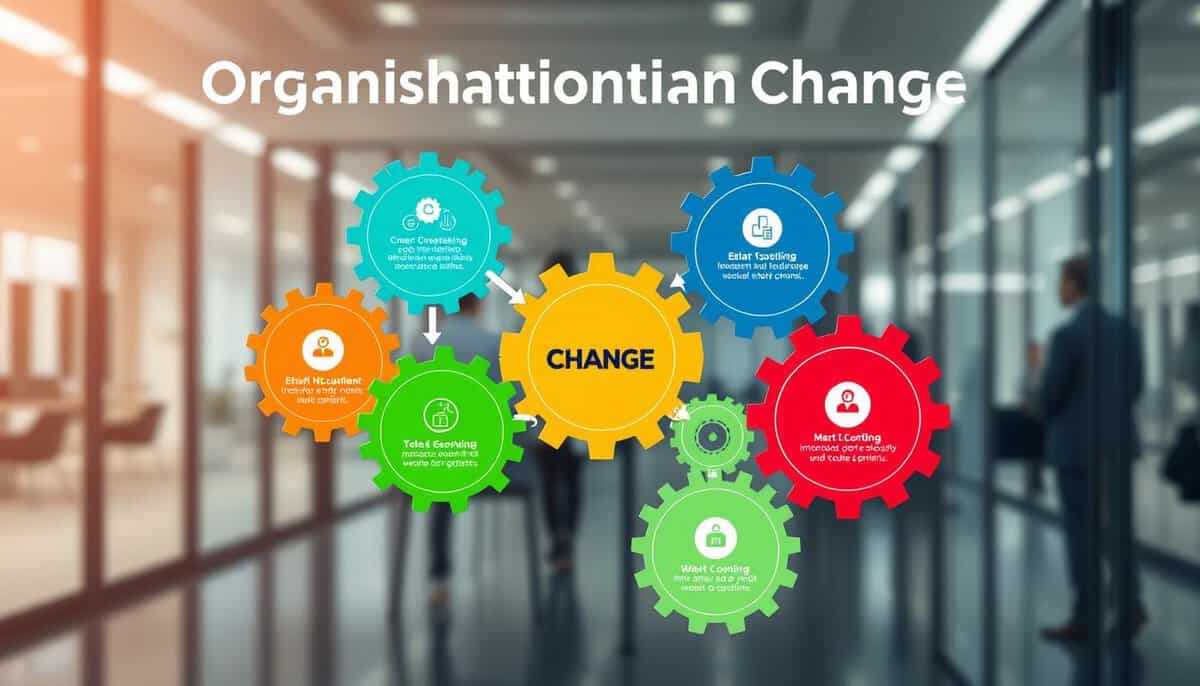
Kotter’s process is key to changing organizations. It uses a structured method. This model carefully leads change, builds leaders, and aligns the organization’s parts.
نظرة عامة على عملية كوتر المكونة من 8 خطوات
Kotter’s 8-step process for change includes:
- خلق شعور بالإلحاح
- بناء تحالف توجيهي
- صياغة رؤية استراتيجية
- تجنيد جيش من المتطوعين
- تمكين العمل عن طريق إزالة العوائق
- تحقيق مكاسب قصيرة الأجل
- الحفاظ على التسارع
- إحداث التغيير
تهدف هذه الخطوات إلى إشراك الجميع، وتقليل المقاومة، وإثارة أفكار جديدة. فعلى سبيل المثال، يؤدي تمكين الأفراد على جميع المستويات إلى تعزيز الكفاءة التشغيلية.
أهمية إدارة التغيير الحديثة
في عالمنا سريع التغير، يُعدّ نموذج كوتر أساسياً. فهو يُناسب سيناريوهات مثل الاستراتيجية، وتطوير القيادة، وتغيير الثقافة المؤسسية. وقد استخدمت شركات مثل آي بي إم وجنرال إلكتريك أفكار كوتر لإحداث تغييرات جذرية. كما تُعدّ هذه العملية مفتاحاً للتحولات الرقمية، وعمليات الاندماج والاستحواذ.
Moreover, Kotter’s method works well with other models like Prosci’s ADKAR and Lewin’s change model. It focuses on strong leadership and keeping everyone involved.
| نموذج إدارة التغيير | التركيز الرئيسي | تطبيق نموذجي |
|---|---|---|
| عملية كوتر المكونة من 8 خطوات | مراحل منظمة للتغيير التنظيمي | تطبيق إجراءات تشغيلية جديدة |
| بروساي نموذج أدكار | احتياجات إدارة التغيير الفردية | اعتماد الموظفين للبرامج الجديدة |
| Lewin’s Change Management Model | ثلاث مراحل للتغيير: الذوبان، والتغيير، وإعادة التجميد | مبادرات تغيير الثقافة |
Kotter’s process helps organizations change successfully. Over 70% of big change efforts work better because of it. The Kotter model is a mainstay in modern change management.
خلق شعور بالإلحاح
In today’s world, businesses move fast. Creating a sense of urgency is crucial, based on Kotter’s 8-step process. Leaders must motivate their teams and fight off any laziness.
تحديد التهديدات والفرص المحتملة
The IBM study “The Enterprise of the Future”يُشير ذلك إلى أن التغييرات تحدث بسرعة. ويُعدّ رصد التهديدات والفرص مبكراً أمراً بالغ الأهمية. على سبيل المثال، كوفيد-19 أجبر ذلك العديد من الشركات على التحول إلى المبيعات والاجتماعات عبر الإنترنت.
يقول جون كوتر إن الشركات تحتاج إلى موافقة معظم المديرين للتحرك بسرعة. يجب على القادة توضيح الوضع الحقيقي وإشراك الجميع لإجراء تغييرات عاجلة.
بناء الزخم والشغف
Clear communication is the start of building energy and excitement for change. It’s about showing what’s at risk if we don’t act and what we gain if we do. Netflix’s rise and Blockbuster’s fall illustrate this perfectly.
يُحدث الرئيس التنفيذي الذي يقود التغيير فرقًا كبيرًا. فهو يستغل الأوقات الصعبة لصالحه، ويُبقي الهدف نصب عينيه، ويُوصل التغيير بفعالية. ويؤكد الدكتور جون كوتر على هذا النهج لتحقيق النجاح.
| شركة | نتيجة لعدم وجود إلحاح | دروس في قيادة التغيير |
|---|---|---|
| فيلم ضخم | فقدت هيمنتها على السوق، وتوقفت عن العمل في عام 2010 | التكيف مع المنافسة والاتجاهات التكنولوجية |
| بلاك بيري | انخفضت الحصة السوقية من 20% إلى أقل من 1% بحلول عام 2017 | الاستجابة السريعة للتطورات التكنولوجية |
| سيرز | أعلنت الشركة إفلاسها في عام 2018، وقامت بتقليص عدد متاجرها بشكل كبير. | تقبّل نماذج الأعمال المتطورة |
With new tech and market changes, following Kotter’s 8-step model helps businesses stay strong and ready for what comes next.
بناء تحالف توجيهي
The second step in John Kotter’s model for leading change is creating a guiding coalition. Without strong support of skilled and influential people, change efforts often fail. This team’s main وظيفة يتمثل الهدف في دعم التغيير، وتعزيز الرؤية، وتحفيز الجميع.

Engaging Key Stakeholders
Starting a guiding coalition means first getting key stakeholders on board. Experts say that its success greatly depends on continuous support from top leaders. These leaders must stay actively involved to fight resistance and help everyone accept the change.
- Active participation is crucial to counter resistance.
- Transparency and trust are essential for harmony.
- Front-line and middle managers’ engagement strengthens buy-in.
Forming a Strong Team
A guiding coalition needs diverse members with leadership skills and decision-making power. It should include people from different levels and areas that are relevant to the change. A variety of perspectives helps bring new ideas to the change effort. Leaders must be careful not to choose the wrong people or lack engagement.
| عوامل النجاح | Common Mistakes |
|---|---|
| Engaging key stakeholders actively | Lack of active engagement |
| Appointing credible, influential members | Wrong team appointments |
| Ensuring transparency and trust | Weak coalition start |
By following leadership principles and Kotter’s model, organizations can form a coalition that leads the way in making change happen.
Developing a Strategic Vision
Crafting a strategic vision is a key part of Kotter’s 8-Step Change Model. It creates a clear path for the future. It also motivates everyone in the organization to work towards the same goals. A strong vision acts as a guiding light, enabling the achievement of major aims smoothly.
Clarifying Future Goals
Understanding the organization’s strengths and weaknesses is vital for setting future goals. This step needs deep thought and future planning. By setting SMART goals, we can ensure our change plans are clear and achievable.
Getting Organizational Buy-In
Getting the organization on board is essential for any change to work. Leaders must communicate well and get stakeholders involved in making and doing the plans. This builds a strong support base and excitement for change.
Also, making sure the entire organization aligns with the vision is critical. This ensures every part works together towards shared goals. It boosts both efficiency and unity.
Empowering Action by Removing Barriers
Kotter’s 8-step process highlights empowering action as key. It follows creating urgency, forming a team, and sharing a vision. Removing barriers that block progress is vital.
It’s important to know the barriers. They come as structural, skills, systems, and managerial issues.
Structural barriers can stop individuals from achieving the change vision. This can lead to frustration and quitting early if not dealt with.
Skills barriers mean we need training or experiences to build the right behaviors. Systems barriers mean making our processes fit the new vision. This helps everyone act effectively.

Managers and supervisors might also block change because of their past or habits. It’s critical to address these issues quickly. Dr. John Kotter found 70% of major organizational changes fail. Most failures are due to not empowering action or not removing barriers well.
- Structural barriers: things like hierarchies and resource issues can clash with new visions.
- Skills barriers: spotting skills gaps and providing training can reduce resistance.
- Systems barriers: systems should help, not hinder, change efforts.
- Managerial barriers: managers may fear loss of control, needing care and strategic change to align them with the vision.
To truly remove barriers, companies need to train both employees and managers. The structure, skills, systems, and leaders must support the vision. Senior leaders and guiding teams are crucial here.
| فئة | Common Barrier | Solution |
|---|---|---|
| Structural | Hierarchical constraints | Realign organizational structure |
| Skills | Lack of necessary skills | Provide targeted training programs |
| Systems | Outdated processes | Update and align systems with vision |
| Managerial | Resistance from managers | Address concerns and realign roles |
Generating Short-Term Wins
Generating short-term wins is key in Kotter’s 8-step process for creating lasting change. It keeps momentum and motivation high among employees. These early successes show the positive effects of change, building support and belief in the vision.
Importance of Early Wins
Short-term wins are organizational improvements that happen within 6 to 18 months. They are important to keep change moving forward.
These wins must be clear, seen by everyone, and linked to the change efforts
They help avoid discouragement, boost morale, and reduce resistance.
Celebrating these wins also encourages employees and cuts down on criticism. By recognizing efforts toward short-term goals, morale stays high. This ensures everyone stays engaged and supports the change.
Strategies to Achieve Short-Term Wins
Planning and executing short-term wins requires effective strategies. They should aim for 3-to-6-month targets. This creates urgency, which is crucial in change management. Acknowledging these achievements is key to keeping everyone motivated.

It’s important to have clear markers to track progress. They help spot problems early, so adjustments can be made if needed. Key strategies include:
- Goal identification: define what a win looks like for the change effort.
- Communication: keep everyone informed about successes to boost commitment.
- Reward system: reward those who meet short-term goals to keep morale high.
- Tracking and reporting: regular progress checks help highlight successes and areas to improve.
Using these strategies not only creates short-term wins but ensures the change benefits are seen long-term. This helps convince stakeholders that the effort is worth it, leading to successful change.
| معايير | وصف |
|---|---|
| Unambiguous Success | Clear indicators of success according to predefined criteria. |
| Visibility | Achievements must be visible organization-wide to ensure acknowledgment. |
| الأهمية | Successes must be directly linked to the change effort to reinforce the change vision. |
Sustaining Acceleration and Consolidating Gains
Kotter’s change model talks about keeping the energy up. After we win some, we use that success to go after bigger changes. Keeping the momentum and making sure the wins last is key.
Kotter says we need to keep pushing to line up our systems and rules with our goals. This way, the new ways stick in how we do things every day.
Getting a strong team to guide change is important. This team works every day to keep the changes going. They communicate a lot to keep everyone moving forward together.
Kotter believes in celebrating the small victories. This helps everyone stay on board and keeps the progress going. Even though it’s slow, it’s the steady effort that makes change stick.
Anchoring Change in Organizational Culture
In the Leading Change Model by John Kotter, the last step is crucial. It makes new actions stick in the organization’s culture. Most failures happen because altering a company’s culture is tough. Making the change deep within the company’s core is essential.
The top leaders have a big part in this. They must fully support and show the new ways themselves. This means everything from what the company values to how it picks and rewards its people must match the new changes. It makes sure the changes stick, not just quick fixes.
At times, you might need to move or replace employees who don’t accept the change. Though hard, it stops them from blocking the new path.
Companies must weave new practices into daily work, making change usual.
The goal is to make the new ways strong and lasting, setting up for real success.
قراءات وأساليب تكميلية
- طراز أدكار: يركز على خمس نتائج رئيسية: الوعي، والرغبة، والمعرفة، والقدرة، والتعزيز، مما يوفر نهجًا أكثر تركيزًا على الفرد لإدارة التغيير.
- نموذج إدارة التغيير الخاص بـ Lewin: يتضمن ثلاث مراحل: التجميد، والتغيير، وإعادة التجميد، مما يوفر فهمًا أساسيًا لديناميكيات التغيير.
- منهجية إدارة التغيير من Prosci: يؤكد على أهمية إدارة الجانب البشري للتغيير لتحقيق نتائج ناجحة.
- تحليل أصحاب المصلحة وإشراكهم: يحدد أصحاب المصلحة الرئيسيين ويخطط لاستراتيجيات إشراكهم طوال عملية التغيير.
- تقييم جاهزية التغيير: يقوم بتقييم مدى استعداد المنظمة للتغيير، مما يساعد على تصميم الاستراتيجيات وفقًا لذلك.
- الذكاء العاطفي في إدارة التغيير: تستخدم الذكاء العاطفي لمعالجة الجوانب العاطفية للتغيير، مما يحسن التواصل وفعالية القيادة.
- تغيير الثقافة التنظيمية: يركز على مواءمة الثقافة التنظيمية مع التوجهات الاستراتيجية الجديدة، وهو أمر ضروري لاستدامة التغيير.
- تخطيط الاتصالات: يقوم بتطوير استراتيجيات اتصال شاملة لضمان إطلاع جميع أصحاب المصلحة وإشراكهم طوال عملية التغيير.
التعليمات
ما هي عملية كوتر المكونة من 8 خطوات؟
وضع البروفيسور جون كوتر من جامعة هارفارد منهجية كوتر المكونة من ثماني خطوات، وهي دليل لقيادة التغيير التنظيمي الناجح. وتركز هذه المنهجية على إشراك الجميع ومعالجة المشكلات الشائعة في مشاريع التغيير.
لماذا تعتبر عملية كوتر مهمة في إدارة التغيير الحديثة؟
تُعدّ طريقة كوتر بالغة الأهمية اليوم نظرًا للتغيرات السريعة التي تشهدها الشركات. فهي تُساعد على تخطيط وتنفيذ استراتيجيات التغيير بكفاءة. وتُعتبر القيادة على جميع المستويات أمرًا بالغ الأهمية للحفاظ على قوة المؤسسة ونجاحها.
كيف تخلق المنظمات شعوراً بضرورة التغيير العاجل؟
لخلق شعور بالإلحاح، تحدد الشركات التهديدات أو الفرص التي تتطلب إجراءً سريعًا. تساعد هذه الخطوة على حشد الجميع وبدء عملية التغيير بحماس.
ما الذي يشكل تحالفاً توجيهياً في نموذج كوتر؟
التحالف التوجيهي هو فريق من القادة المحترمين ذوي المهارات اللازمة. يقودون التغيير، ويدفعون بالرؤية، ويحفزون الجميع في العمل.
كيف يتم تطوير الرؤية الاستراتيجية وفقًا لنموذج كوتر؟
تُحدد الرؤية الاستراتيجية خطة واضحة وعملية للتغيير. وتتمحور حول تحديد الأهداف المستقبلية والحصول على موافقة الجميع لضمان سير الشركة بسلاسة.
ما أهمية تحقيق مكاسب قصيرة الأجل؟
تُعدّ المكاسب قصيرة الأجل أساسية للحفاظ على حماس الجميع أثناء التغيير. هذه النجاحات المبكرة تجعل الناس يؤمنون بالتغيير ويدعمونه.
ما الذي يستلزمه ترسيخ التغيير في ثقافة المنظمة؟
إن ترسيخ التغيير يجعل أساليب العمل الجديدة جزءًا لا يتجزأ من ثقافة الشركة. وهذا يعني أن القادة يواصلون دعم التغيير، والتخطيط للمستقبل، ودمج الممارسات الجديدة في صميم الشركة.
External Links on Comapanies Organizational Changes
المعايير الدولية
(حرك الرابط لرؤية وصفنا للمحتوى)
مسرد المصطلحات المستخدمة
Specific Measurable Achievable Relevant Timely (SMART): إطار عمل لتحديد الأهداف الواضحة والقابلة للقياس والقابلة للتحقيق والمتوافقة مع الأهداف الأوسع والمحددة بالوقت، مما يسهل التخطيط الفعال وتقييم التقدم.